
Emergency Air Duct Cleaning Near Me: What Madison Homeowners Should Do First
If smoke, sewage, or confirmed mold has reached your duct system in Madison, don’t call a duct cleaner first. Turn the system off at the thermostat, contain the source, and photograph everything before anyone touches a vent. Duct cleaning is a later step, not the opening move. We’re Madison Air Duct Cleaning Co, and we’d rather you understand the sequence than panic-dial a coupon number. If you’d rather not work through it yourself, call (844) 443-4890.
What Counts as a Real Duct Emergency (And What Doesn’t)
Three situations rise to the level of a genuine duct emergency in Madison: sewage backing up into the air handler or supply trunk, fire or smoke contamination that has entered the return system, and confirmed mold growth inside the ducts or on the blower. Those carry contamination that will spread every time the air handler runs. Everything else, however unpleasant, is urgent but not emergent.
A strong musty smell with no visible growth? Urgent. A single clogged return with dust buildup? Routine. A dryer vent that’s taking longer to dry clothes? Worth attention this week, not this hour. It helps to separate the two lists, because panic tends to make people call whoever answers fastest rather than whoever has the right equipment.
- Real emergency: sewage reaching the air handler, smoke residue throughout the supply or return, confirmed mold on duct interiors or the blower.
- Urgent, not emergent: persistent musty odor with no confirmed growth, a pest intrusion you’ve already removed, water staining on the plenum.
- Routine: visible dust at the registers, a dryer vent running slow, general maintenance cleaning.
In Madison, the humidity through summer makes mold questions common, and homeowners often assume any smell means growth. A real inspection answers that before cleaning begins.
What to Do in the First Hour After Smoke, Sewage, or Water Reaches Your Ducts
Shut off the HVAC system at the thermostat, then at the breaker if you can reach it safely. Do not run the fan to “clear the air” – that’s the single most common mistake we see. Every minute the blower runs pushes contamination further into rooms that were clean five minutes ago.
Next, stop the source. For water, find the shutoff. For sewage, avoid flushing or draining anything that could add to the backup. For smoke, ventilate with open windows and box fans pointed out, not through the duct system. Then photograph everything – before any cleanup, before any contractor arrives. Insurance adjusters want the mess as it happened, not after it’s been tidied.
- Turn off the HVAC at the thermostat.
- Shut off the breaker to the air handler if reachable safely.
- Stop the water or sewage source.
- Open windows and move air out with fans, not through the ducts.
- Photograph and video every affected register, the air handler, and the visible damage.
Do not spray disinfectant into the ductwork yourself. Household sprays don’t reach the interior surfaces where contamination settles, and they can leave residue that complicates a real cleaning later. Sanitizing that follows the cleaning, applied correctly, is a different thing entirely.
Why Sequencing Matters: Restoration Before Cleaning, Containment Before Airflow
Restoration comes before cleaning, and containment comes before airflow. That order is not a preference – it’s what keeps the problem from spreading. If a sewage backup soaked into subfloor or drywall near the air handler, that structural damage has to be dried and remediated before duct cleaning has any value. Cleaning a duct system connected to a wet, contaminated cavity is wasted work.
Containment is the second piece, and it’s where equipment separates serious companies from the rest. A proper job uses negative-pressure HEPA extraction so that when debris is dislodged, it’s captured rather than recirculated into the room. We run Nikro HEPA-class equipment for negative-pressure containment, and we deploy Abatement Technologies air filtration on-site to catch particulates as they’re disturbed. That’s what containment actually looks like in a Madison home – not a shop vac and a promise.
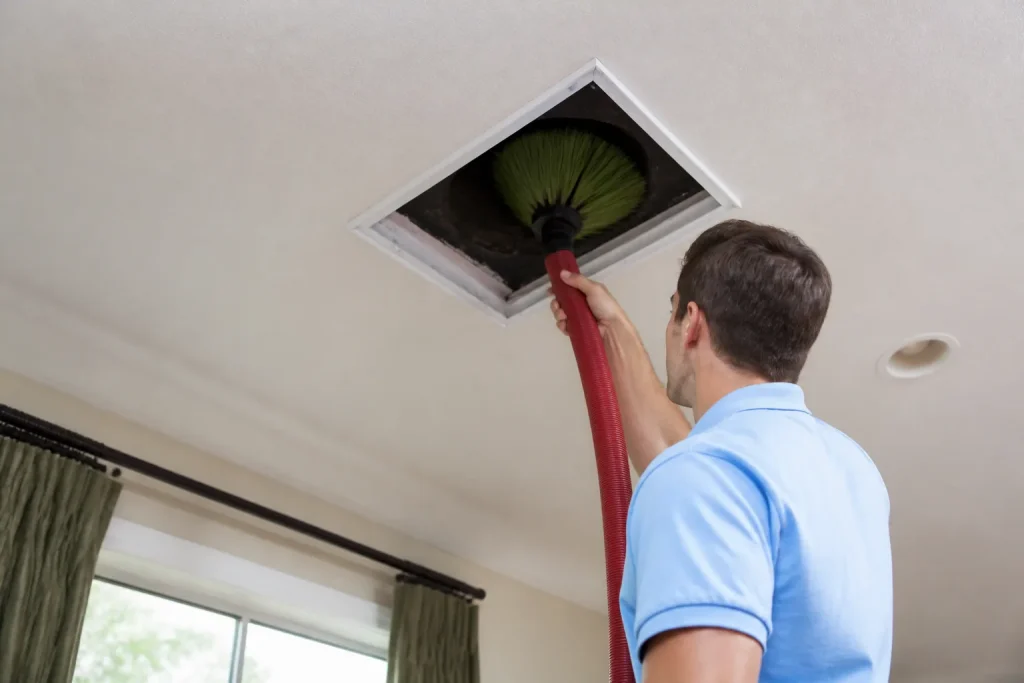
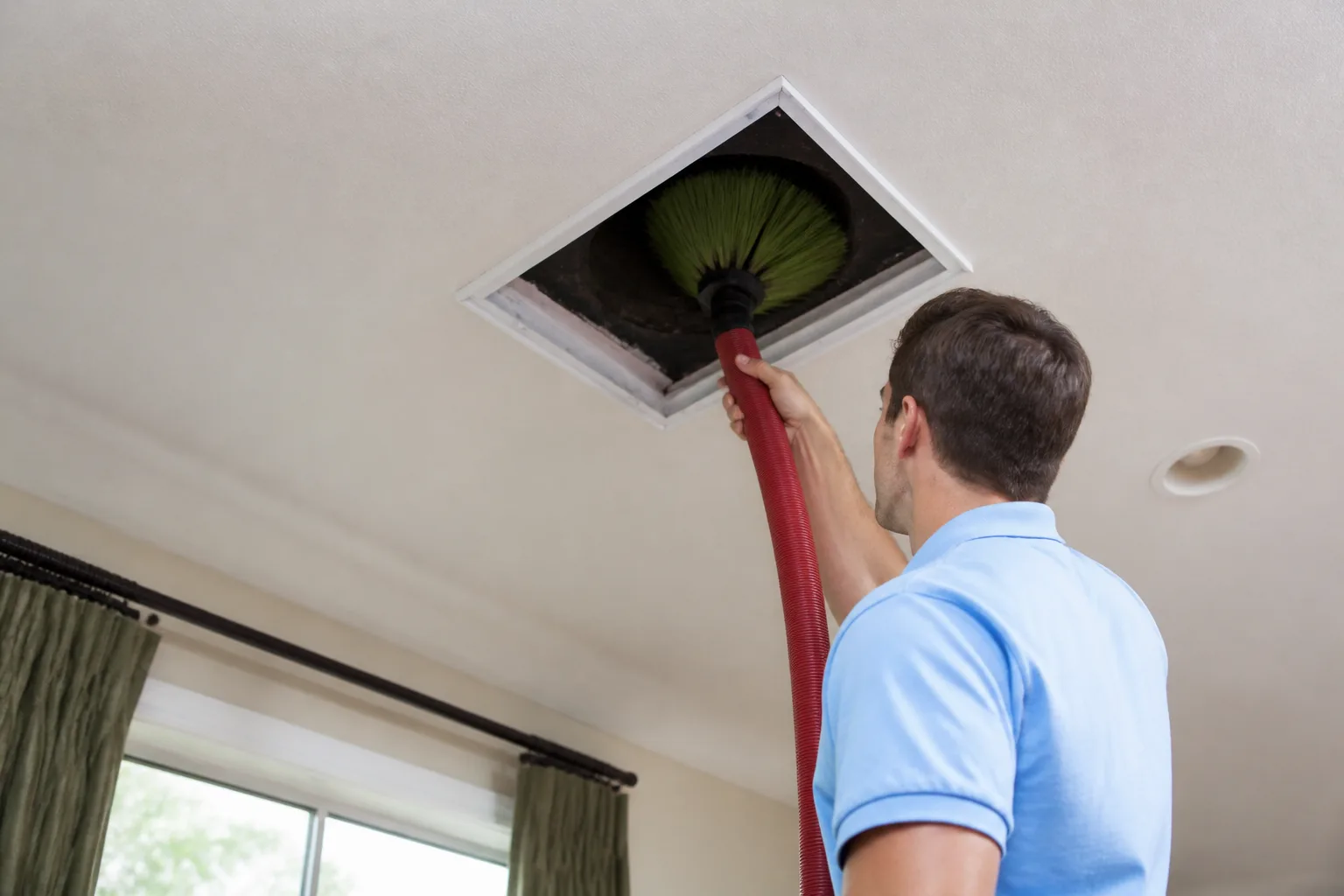
Only after restoration and containment does cleaning make sense. And cleaning itself should be done with a rotary-brush system like Rotobrush, which contacts the duct walls rather than just pulling loose dust from the center of the run.
How to Tell if an Emergency Duct Cleaning Company Is Actually Equipped
Ask what equipment they’ll bring and where it comes from. An “emergency” cleaning that uses the same consumer-grade vacuum for a sewage scenario as for routine maintenance isn’t an emergency response – it’s a standard cleaning done in a hurry. That difference matters more than any review count.
- Do they name their equipment? Rotobrush, Nikro, Abatement Technologies – if the answer is vague, the gear probably is too.
- Do they offer duct repair and sealing in-house? Contamination often reveals leaks and gaps. If they refer that work out, you’re coordinating two contractors mid-crisis.
- Do they ask about restoration first? A company that jumps straight to scheduling cleaning without asking about water damage isn’t sequencing correctly.
- Do they document before and after? Photos of your own ducts, not stock images.
- Do they carry air-quality products like Honeywell or Aprilaire? Not required, but it signals they think past the cleaning visit.
In our experience, the right questions filter out a lot of noise before anyone knocks on the door.
Documentation Steps for Your Insurance Claim
Document before, during, and after – and keep it organized. Insurance claims for smoke or water damage involving ductwork rise or fall on evidence that the contamination was real and the cleaning was necessary. Start with wide shots of each room, then close-ups of registers, the air handler, and any visible residue.
Save the contractor’s written estimate before work starts, their equipment list, and before-and-after photos of your own system. Keep receipts for any temporary measures – fans, dehumidifiers, air filtration rentals. If a professional air-quality inspection confirms mold, keep that report with the rest. In Madison, where a humid summer can turn a slow leak into a growth problem fast, having a dated record helps your insurer understand the timeline.
One small note of humor in an otherwise serious process: your phone’s camera roll will be the least glamorous part of this whole ordeal, but it’s the part your adjuster will actually thank you for.
When to Call a Pro
Call a pro as soon as you’ve confirmed the source is stopped and you’ve documented what you’re looking at. If the situation involves sewage, smoke, or suspected mold, a trained professional with proper containment is the right call – not a homeowner with a shop vac and determination. The local pro is licensed and insured as their state requires, and the estimate should be free and written before any work begins.
Call (844) 443-4890. We answer 24/7. Fast dispatch from 7am to 7pm, Sunday through Friday.
Related services in Madison
Once containment and restoration are handled, full air duct cleaning handles the system itself, and HVAC cleaning addresses the blower and coil where contamination often settles. If a dryer vent was involved in the incident, dryer vent cleaning should follow. See Madison Air Duct Cleaning Co for our full scope.
The Bottom Line
Duct emergencies in Madison come down to sequence: shut off the system, stop the source, document everything, contain before cleaning, restore before cleaning, and only then clean the ducts with the right equipment. Skip a step and you’re paying to spread the problem, not fix it. If you’re in Madison and need help, Madison Air Duct Cleaning Co offers free estimates – call (844) 443-4890.
- Turn off the HVAC before anything else.
- Photograph everything before cleanup.
- Confirm restoration is complete before duct cleaning.
- Ask what equipment a company brings – and expect names.
Frequently Asked Questions
No. Running the fan pushes contamination deeper into the home. Turn the system off at the thermostat and ventilate with windows and fans pointed out. Call (844) 443-4890 for a free estimate once the source is stopped.
Remediation comes first. Confirmed mold means the moisture source has to be addressed before duct cleaning has lasting value. Clean the ducts after the water problem is solved, not before. Call (844) 443-4890 – estimates are free.
Often yes for the water damage and resulting cleanup, though coverage varies by policy. Document everything before any work begins, and keep the written estimate alongside your photos. Call (844) 443-4890 for a free estimate.
Ask for before-and-after photos of your own system, not stock images. A professional job includes containment during the work and a written scope before it starts. Call (844) 443-4890 – estimates are free, and we’ll walk you through what the work involves.
Written by the team at Madison Air Duct Cleaning Co.
Need Air Duct Cleaning Help?
Call Madison Air Duct Cleaning Co - the local pro we connect you with is licensed and insured, with free written estimates in Madison.
(844) 443-4890