
Last updated November 24, 2026
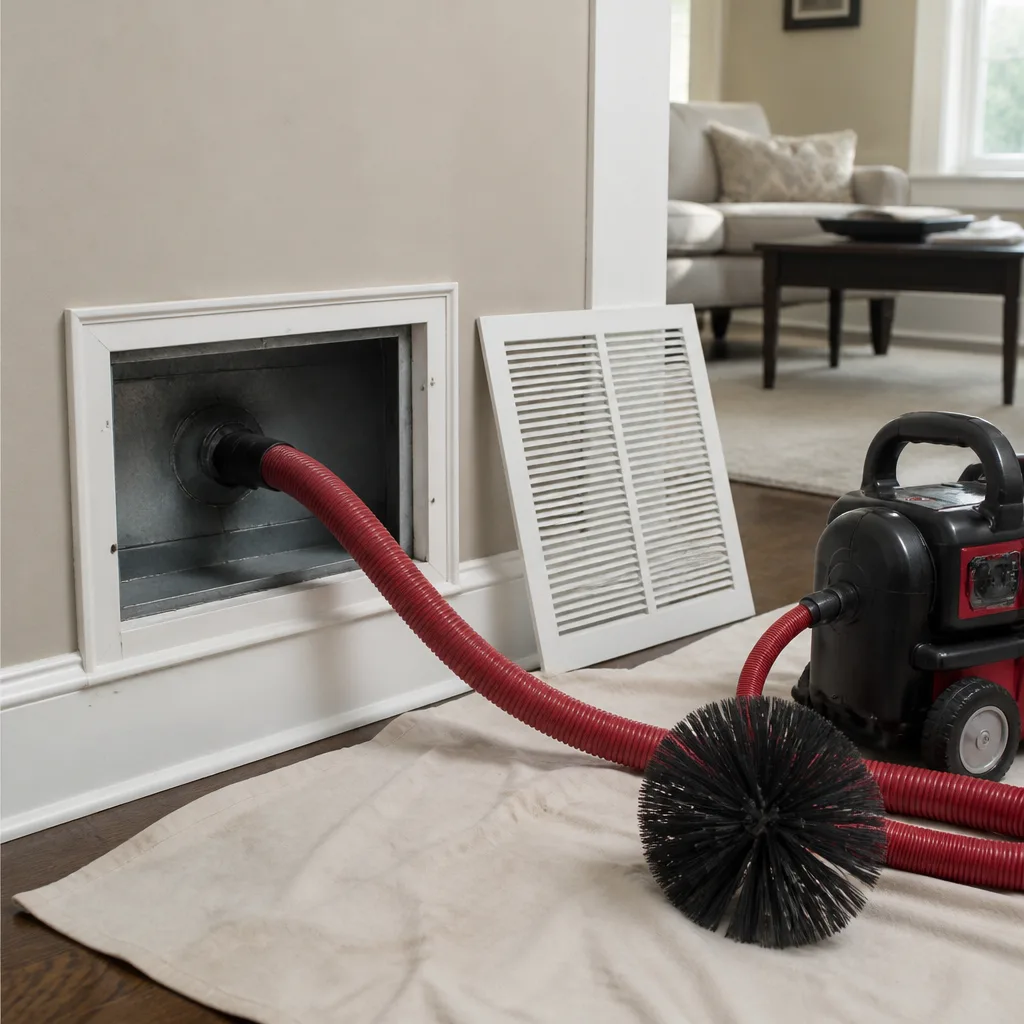 Whole-home duct cleaning
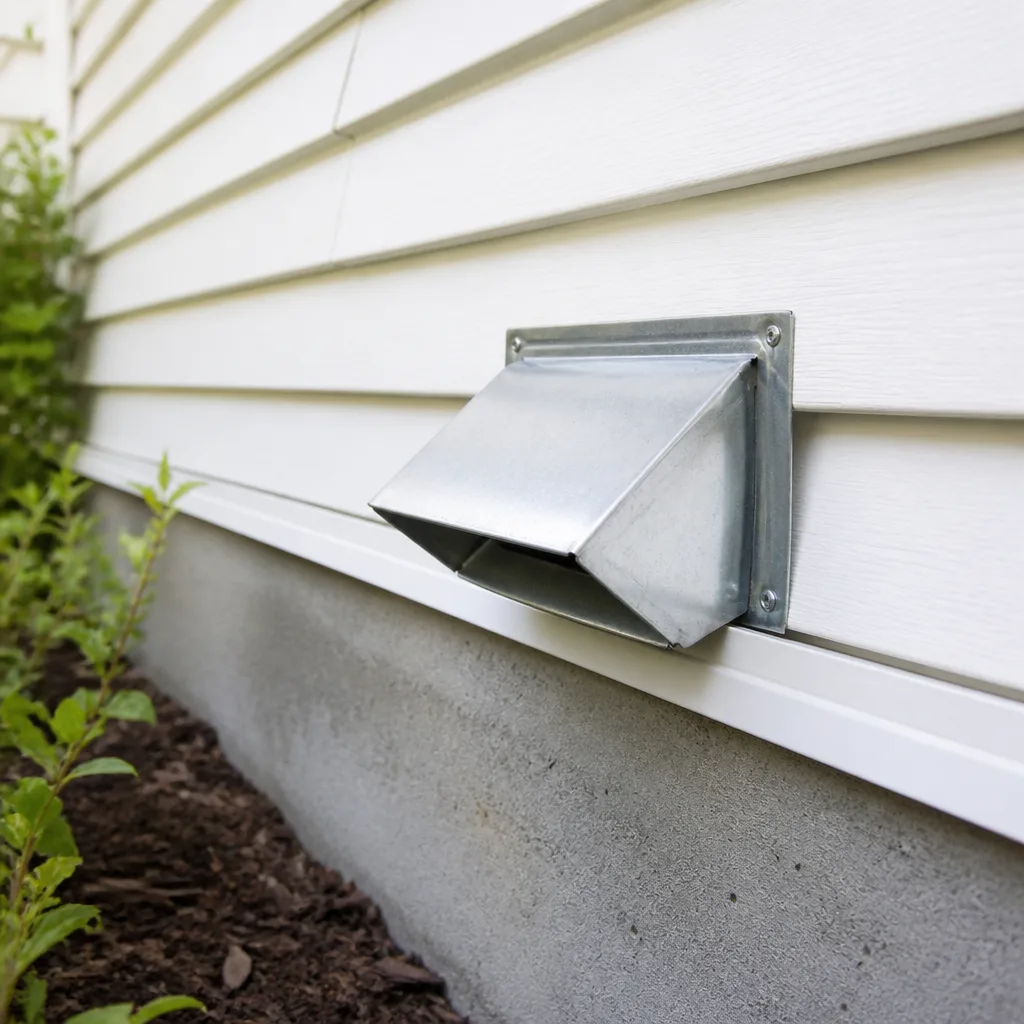 Dryer vent cleaning
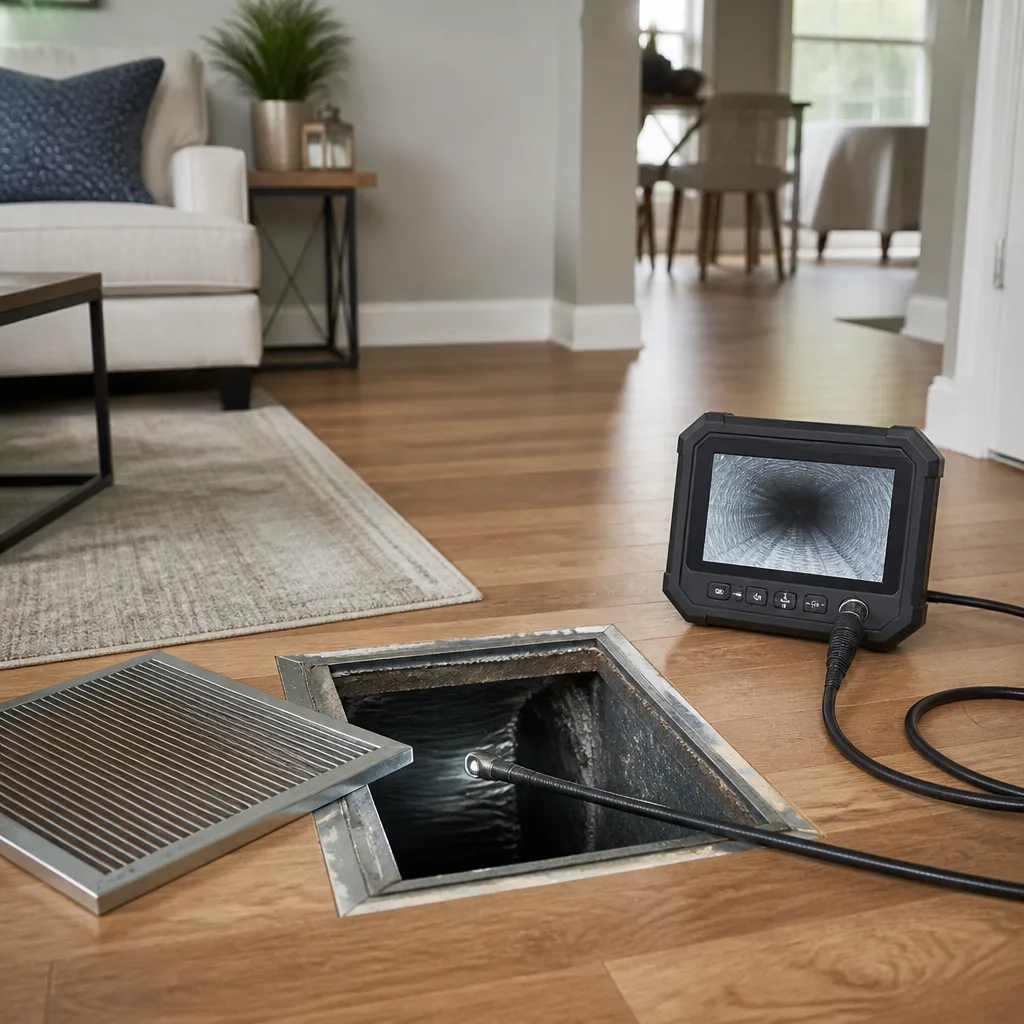 Camera inspection
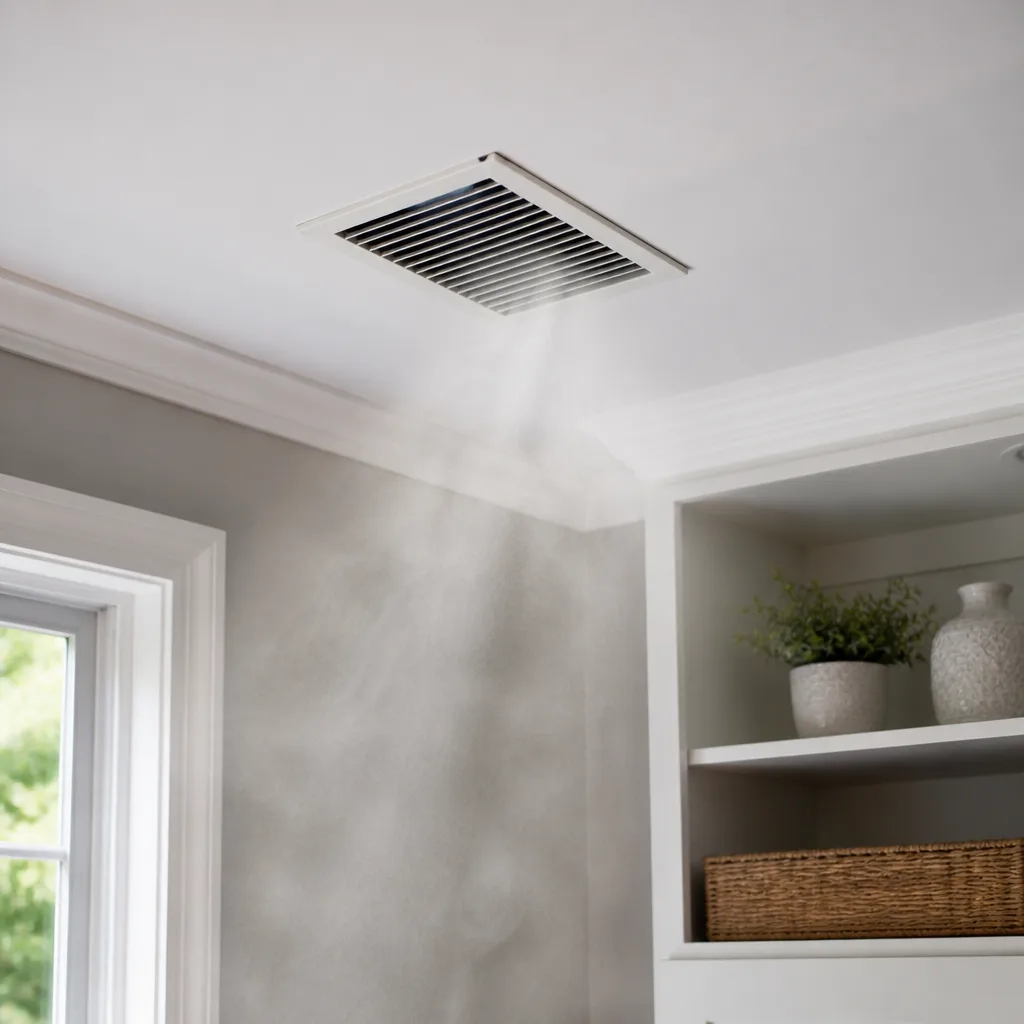 Sanitizing & deodorizing
Whole-system duct and dryer vent check with before-and-after photos - you see exactly what came out of your vents
That "$99 whole-house special" is a bait ad - the real number appears once they are in your hallway, or the "clean" is a shop-vac at the register. We photograph the inside of your ducts before and after instead.
Air Duct Cleaning Emergency Preparedness Guide for Madison Homes
After a kitchen fire, the instinct is to open the windows and turn on the HVAC. That’s exactly the wrong sequence. Running the system pulls smoke particles into the return grilles and pushes them out through every supply register in the house, coating rooms that the fire never touched. The same logic applies after a flood or a severe storm: the duct system becomes the distribution network for whatever contamination is already in the air. This guide walks Madison homeowners through the first 24 hours, the documentation insurers expect, and the decision point where cleaning stops being enough. You’ll learn what to run, what to shut off, and in what order.
Quick Answer
After a fire, flood, or storm event, shut off the HVAC system before you do anything else and keep it off until a technician has assessed the ductwork. Smoke, ash, mold spores, and debris travel through ducts faster than any cleaning crew can follow, so containment comes first and cleaning comes second. In Madison, the correct order is: shut down, document, assess, then clean or replace based on moisture readings and structural condition.
Styles & brands we work with
- Whole-home duct cleaning
- Dryer vent cleaning
- Camera inspection
- Sanitizing & deodorizing
Table of Contents
- What to Do in the First 24 Hours After a Fire, Flood, or Storm
- Why Smoke and Ash Contamination Needs Different Equipment
- Post-Flood Duct Assessment: What Gets Submerged and What Survives
- What to Document for Insurance Before Cleaning Starts
- When Cleaning Is Enough and When the Duct System Needs Replacement
- Equipment That Matters After an Event
- Madison-Specific Risks: Climate, Housing Stock, and Seasonal Storms
- Building an Emergency Preparedness Plan Before the Next Event
What to Do in the First 24 Hours After a Fire, Flood, or Storm
The first 24 hours set the trajectory for everything that follows. After smoke or water enters the home, the duct system either stays contained or it distributes contamination across the entire envelope. The steps below apply to Madison homes whether the event was a contained kitchen fire, a burst pipe, or a storm-driven roof leak.
- Shut off the HVAC system at the thermostat and the breaker. This is the single most important step. A running system pulls contaminated air into the return and distributes it through supply ducts to every room. Turn it off before you open windows or do anything else.
- Stop running the dryer if the vent path crosses an affected area. Dryer vents are a separate airway, but water or debris in the vent run can turn a routine dry into a fire risk. Leave the dryer off until the vent has been checked.
- Open windows and doors for cross-ventilation, but only with the HVAC off. Natural ventilation helps clear airborne smoke or humidity without pushing it through ducts.
- Photograph everything before touching it. That includes duct openings, grilles, visible soot, waterlines on ductwork, and the thermostat setting. Insurance adjusters want the pre-cleaning state.
- Call your insurer before you call a cleaner. Most policies require prompt notification, and many will direct you to an approved remediation contractor. Get the claim number before any work starts.
- Book a duct assessment. A technician confirms which sections were exposed, measures moisture, and gives you a written scope. Cleaning without assessment risks cleaning ducts that should be replaced, or replacing ducts that only need cleaning.
In our experience, the homeowners who end up with the fewest complications are the ones who shut the system down first and ask questions later. That order of operations is free to follow and prevents the majority of avoidable spread.
Why Smoke and Ash Contamination Needs Different Equipment
Smoke residue inside a duct system isn’t just dust with a smell. It’s a mix of fine particulates, acidic soot compounds, and oils that bond to duct walls. Standard vacuuming dislodges the surface layer but leaves the bonded residue, which is why a system that looks clean can still smell of smoke weeks later.
Ash behaves differently again. After a fire, ash settles into the low points of horizontal runs and into the return plenum, and it’s light enough that any airflow picks it back up. Cleaning it requires negative-pressure containment so the ash isn’t redistributed the moment the vacuum starts.
That’s the reason we deploy Abatement Technologies air filtration on-site during post-fire jobs. The filtration units capture particulates as they’re disturbed, holding them in HEPA-class filters rather than recirculating them into the room the technician is working in. Combined with Nikro HEPA-class extraction and Rotobrush rotary-brush agitation, the process reaches the duct wall itself rather than skimming the surface.
Neutralization is the final step, not the first. Sanitizing treatments follow the mechanical cleaning because a sanitizer applied to a soot-coated duct wall doesn’t reach the contamination underneath. The order is brush, extract, contain, then treat. A crew that sanitizes first and cleans second has the sequence backwards.
For more detail on the cleaning process itself, see our guide to air duct cleaning.
Post-Flood Duct Assessment: What Gets Submerged and What Survives
Water damage in ducts is a moisture question, not a visual one. A duct section can look intact and still be growing mold on the interior lining. The assessment has to measure moisture and inspect the lining, not just glance at the exterior.
Duct sections fall into three categories after a flood:
- Submerged sections. Any duct run that was underwater, even briefly, is at high risk of interior lining damage. Fiberglass duct board and flex duct are especially vulnerable because the porous lining holds water. These sections are usually candidates for replacement.
- Moisture-exposed sections. Ducts that were in a damp environment but never submerged may have condensation on the interior walls. Moisture readings tell you whether they can be dried and cleaned or need to come out.
- Structurally compromised sections. Ducts that sagged, separated at joints, or lost their seal after water exposure are no longer an effective air pathway. Repair and sealing is often the fix when the run is otherwise sound.
The assessment happens before any cleaning because wet contamination behaves differently from dry. Vacuuming a wet duct can drive moisture deeper into the lining and spread mold spores that were contained. In Madison, where summer humidity routinely sits high enough that a damp crawlspace stays damp for weeks, moisture in ductwork doesn’t dry out on its own. It has to be measured and addressed.
Our team traces the full air pathway, from return grille to blower unit, before any cleaning begins. On a post-flood job that means opening access panels, checking every joint, and taking readings at multiple points. For related HVAC-side assessment, our HVAC cleaning page covers what equipment cleaning involves after water exposure.
What to Document for Insurance Before Cleaning Starts
Insurance claims after a fire or flood hinge on documentation, and ductwork is one of the most commonly under-documented parts of a claim. The adjuster can’t see inside the ducts, so the paperwork has to show them what was there.
Document these items before cleaning starts:
- Photographs of every register and return grille. Show soot, waterlines, and debris at each opening, with the room identifiable in the frame.
- Moisture readings with the meter visible. A photograph of the reading on the meter at each test point is far stronger than a written number alone.
- Before-cleaning photographs of duct interiors. The technician needs to capture the inside of the duct runs before the brush touches them. Those photos are the baseline the insurer compares against the post-cleaning photos.
- A written technician assessment. This should identify which sections were affected, how they were affected, and what the recommended scope is. It should read as a diagnosis, not a sales quote.
- The scope of work with the cleaning, repair, and replacement recommendations separated. Adjusters want to see the reasoning behind each line item.
Our technicians have up to 15 years of experience with post-event documentation, and we take before-and-after photos of the actual ducts we work on, not stock images. Those photos serve the homeowner twice: once for the claim and once as proof the work was done.
When Cleaning Is Enough and When the Duct System Needs Replacement
The choice between cleaning and replacement comes down to four factors: material, moisture, structure, and contamination type. Get those four right and the recommendation follows.
Cleaning is usually sufficient when:
- The duct material is metal and the contamination is surface-level soot or dust
- Moisture readings are within normal ranges after drying
- The runs are structurally intact and joints are still sealed
- Contamination is from smoke, ash, or dry debris that hasn’t bonded to porous surfaces
Replacement is usually the recommendation when:
- The duct is fiberglass board or flex duct that was submerged or saturated
- Mold growth has penetrated the interior lining of a porous duct
- Sections have collapsed, separated, or lost their structural integrity
- The contamination is extensive enough that cleaning can’t reach it reliably
The threshold for homeowners in Madison often comes down to one question: is the duct material porous and did the water actually reach it? Metal duct that got damp but not submerged is generally cleanable. Flex duct that spent a night underwater usually isn’t. When a run is structurally sound but leaking, duct repair and sealing is the in-house fix rather than replacement, and we perform that work on the same visit as the cleaning rather than referring it out.
Equipment That Matters After an Event
The equipment distinction matters most after a fire or flood, because standard cleaning tools can’t handle the containment requirements. Store-bought vacuums and consumer shop vacs don’t hold a HEPA seal and can blow fine soot back into the room. That’s a distinction worth asking about when you’re comparing quotes in Madison.
The equipment that belongs on a post-event job:
- Rotobrush rotary-brush systems for agitating soot and ash off duct walls, not just vacuuming the surface
- Nikro HEPA-class equipment for negative-pressure extraction during cleaning
- Abatement Technologies air filtration deployed on-site to capture particulates in real time
- Moisture meters and access cameras for assessment before and after
On the air-quality side, we integrate Honeywell and Aprilaire products so the work doesn’t stop at the duct opening. Filtration and humidity control in the living space reduce the load the duct system sees going forward. Guardsman components are also part of the equipment lineup for repair and sealing work. For dryer vent exposure, which is its own airway and its own fire risk, see dryer vent cleaning.
Madison-Specific Risks: Climate, Housing Stock, and Seasonal Storms
Madison sits in a climate where the emergency scenarios look different from a coastal market. There’s no salt air to worry about, but there is humidity that lingers, storms that arrive fast, and a housing mix where duct systems range from recent builds to older configurations with flex duct in the attic.
The three event types that hit Madison homes hardest:
- Summer humidity and mold risk. After a water event in July or August, the interior of a damp duct system is set up for mold growth within days. Moisture readings taken early are the difference between cleaning and replacing.
- Severe storm damage. Wind-driven rain and fallen tree limbs can breach the roof and the duct boots in one event. Attic ductwork that gets wet needs assessment before anyone runs the system again.
- Winter chimney and fireplace incidents. Smoke from a chimney backdraft or a fireplace incident behaves like any other smoke event, and the duct system distributes it the same way.
Madison-area neighborhoods including Madison Heights, Neely’s Bend, and the streets around Old Hickory Boulevard see a mix of older housing stock and newer construction, and the duct design differs enough between them that a single cleaning method doesn’t fit both. A standard-particulate cleaning on an older flex system doesn’t address the same conditions as a newer metal system after a smoke event. For Madison homeowners, the assessment step is what separates a real scope from a generic one.
Building an Emergency Preparedness Plan Before the Next Event
The cleanest emergency response is one that was planned before the emergency. A few prep steps take an hour and eliminate most of the confusion during a fire or flood.
- Know where the HVAC breaker is. In most Madison homes it’s in the main panel, but verify it before you need it. A labeled breaker saves minutes in a smoke event.
- Photograph the inside of your duct system now. A pre-event baseline gives the insurer a comparison point after any future damage and makes post-event documentation airtight.
- Store your insurance policy number and the claim line somewhere you can reach without entering the house. A phone photo of the policy page works.
- Save the number for a duct assessment. Have it available so you’re not searching during the first hour of a fire event.
- Schedule a fall assessment if you have attic ductwork. Storm season changes what’s exposed, and an annual inspection catches roof leaks before they reach the duct system.
We answer 24/7. Fast dispatch from 7am to 7pm, Sunday through Friday. For more on the full scope of what we do, visit Madison Air Duct Cleaning Co.
Common Mistakes to Avoid
- Turning on the HVAC after a fire to “clear the air.” This is the single most damaging mistake. The system distributes smoke particles to every room within minutes. Keep it off until the ducts have been assessed.
- Sanitizing before cleaning. A sanitizer sprayed on soot doesn’t reach the contamination beneath it. Cleaning has to come first, and sanitizing follows.
- Skipping the moisture readings on a flood job. In Madison’s summer humidity, damp duct lining that reads “dry to the touch” can still be growing mold. Insist on meter readings with the meter visible in the photo.
- Letting a cleaning crew start before the insurer has been notified. Cleaning before documentation can complicate a claim. Notify the insurer and photograph the pre-cleaning state first.
- Assuming a low quote covers the whole job. Bait-and-switch pricing is a known problem in this trade. A quote that’s dramatically lower than every other quote is usually excluding containment or replacement of compromised sections. One flat price per system, agreed before work starts, is the version that holds up.
- Running the dryer before the vent has been checked after a flood. A dryer vent that took on water or debris is a fire risk. Leave the dryer off until the vent has been assessed.
- Replacing ducts that only needed cleaning. Metal duct that got damp but wasn’t submerged is usually cleanable. Get a written assessment before accepting a replacement recommendation.
See the difference
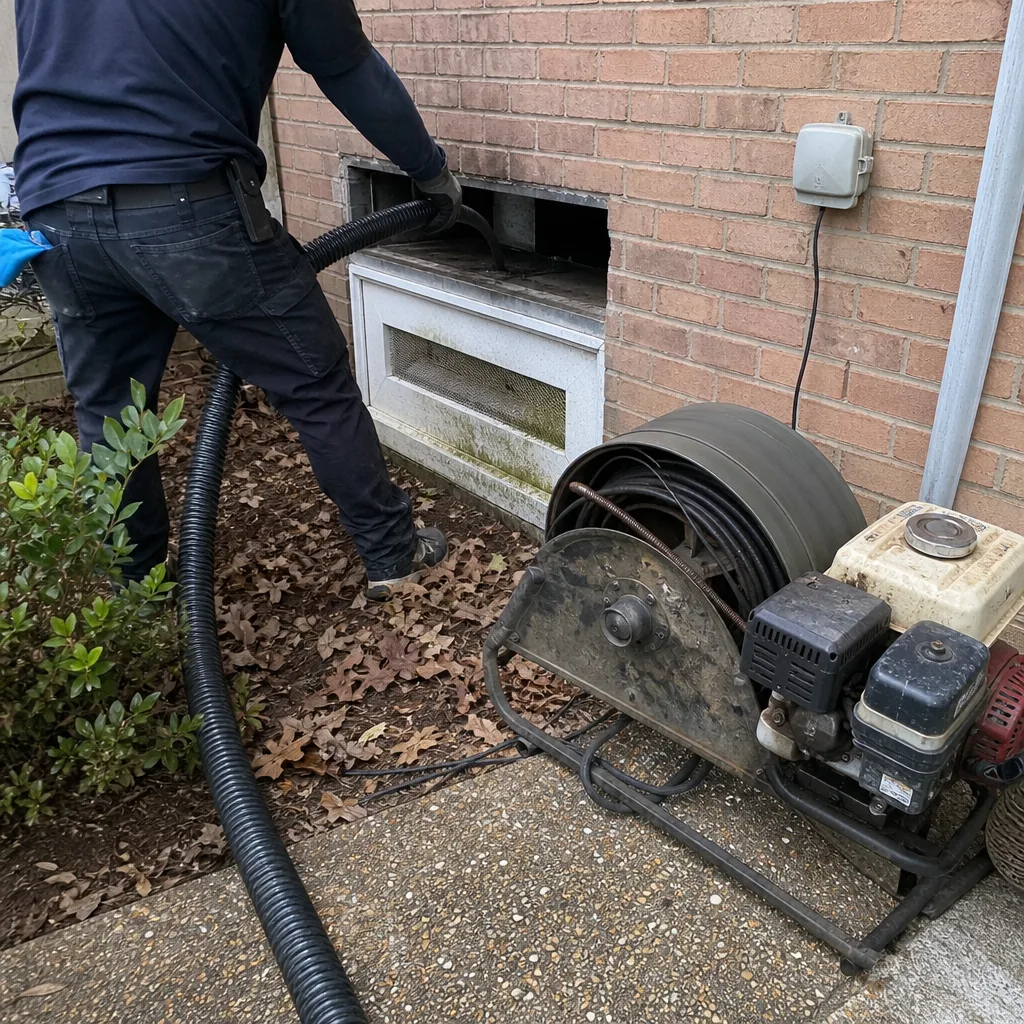 Before
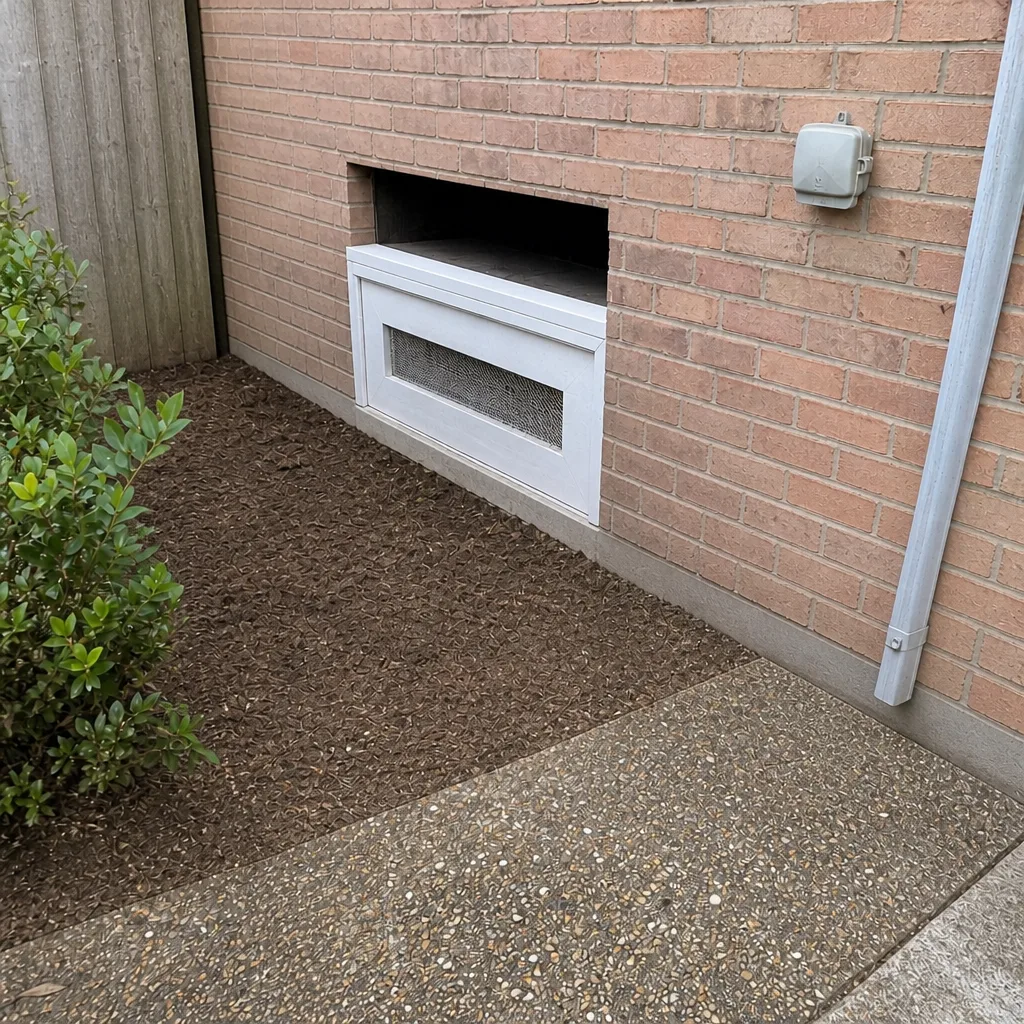 After
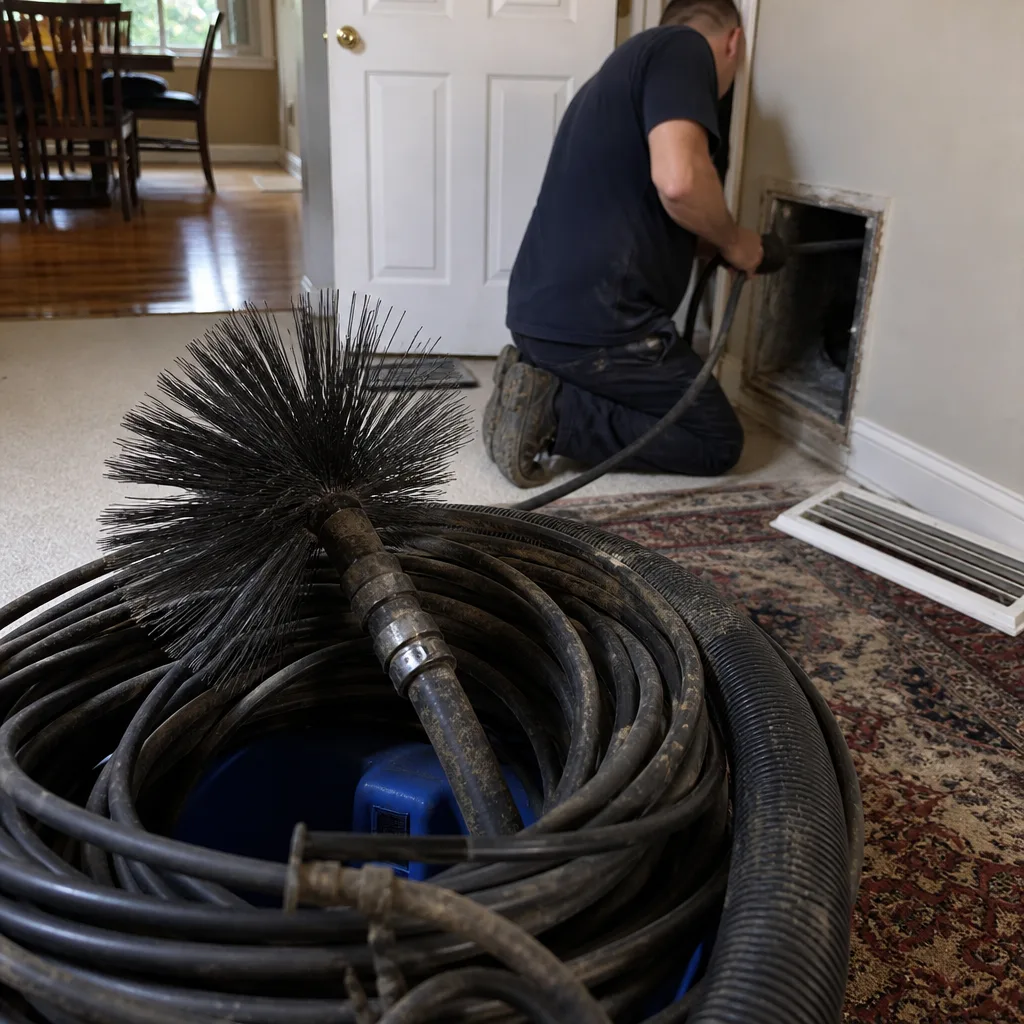 Before
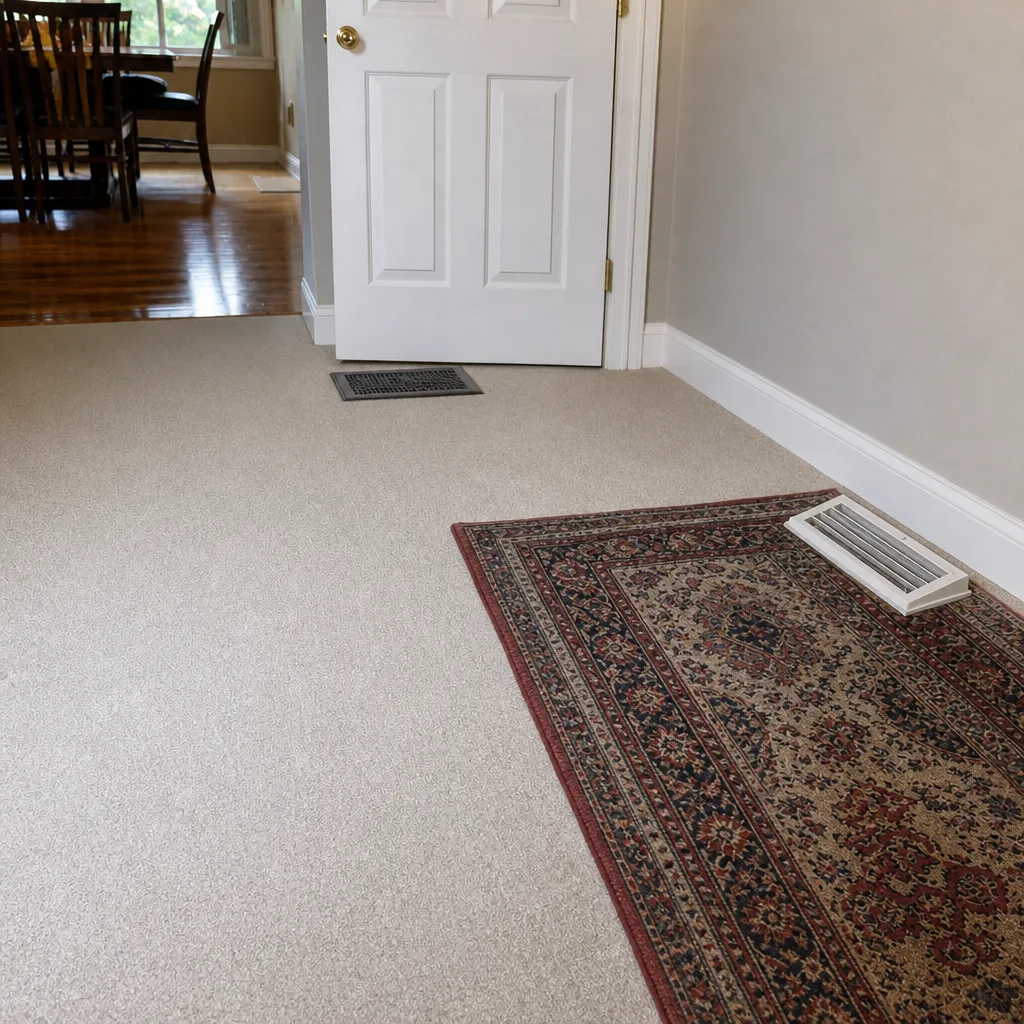 After
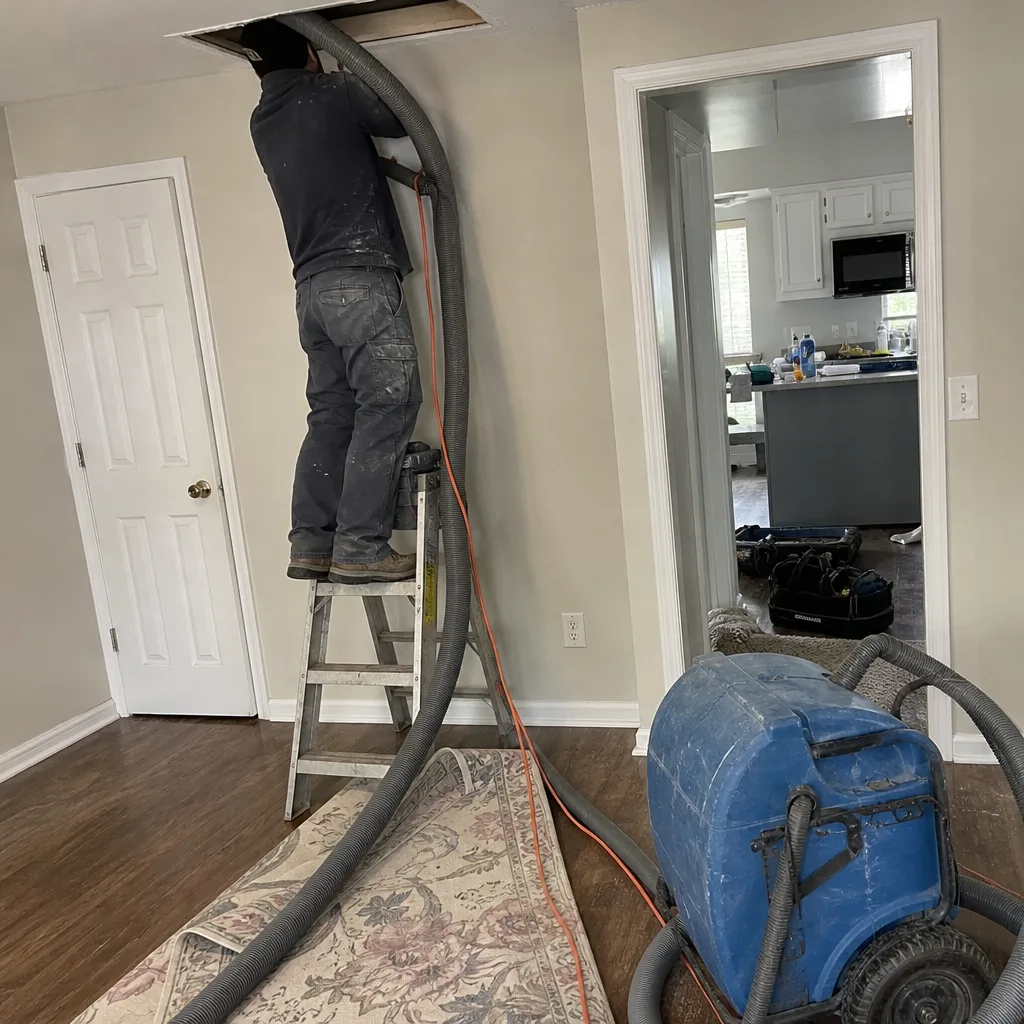 Before
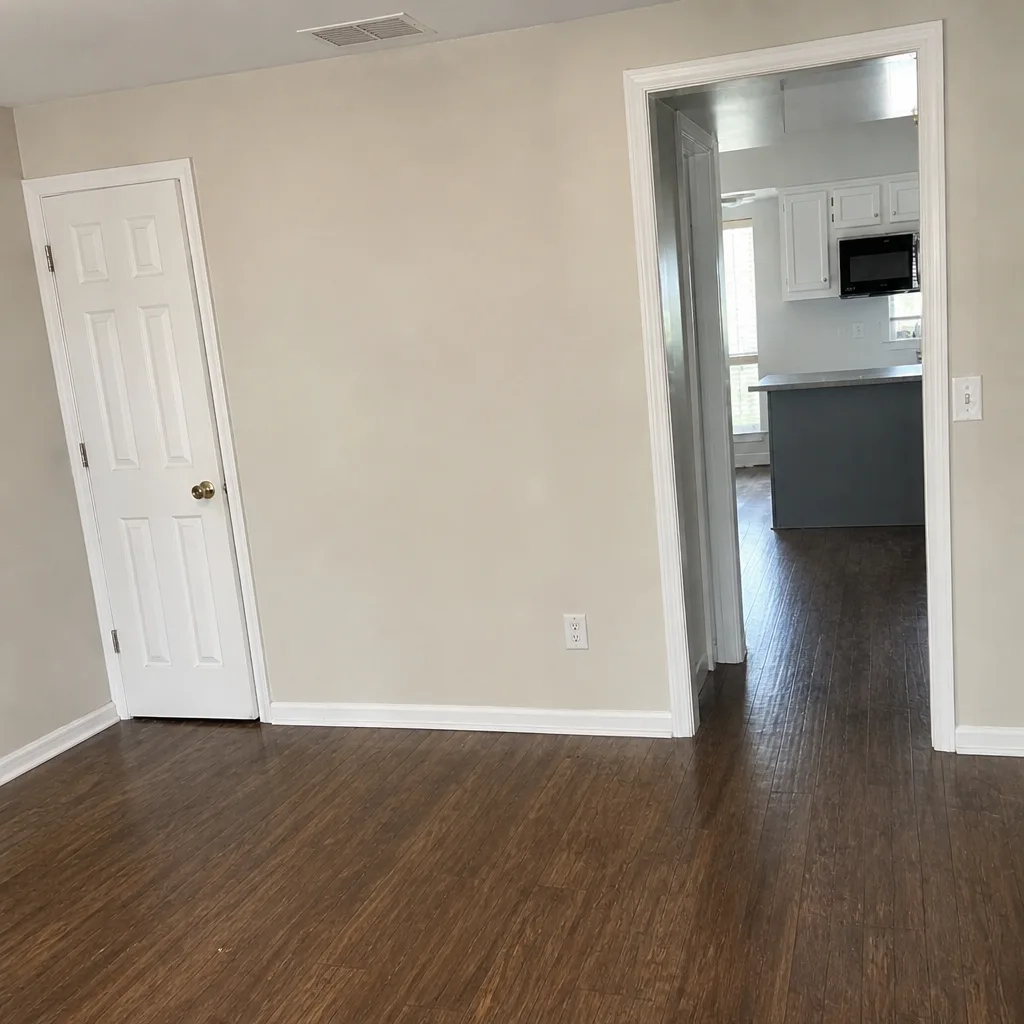 After
When to Call a Professional
Call a professional duct assessment after any fire involving smoke reaching the HVAC returns, any water event that reached or submerged ductwork, any storm that breached the roof or duct boots, and any event after which the HVAC ran while contamination was present. Call immediately if you smell smoke or musty odors from the vents weeks after the event, if the system short-cycles after a water event, or if an adjuster has asked for a duct-specific scope. Also call if a previous cleaning left visible debris behind: a cleaning that didn’t include containment or a written scope is worth re-assessing. Madison Air Duct Cleaning Co offers free estimates in Madison and uses Rotobrush, Nikro, and Abatement Technologies equipment on every post-event job. Call (844) 443-4890. We answer 24/7. Fast dispatch from 7am to 7pm, Sunday through Friday.
Frequently Asked Questions
No. Shut the HVAC off at the thermostat and the breaker immediately after a fire, before doing anything else. Running the system pulls smoke and soot into the return grilles and distributes it through every supply register, spreading contamination to rooms the fire never touched. Keep the system off until a technician has assessed the ductwork and the cleaning has been completed.
Within 24 to 48 hours of the water receding. In Madison’s summer humidity, mold can begin colonizing damp duct lining within a few days, and the longer the delay, the more likely a duct section that could have been dried has to be replaced. Call (844) 443-4890 for an assessment. We answer 24/7. Fast dispatch from 7am to 7pm, Sunday through Friday.
It often does, but the coverage depends on your specific policy and on the documentation submitted with the claim. Photograph every register before cleaning, get moisture readings with the meter visible in the image, and ask for a written technician assessment with the cleaning, repair, and replacement recommendations separated. Notify your insurer before any cleaning starts.
Ask for before-and-after photos of your own ducts, not stock images. A real cleaning includes mechanical agitation with a rotary-brush system, HEPA-class extraction, and containment equipment on-site. Sanitizing alone doesn’t remove soot, ash, or bonded residue, so if a quote offers sanitizing without mechanical cleaning, that’s a warning sign. Call (844) 443-4890 for an exact scope. Estimates are free.
Sometimes, yes. Metal duct that got damp but was never submerged can usually be dried, cleaned, and returned to service. Fiberglass board duct and flex duct that were submerged or saturated are usually replacement candidates because the porous lining holds water. The determination is made with moisture readings during the assessment, not a visual inspection.
Low quotes typically exclude containment, HEPA-class extraction, or replacement of compromised sections. After a fire or flood, containment isn’t optional: without negative-pressure equipment, the cleaning itself redistributes soot into the living space. We give one flat price per system, agreed before work starts, with the full scope in writing. Call (844) 443-4890. Estimates are free.
The Bottom Line
The order of operations matters more than the speed. Shut the HVAC off first, document before you clean, assess moisture before you recommend replacement, and clean before you sanitize. In Madison, a post-event duct job on a working system needs Rotobrush agitation, Nikro HEPA-class extraction, and on-site Abatement Technologies filtration to hold contamination in the equipment rather than the house. The documentation phase is what makes an insurance claim stand up, and the assessment phase is what tells you whether you’re cleaning or replacing. Get both right and the rest of the job follows. Call (844) 443-4890 for a free estimate. We answer 24/7. Fast dispatch from 7am to 7pm, Sunday through Friday.
Written by the team at Madison Air Duct Cleaning Co.