
Last updated November 24, 2026
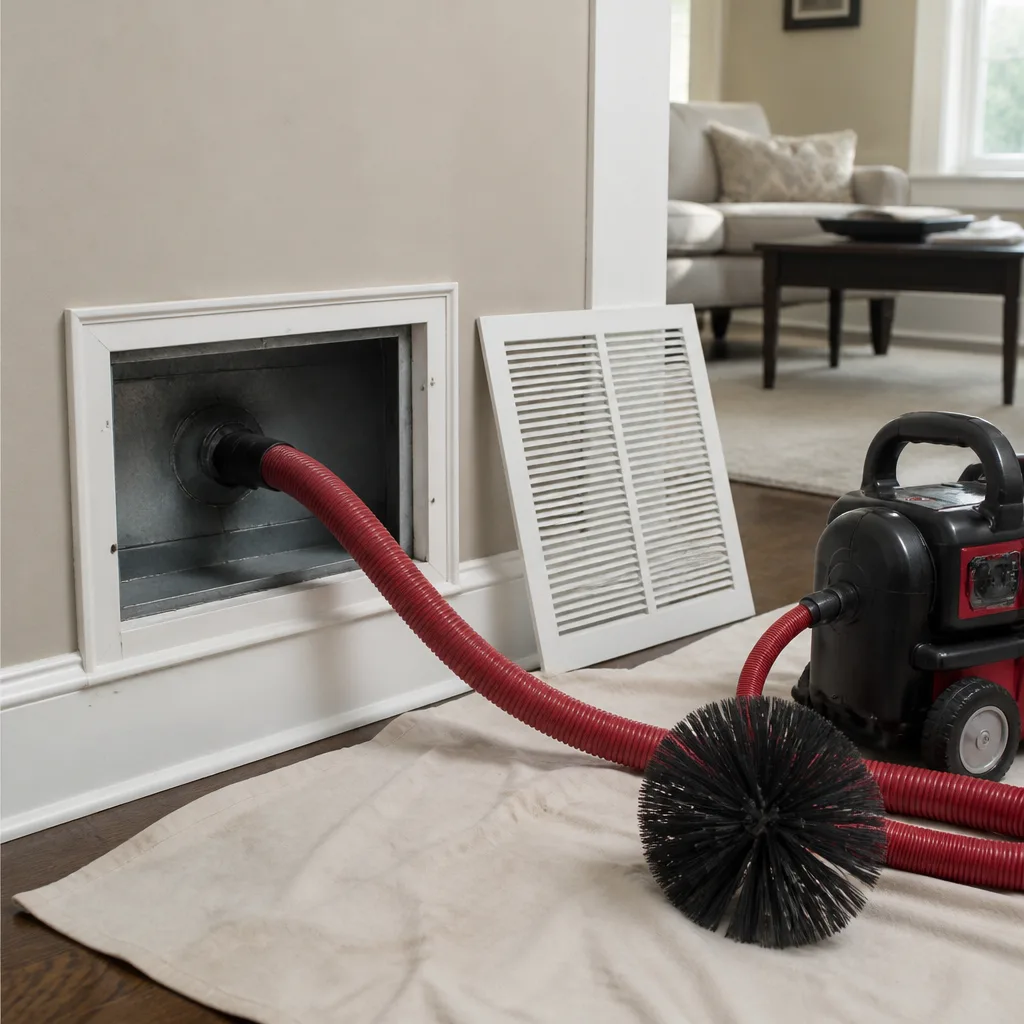 Whole-home duct cleaning
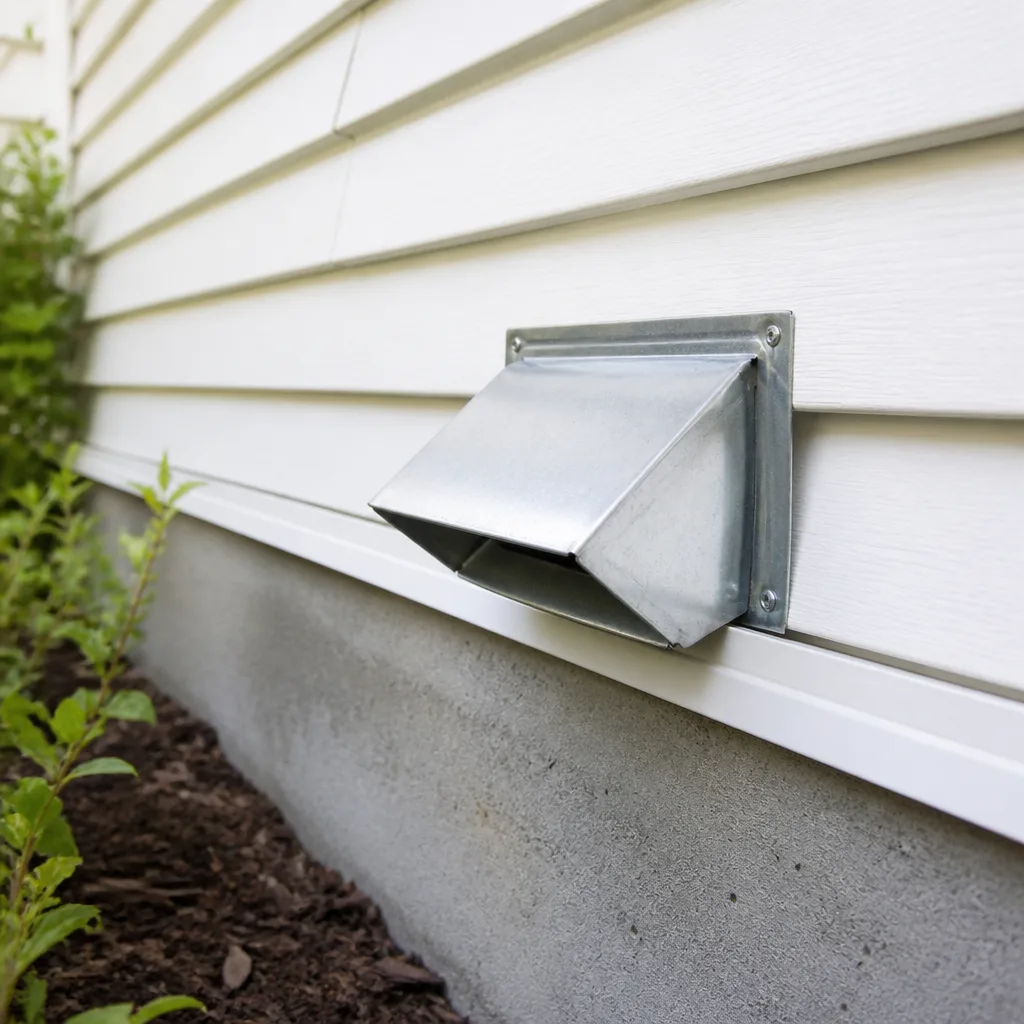 Dryer vent cleaning
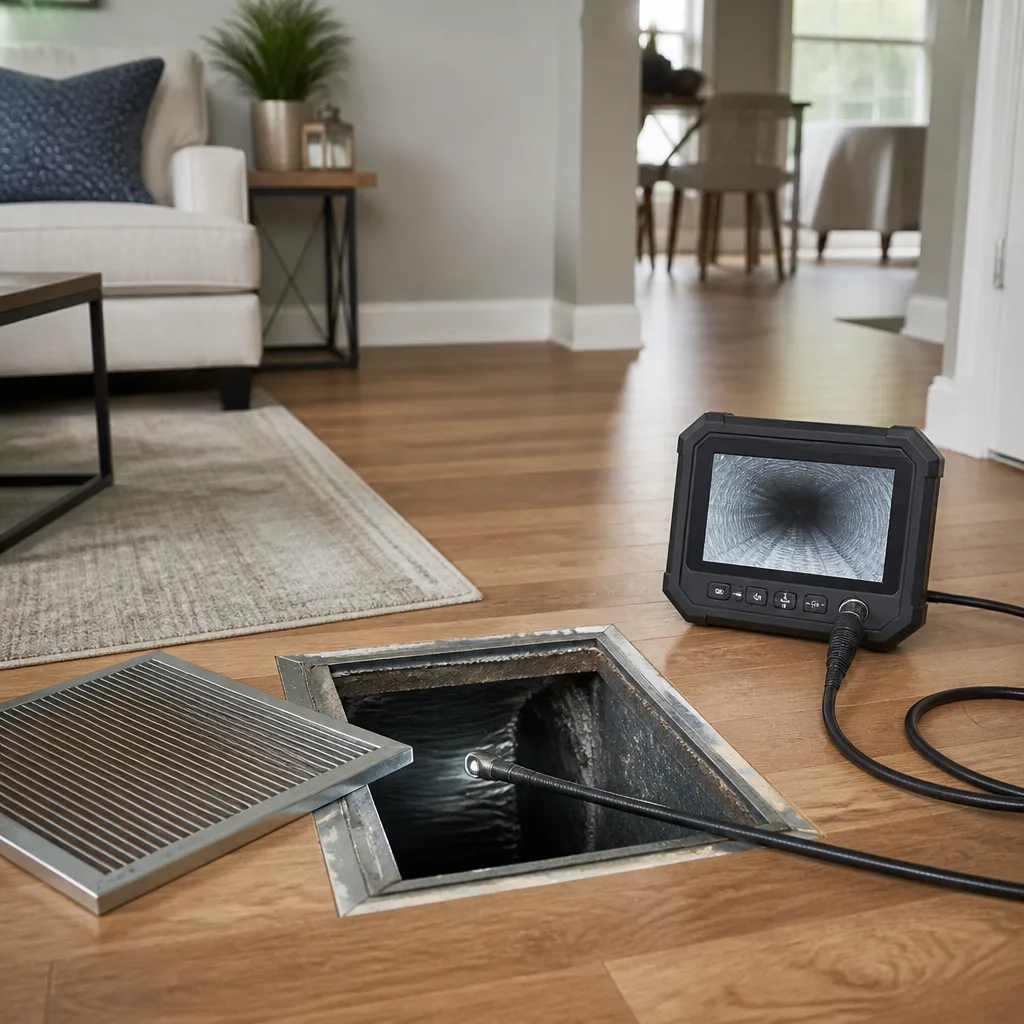 Camera inspection
 Sanitizing & deodorizing
Whole-system duct and dryer vent check with before-and-after photos - you see exactly what came out of your vents
That "$99 whole-house special" is a bait ad - the real number appears once they are in your hallway, or the "clean" is a shop-vac at the register. We photograph the inside of your ducts before and after instead.
Air Duct Cleaning Maintenance Schedule: What to Do and When
The often-quoted recommendation to clean your ducts every three to five years is a starting floor, not a real maintenance plan. It ignores the things that actually decide how fast a duct system gets dirty: your filter’s MERV rating, how many pets share the house, whether you’ve renovated recently, and whether the ducts are even sealed well enough to hold a clean result. A schedule built around those variables keeps duct work a routine cost instead of a frantic call once the vents start puffing dust. This guide lays out a month-by-month calendar tuned to Middle Tennessee’s humidity and pollen seasons, the event-based triggers that override any calendar, and how to document your system so the next visit is faster and more accurate. Madison Air Duct Cleaning Co wrote it for homeowners and property managers who want the schedule to fit the house, not the other way around.
Quick Answer
Most Madison homes need professional air duct cleaning roughly every three to five years, but the real schedule depends on your filter choice and what’s happened in the house: pet additions, renovations, water intrusion, or a new HVAC system all reset the clock. Between professional cleanings, check and change your filter on a set rhythm, inspect the supply and return grilles each season, and keep a simple written record of every service. Annual inspection, cleaning every few years, and event-triggered visits as things come up is the plan that holds the system clean longest.
Styles & brands we work with
- Whole-home duct cleaning
- Dryer vent cleaning
- Camera inspection
- Sanitizing & deodorizing
Table of Contents
- Why the “Every 3-5 Years” Rule Is Just the Floor
- A Month-by-Month Duct Maintenance Calendar for Middle Tennessee
- How Filter MERV Rating Changes Your Cleaning Frequency
- Event-Based Triggers That Override the Calendar
- What You Should Inspect Yourself vs. What Needs Professional Equipment
- How to Track Your Duct History for the Next Technician
- Signs It’s Time to Move the Cleaning Up
- A Maintenance Schedule for Rental Properties and Property Managers
Why the “Every 3-5 Years” Rule Is Just the Floor
A single national number can’t fit a house full of shedding dogs and a house with two quiet adults, and the trade knows it. The three-to-five-year figure works as a baseline for an average occupied home with a mid-range filter and no unusual dirt sources. Start adding variables and it stops being useful. A remodel that kicks up drywall dust, a leak under the house that wets a section of flex duct, or a filter that’s too restrictive or too permissive to catch fine particles will change how fast a just-cleaned system gets dirty again. We’ve seen systems that looked clean two years after a proper clean and others that needed attention inside eighteen months.
The point isn’t to clean more often. It’s to clean on evidence. A real schedule tracks three things:
- Dirt load – what’s actually settling on the duct walls, not just what you can see through a grille.
- Filtration – whether the filter is a match for the equipment and the house.
- Air-path integrity – whether the ducts are sealed well enough to hold a clean result once it’s achieved.
Miss the third one and you clean a leaky duct system every couple of years for nothing. This is why Madison Air Duct Cleaning Co treats cleaning and duct repair and sealing as the same conversation, not two separate jobs. The cleaning removes what’s there; sealing keeps it from coming back through gaps and disconnected joints.
A Month-by-Month Duct Maintenance Calendar for Middle Tennessee
Middle Tennessee runs two humid seasons and a long, heavy pollen stretch, and a duct schedule that ignores those patterns wastes money. The calendar below is a rhythm to adapt, not a fixed law. Move the professional items when the system tells you to, but keep the habit of checking on a schedule.
January – February (heating peak). Check your filter once a month instead of stretching it. Cold-season run time is high, so a filter that lasts three months in summer may need changing every four to six weeks. Look at the supply grilles for dark streaks; that tells you the system is pulling dirt through.
March – May (pollen and spring storms). This is Middle Tennessee’s heaviest pollen window, and a good filter is working hard. Note the grilles and register covers for build-up. If you’ve had a spring storm push water into a crawlspace or attic near duct runs, that’s a professional inspection trigger, not a “wait and see” situation.
June – August (humidity peak). High humidity is when a poorly sealed system can let moisture and dust combine inside duct runs. Watch for musty smells at the vents or condensation at the register boots. This is also when AC run time is highest, so filter checks stay on the short rhythm.
September – October (shoulder season). The best window for a full professional air duct cleaning if your system is near its interval – moderate weather means the system isn’t working hard when it’s off for a few hours. This is also a smart time to schedule an inspection if you’ve never had one.
November – December (heating startup). Before you rely on the furnace, have a technician confirm the HVAC unit is clean and the blower compartment is free of debris. A dusty blower throws dirt straight back into the ducts.
Write the dates down. A calendar you never maintain isn’t a schedule; it’s an intention.
How Filter MERV Rating Changes Your Cleaning Frequency
Your filter is the single biggest lever on how quickly a clean duct system re-contaminates, and it’s the item most homeowners get wrong in both directions. A cheap fiberglass filter catches almost nothing, so fine dust blows straight past and settles on the duct walls. A filter rated too high for the blower can choke airflow, and restricted airflow causes its own problems. Matching the filter to the equipment is where the schedule actually starts.
Here’s how the MERV scale typically plays out for a residential system:
- MERV 1-4 (basic fiberglass): Catches large debris only. Ducts in these homes load up fastest. Plan on the short end of the cleaning interval.
- MERV 8 (the common residential workhorse): A reasonable balance of capture and airflow. This is where most homes should start, and it supports a normal cleaning interval.
- MERV 11-13 (higher capture): Catches finer particles, including pollen and some pet dander, but adds resistance. Confirm with your HVAC technician that the blower can handle it before you switch.
- MERV 16 and hospital-grade: Rarely a fit for a standard home system. High restriction, short filter life, and a real risk of starving the blower.
The important habit is this: change your filter on a set rhythm, and note the rating each time. If you step up from a fiberglass filter to MERV 8, your ducts stay cleaner for longer, and you can stretch the interval toward the five-year end. If you drop back to a thin filter to “save money,” you’re paying for it at the next professional clean. When we clean a system, we look at what filter has been running – it tells us a lot about why the ducts got as dirty as they did. We also integrate Honeywell filtration products when a homeowner wants to move from cleaning into long-term air-quality improvement, because the right filter and housing for the system matters more than the marketing on the box.
Event-Based Triggers That Override the Calendar
Some things reset the clock no matter what month it is. If any of these happen, schedule a professional assessment regardless of when your last cleaning was. Event triggers matter more than the three-to-five-year rule because they involve a specific new source of contamination.
- A new pet joins the household. Pet dander and hair are the most common reason ducts load up faster than a homeowner expects. A cat or a dog with free run of the house is enough to move a system from a five-year interval toward three.
- Renovation or drywall work. Fine gypsum dust is relentless, and it settles through the whole air path even when you tape off the room. Clean after the renovation, not before. A post-project cleaning is one of the more valuable jobs we do.
- HVAC replacement or major repair. A new system deserves a clean duct run to work with, and the install is the cheapest moment to check for disconnected joints and dust trapped in the old plenum.
- Water intrusion or a musty smell. Any water in a crawlspace, attic, or around a register is a professional call. Duct interiors that stay damp are a different problem than dirt, and they need to be addressed, not masked with a spray.
- Pest activity. Rodent or insect activity in ductwork is a cleaning and inspection trigger, and often a repair trigger if gnawed flex duct is found.
- Moving into a new home. You don’t know the previous owner’s maintenance habits. A first-year inspection on an unfamiliar system is the single best way to start a schedule from a known baseline.
When we find a trigger condition while we’re already in the system, it makes sense to act on it – this is why Madison Air Duct Cleaning Co holds duct repair and sealing in-house rather than handing structural follow-up to someone else. If we open the return and find a gap or a disconnected run, we can correct it on the same visit.
What You Should Inspect Yourself vs. What Needs Professional Equipment
A maintenance schedule works only if you split the tasks honestly. Some checks absolutely belong to the homeowner, and doing them saves money. Other tasks will never produce a real result without the right machinery, and attempting them risks making things worse. Here’s the line.
What you should check and document yourself, every season:
- Filter condition and rating. Note the MERV number and the replacement date.
- Supply and return grille appearance – streaks, dust build-up, discoloration.
- Airflow at each register. A weak vent that used to be strong is a signal.
- Odors. A musty or dusty smell at the vents is worth writing down.
- Visible condensation at register boots or around the air handler.
- Any new noise – popping, whistling, or rattle – when the system cycles.
What needs professional equipment and a trained eye:
- Inside the duct runs themselves. A flashlight through a grille shows you the first foot, not the whole run.
- Negative-pressure containment. A shop vacuum increases the problem by stirring up dust without capturing it.
- Rotary-brush extraction. Duct walls hold onto hardened, stuck-on dirt. This is what a Rotobrush system is designed to break loose, and it’s the professional standard.
- HEPA-class extraction throughout the job. Nikro equipment holds a seal on the system while the work happens so the dust you dislodge leaves the house instead of landing on your furniture.
- Sealing and repair. Tape and caulk from a hardware store won’t hold on duct runs the way mechanical sealing does. This is the difference between a clean result that lasts and one that doesn’t.
- Air-path tracing. We trace the full pathway from return grille to blower unit before any cleaning begins – that’s how you find the hidden sections, the disconnected runs, and the dead legs that a shop vac will never touch.
The honest split is this: anything you can see with open eyes and access, you should check.
Anything that lives behind sheet metal or flex duct needs the right tooling behind it. Professional-grade Rotobrush and Nikro systems, not shop vacuums in a van, are what make a duct cleaning mean something. We also deploy Abatement Technologies air filtration during jobs, actively capturing dislodged contaminants in real time rather than letting the machine recirculate them into the room. For a homeowner who wants a single company that covers the full scope – air duct cleaning, dryer vent work, HVAC unit cleaning, sanitizing, and duct repair – that’s the model that keeps the schedule simple.
How to Track Your Duct History for the Next Technician
The most underrated part of a duct maintenance schedule is the record. Most homeowners can tell you when they last had the system cleaned, and almost none can tell you what that clean covered, what was found, or what filter was running. That’s a problem, because the next technician starts from scratch and can’t build on the last visit. A simple written history fixes that and makes every future visit faster and more accurate.
Keep a single note – paper, a phone note, a folder, anywhere reliable – with these items:
- Date and scope of each professional service. Note whether the clean covered supply and return, dryer vent, HVAC unit, and whether sealing was done. Different scopes mean different intervals.
- Filter log. MERV rating and change dates. This single line tells the technician more than anything else about how the system has been fed.
- Findings. Any repair, any damaged run, any disconnected joint, any area flagged for follow-up. If sealing was done, note where.
- Event notes. Date of a renovation, new pet, HVAC replacement, water intrusion. These reset the interval and a technician needs to know when.
- Photographs. Before-and-after photos of your own ducts are the record that proves the work. Ask for them at every service and keep them.
When you call Madison Air Duct Cleaning Co, having that record means the technician arrives already knowing the system’s history. We photograph the before and after of the work on every job, and those photos become part of your file. That’s how a schedule stays evidence-based instead of guesswork.
Signs It’s Time to Move the Cleaning Up
Even with a calendar, the system itself will tell you when it’s time. If you start seeing any of these, move the cleaning up and schedule an inspection – don’t wait for the next interval. These are visible signals, and each one points to a specific kind of build-up or a specific problem worth scoping.
- Visible dust or dark build-up at the return grille. The return is the first place dirt collects. A dark, fuzzy return face means the system is pulling heavy load.
- Dust settling on furniture faster than usual. When surfaces in the house collect dust within days of cleaning, the dirt source is often inside the air path.
- A musty or stale smell when the system cycles on. Odor at startup points to what’s sitting in the duct run and, if it’s humid, to the moisture that’s feeding it.
- Weak airflow at some registers and strong at others. Inconsistent airflow usually means a blocked, disconnected, or restricted run – a duct repair or sealing issue, not just dirt.
- Allergy symptoms that seem seasonal and location-specific. Not a diagnostic; just one more reason to have the system checked if the calendar has come up.
- Recent renovation with no follow-up clean. Drywall dust moves through the whole air path, and the “next interval” isn’t the answer.
Every one of these is a good reason to schedule an assessment. None of them is a reason to attempt duct cleaning with rented equipment. The tooling matters, and the tools required for a proper clean aren’t sold in a big-box store.
A Maintenance Schedule for Rental Properties and Property Managers
Property managers face the schedule problem from a different angle. A single-family rental with frequent tenant turnover loads up faster than an owner-occupied home, and a tenant complaint of “musty air” is harder to resolve once it’s sitting in a lease dispute. A written maintenance schedule solves both. It sets an inspection rhythm independent of turnover and gives you documentation that the unit was serviced to a professional standard.
A sensible property-manager flow:
- Baseline at acquisition. Before a new property enters the portfolio, get an inspection and document the state of the duct system with photographs. This is the record your future schedule builds on.
- Inspect on turnover. Every tenant change is a natural check point. Note filter condition, airflow, and any visible grille build-up.
- Clean on an interval. Base the interval on the property type, occupancy, and whether pets are allowed. A house that allows pets and has frequent turnover will be on the short end.
- Repair and seal as found. Disconnected or damaged runs found during inspection should be corrected on the same visit. We repair what we find, on the same visit, which avoids a second trip and a second booking.
Multi-unit buildings benefit from the same record-keeping approach. If your portfolio is in the Madison area, our team can provide a free estimate and walk the property to establish a baseline. The full-service scope – duct cleaning, dryer vents, HVAC units, and sealing – under one company keeps the schedule simple across an entire portfolio.
Common Mistakes to Avoid
- Treating the three-to-five-year figure as a hard rule. It’s a floor, not a plan. A system with pets, a recent renovation, or a basic fiberglass filter will need attention sooner, and one with a well-sealed duct run and a good filter can go longer.
- Swapping to a higher MERV filter without checking airflow. A filter your blower can’t handle restricts airflow, and that causes its own set of problems. Confirm the rating with your HVAC technician before you step up.
- Cleaning the ducts before a renovation, then stopping. The thorough clean belongs after the drywall work, not before. Drywall dust moves through the entire air path within days of the job.
- Ignoring a musty smell as “just old-house smell.” Odor at the vents is a specific signal worth an inspection, especially in Middle Tennessee’s humid months.
- Hiring on price alone and skipping the equipment. A shop vacuum in a van doesn’t clean a duct run. Ask what equipment is going to be used, and expect a named system.
- Skipping the record-keeping. If you can’t tell the next technician what was done last time, they start blind. The record is part of the process.
- Cleaning without sealing. A clean, leaky duct system re-contaminates faster than a clean, sealed one. If the ducts are leaking, seal them as part of the schedule.
See the difference
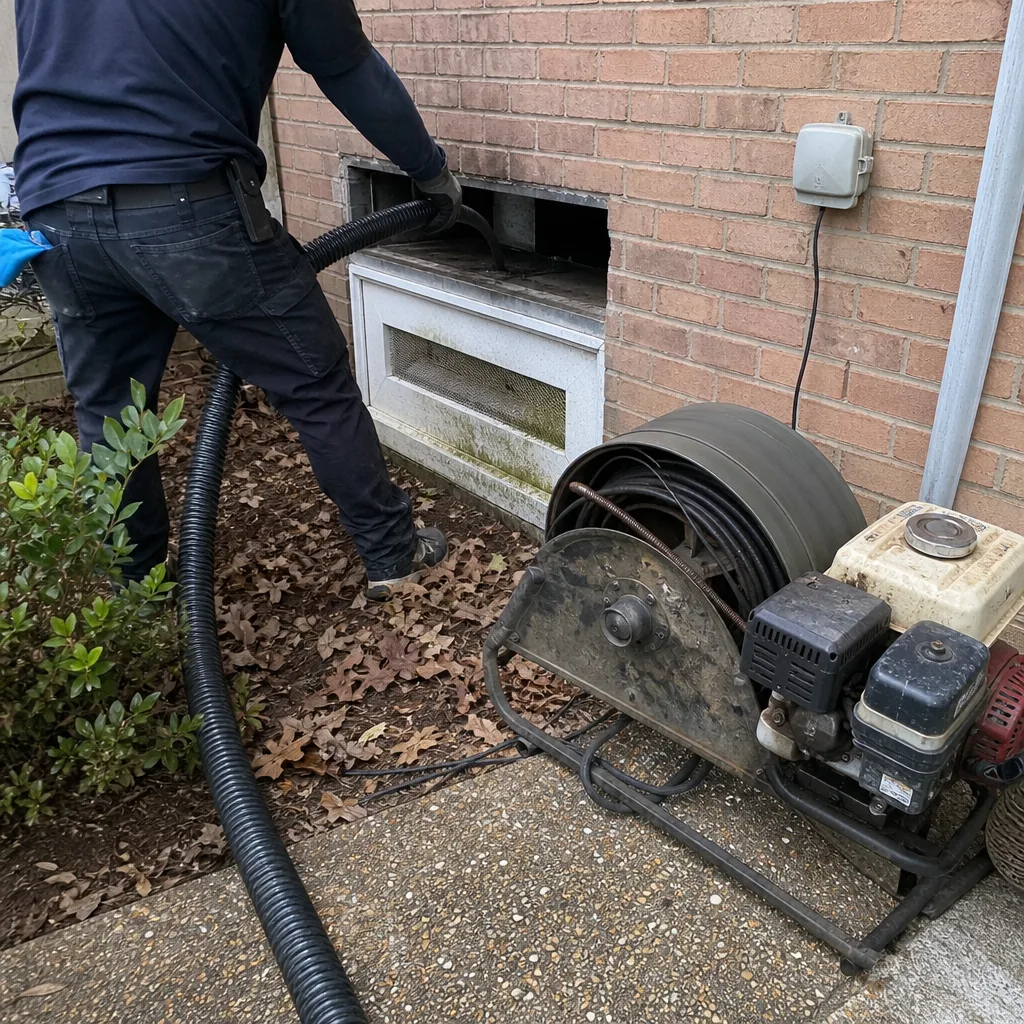 Before
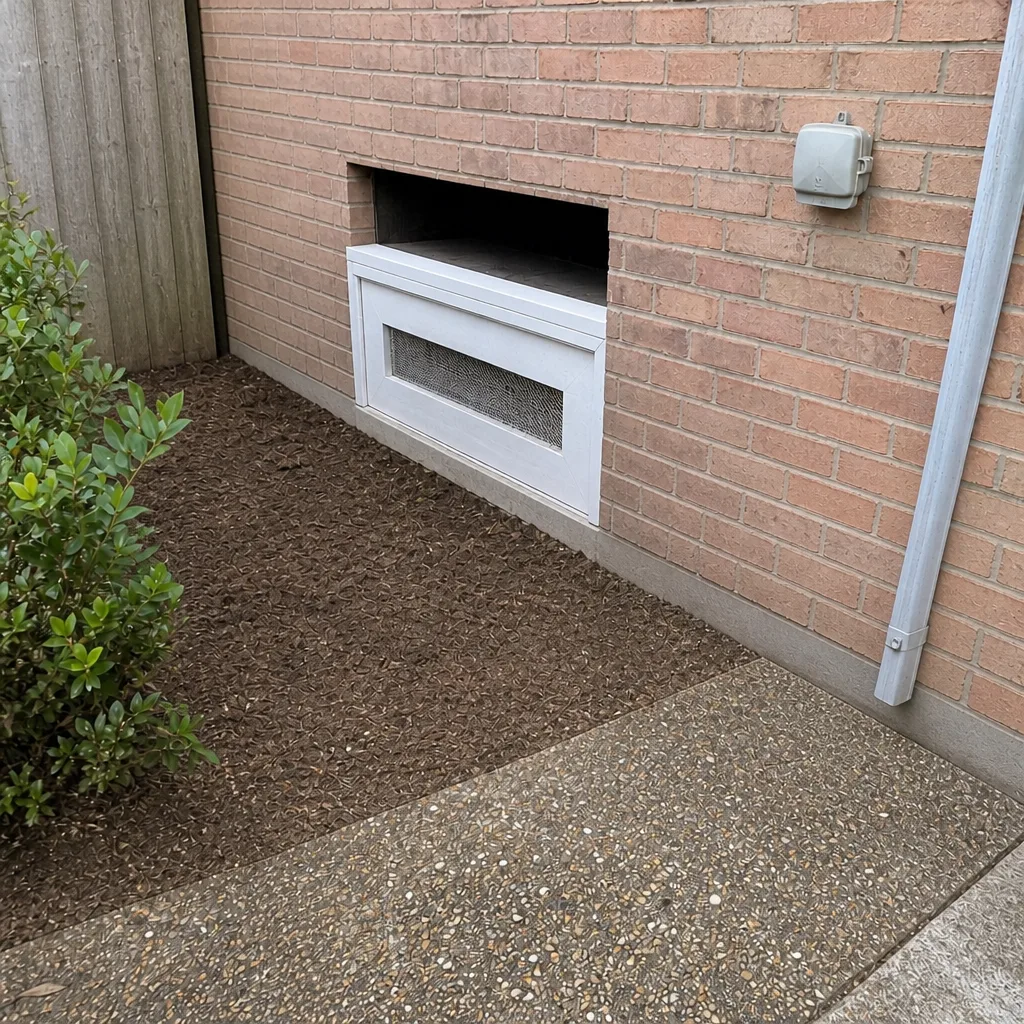 After
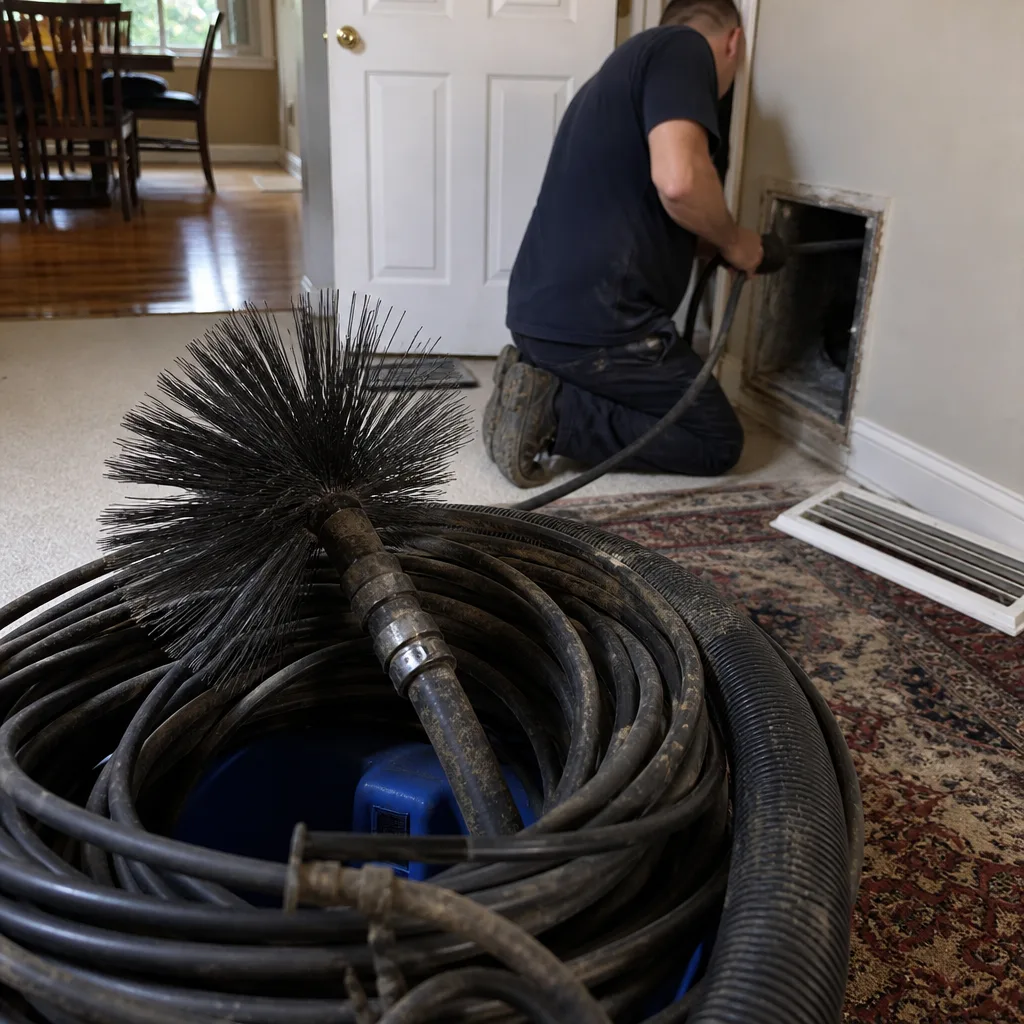 Before
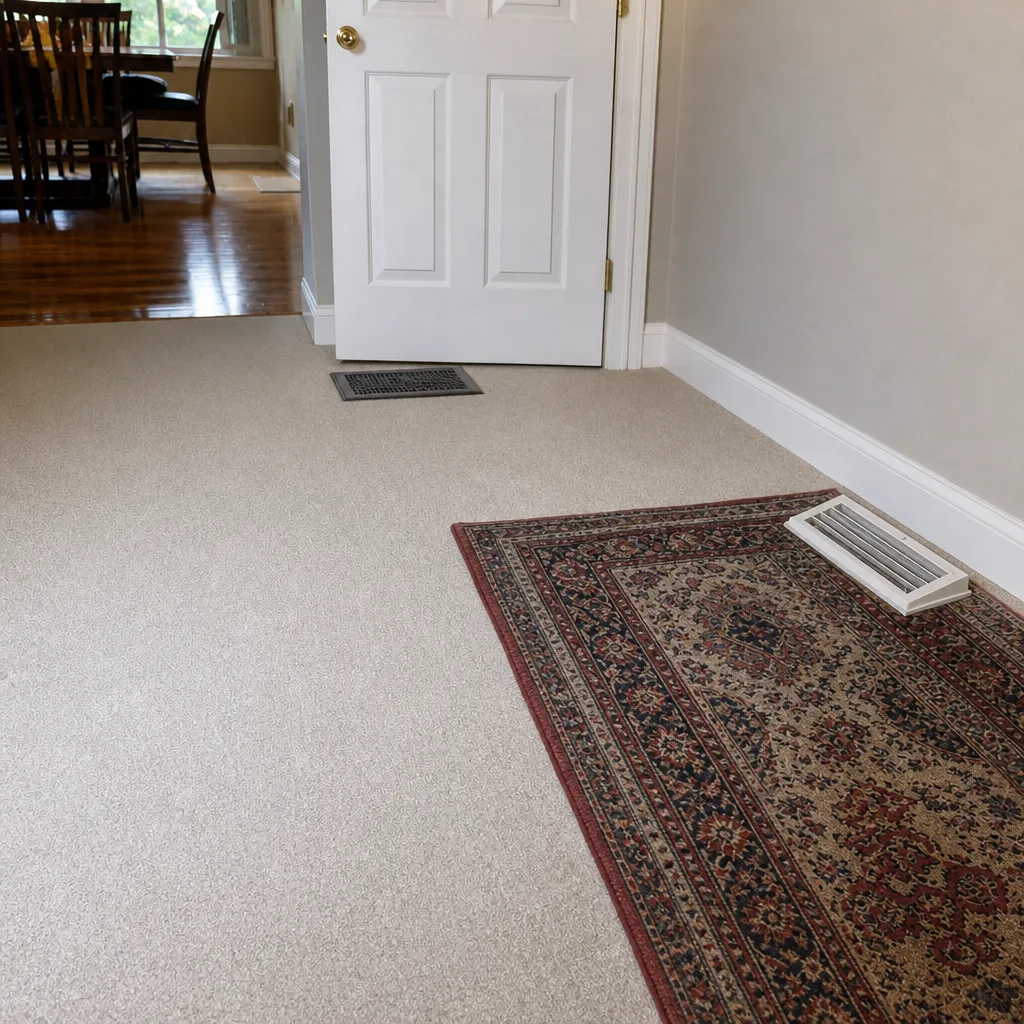 After
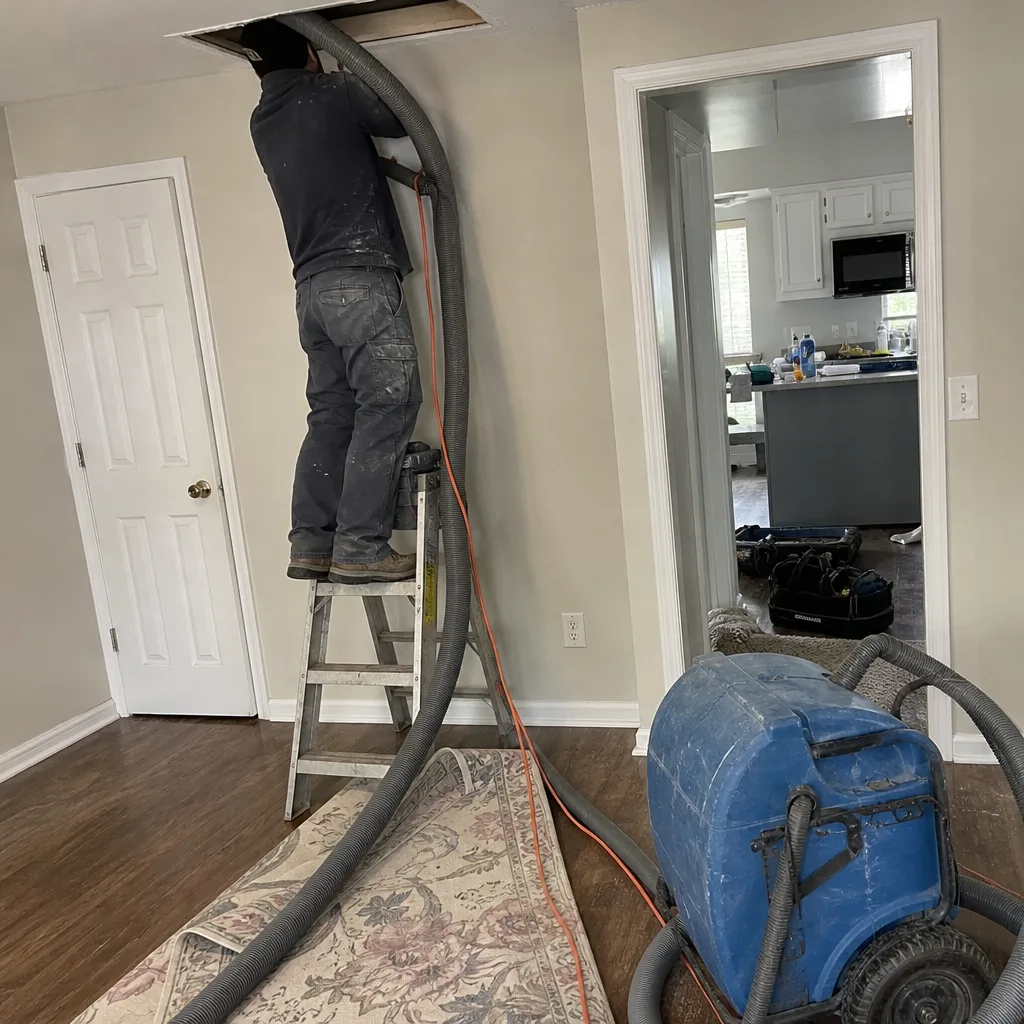 Before
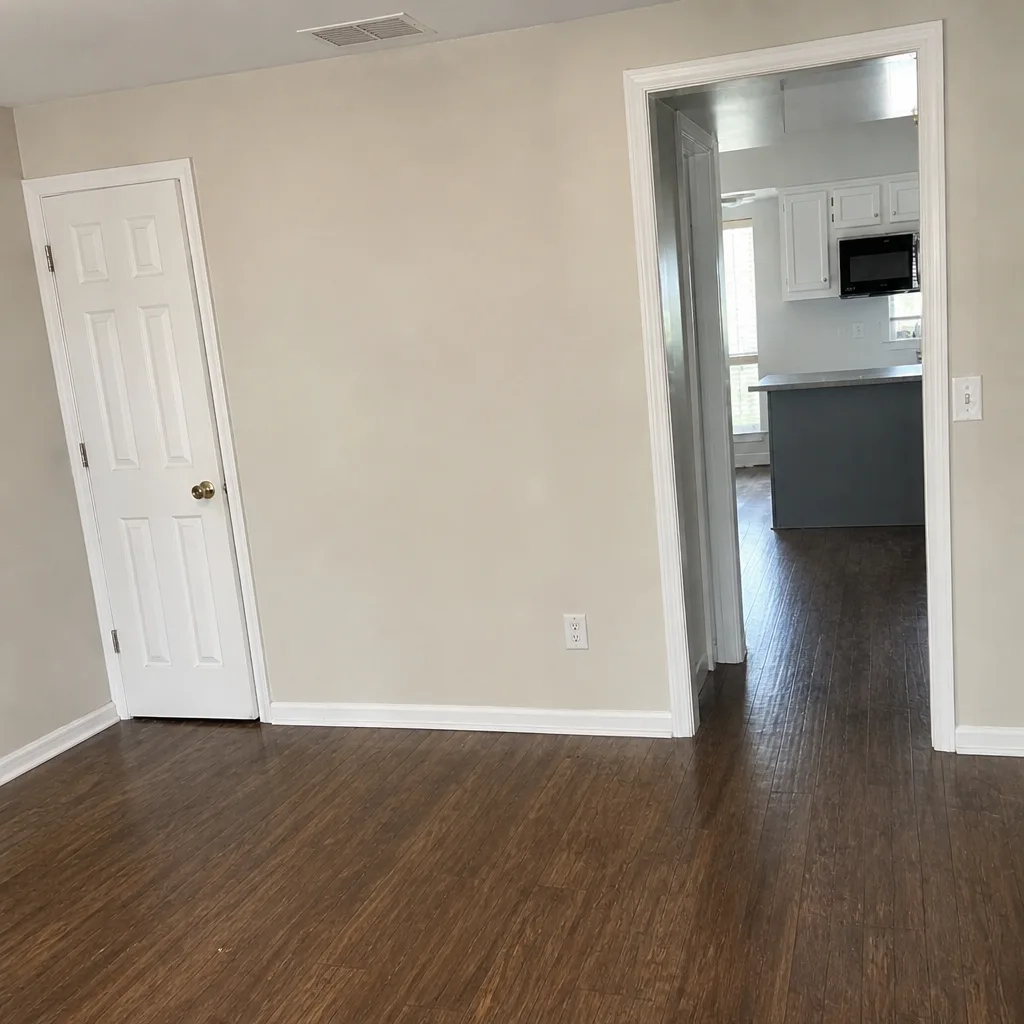 After
When to Call a Professional
Some situations in the schedule are not homeowner-optional. Call us if you have water intrusion or a persistent musty smell, if you’ve had a recent renovation or a new pet, if your airflow is uneven at the registers, if you’ve just moved into a home with no known service history, or if your system is due on the interval and you haven’t recorded a professional clean. Any of those justify an inspection, and most justify a cleaning. Do not attempt duct cleaning with rented or consumer-grade equipment – the tools required for a real result aren’t in that category. Our technicians have up to 15 years of experience, and we trace the full air pathway before any cleaning begins. Madison Air Duct Cleaning Co offers free estimates – call (844) 443-4890. We answer 24/7. Fast dispatch from 7am to 7pm, Sunday through Friday.
Frequently Asked Questions
Most Madison homes should be professionally cleaned every three to five years, but the interval depends on your filter, pets, renovation history, and whether the ducts are sealed. Homes with pets, recent renovation, or a low-end filter need to move toward the three-year end. Homes with a well-sealed system and a MERV 8 or better filter can stretch to five. Call (844) 443-4890 for an estimate – estimates are free.
A MERV 8 filter is the common residential starting point, and stepping up to MERV 11-13 catches finer particles and stretches your cleaning interval. Confirm with your HVAC technician that the blower can handle the higher rating before you switch. A filter that chokes airflow causes more problems than it solves. Call (844) 443-4890 for an estimate – estimates are free.
Yes. Drywall dust and construction debris settle through the entire air path during a renovation, and a clean done before the work finishes will be undone by the time the crew packs up. Schedule the clean after the renovation, and ask for a full air-path inspection so damaged or disconnected runs are flagged. Call (844) 443-4890 for an estimate – estimates are free.
Most household dryer vents should be cleaned annually, and homes with heavy laundry loads or longer vent runs may need it more often. This is separate from the duct cleaning schedule and runs on its own rhythm. A clogged dryer vent is a fire risk, so don’t let it slide. Madison Air Duct Cleaning Co provides dryer vent cleaning as part of the full-service scope. Call (844) 443-4890 for an estimate – estimates are free.
Ask for before-and-after photos of your own ducts, not stock images or a stock binder page. A professional service photographs the before and after on every job and makes the record available to you. Insist on the photographs, and keep them. Call (844) 443-4890 for an estimate – estimates are free.
When the right company is doing the work, yes. Duct repair and sealing performed in-house means gaps or damaged sections found during cleaning can be corrected on the same visit, not referred out to a subcontractor. Madison Air Duct Cleaning Co performs both, so a clean result is a durable one. Call (844) 443-4890 for an estimate – estimates are free.
The Bottom Line
An air duct maintenance schedule is three things stacked together: an annual inspection rhythm, a professional cleaning every few years, and a set of event triggers that reset the clock when something changes. The filter is the lever you control every month; the record is the part that keeps every visit faster. Cleaning and sealing belong in the same conversation, because a clean system that leaks won’t stay clean. Madison Air Duct Cleaning Co covers the full air pathway – cleaning, HVAC unit cleaning, sanitizing, and duct repair and sealing – with the professional equipment the job actually requires. Start the schedule with a free estimate: call (844) 443-4890. We answer 24/7. Fast dispatch from 7am to 7pm, Sunday through Friday.
Written by the team at Madison Air Duct Cleaning Co.