
Last updated November 24, 2026
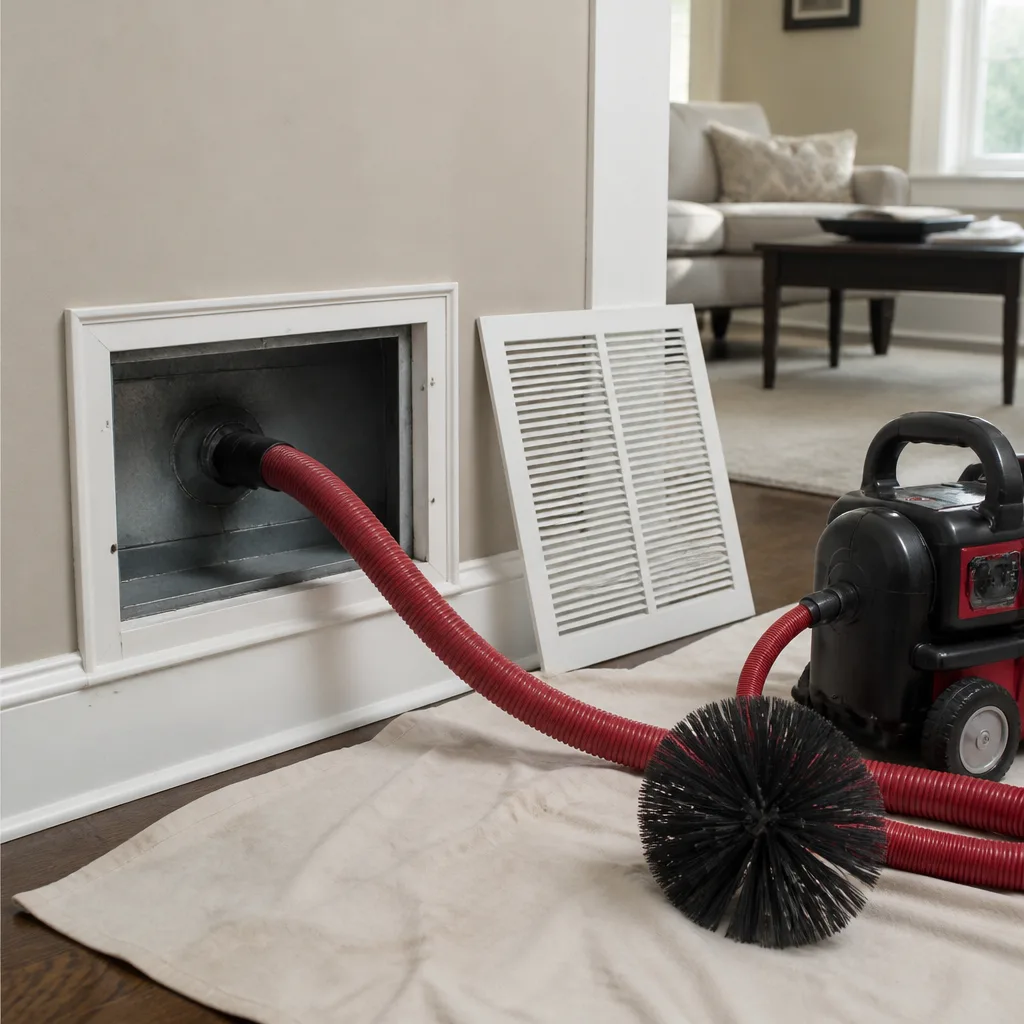 Whole-home duct cleaning
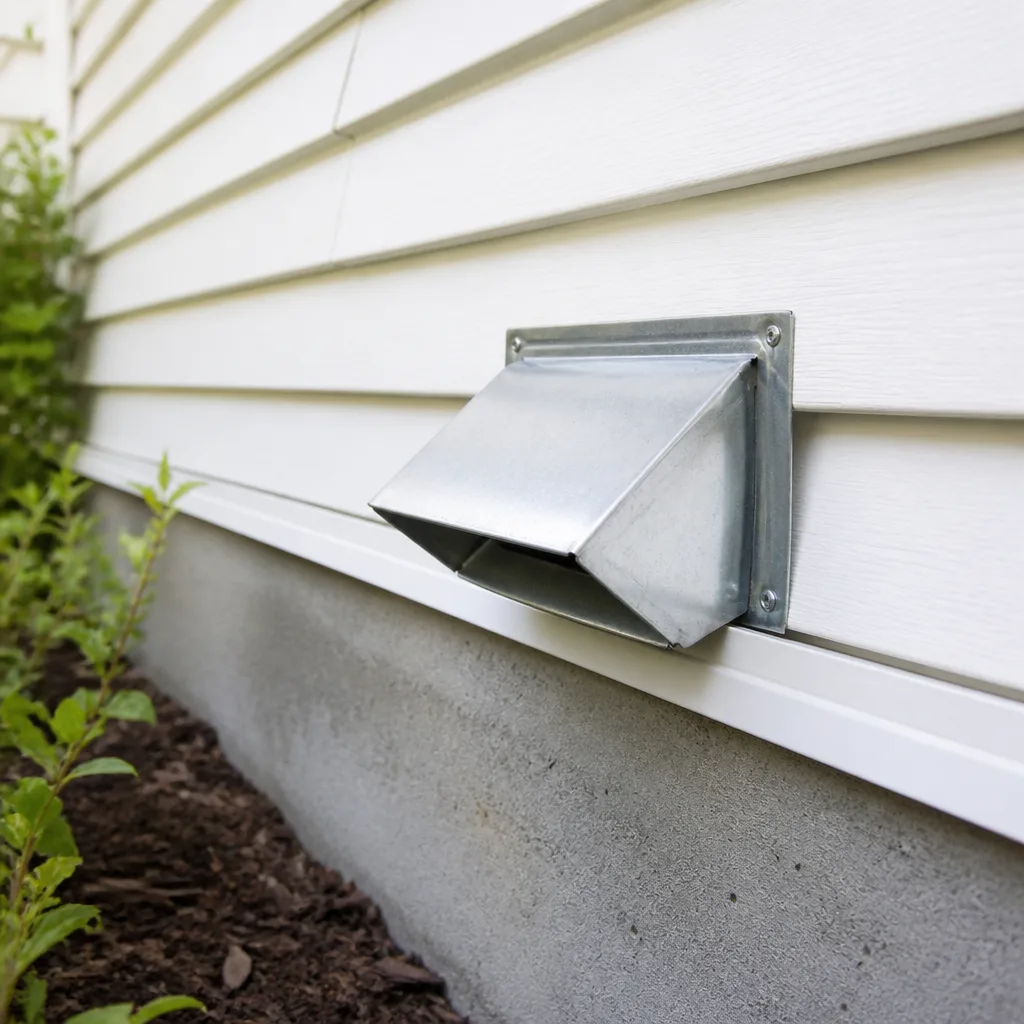 Dryer vent cleaning
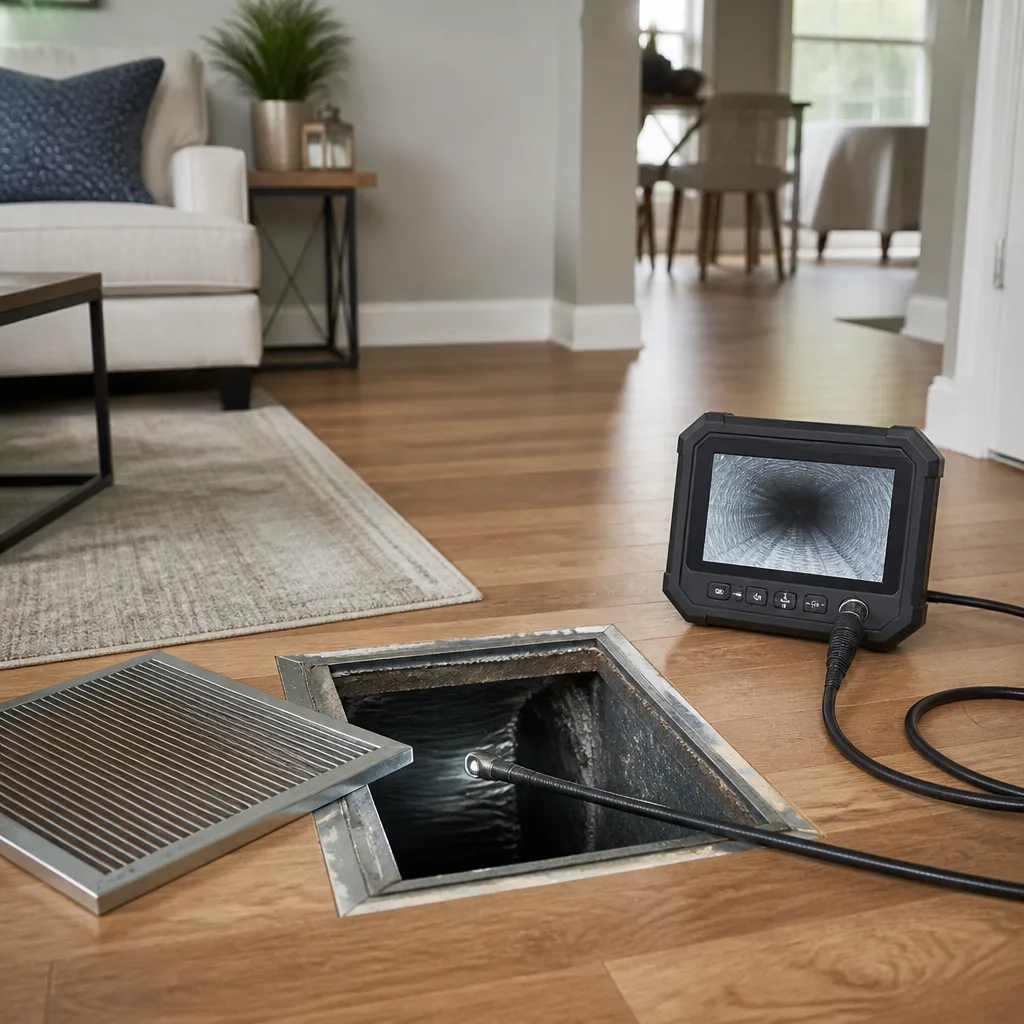 Camera inspection
 Sanitizing & deodorizing
Whole-system duct and dryer vent check with before-and-after photos - you see exactly what came out of your vents
That "$99 whole-house special" is a bait ad - the real number appears once they are in your hallway, or the "clean" is a shop-vac at the register. We photograph the inside of your ducts before and after instead.
Air Duct Cleaning Warning Signs: A Madison Homeowner’s Reference Guide
Most people who call us about their ducts describe a feeling, not a system. The hallway is stuffy. The bedroom never quite cools. There’s a smell when the heat comes on. That description is a starting point, not a diagnosis. Air problems get blamed on the furnace, on pollen, on a house that “just runs warm,” and the actual source sits in the duct system. In this guide we map each symptom to the part of the air pathway that produces it, so you can describe what you’re noticing with enough precision to get the right answer before anyone shows up at your door in Madison. By the end you’ll know which signs mean cleaning, which mean repair, and which mean stop and call.
Quick Answer
Air duct cleaning warning signs include visible dust streaking around supply registers, a musty smell that appears only when the system first starts, uneven airflow between rooms, filters that load up faster than they should, and debris you can see inside a register with a flashlight. Signs of a duct breach or disconnected trunk, like a room getting almost no airflow while others are strong, point to repair before cleaning.
Styles & brands we work with
- Whole-home duct cleaning
- Dryer vent cleaning
- Camera inspection
- Sanitizing & deodorizing
Table of Contents
- Supply Side vs. Return Side: Where the Symptom Shows Up
- What Visible Debris at a Register Actually Tells You
- Odor Diagnostics: A Symptom-to-Source Map
- Airflow and Temperature Signals That Are Duct Problems
- Cleaning Signs vs. Repair Signs: The Critical Difference
- What a Real Inspection Looks For
- Why the Equipment Behind the Cleaning Matters
- How a Madison House Ages Its Ducts
Supply Side vs. Return Side: Where the Symptom Shows Up
The duct system has two halves, and they fail differently. Supply ducts carry conditioned air out to the rooms. Return ducts pull air back to the blower. When you notice a symptom, the first question to ask is which half it’s coming from. That single distinction changes what the repair looks like and how much of the system needs attention.
Supply-side problems usually announce themselves at the register. You see dust puffing out when the fan kicks on, or a dark ring around the grille, or the air feels weaker in one room than the next. Return-side problems tend to be quieter. The return pulls air back through grilles that are often larger and often near the floor or in a central hallway. A return that’s carrying heavy debris can look clean from the surface while the trunk behind it is loaded. In our experience, Madison homes with a single central return are the ones where homeowners are most surprised by what comes out of the return trunk.
- Notice it only when the fan starts? Likely supply-side or blower-related.
- Notice it constantly, all day? More likely return-side or a coil drain pan issue.
- Notice it in one room only? Local branch duct, register seal, or a closed or blocked run.
- Notice it everywhere at once? Main trunk or the HVAC unit itself.
This is the framework we use on every call. We trace the full air pathway, from return grille to blower unit, before any cleaning begins. If you can tell us which rooms and which times of day the problem shows up, you’ve already done half the diagnostic work. For a fuller picture of what air duct cleaning actually involves room by room, that page walks through the scope.
What Visible Debris at a Register Actually Tells You
Surface dust on a register grille proves very little. A grille gets dusty from room air passing through it, from a nearby candle, from a dryer, from a pet. The symptom that matters is what you see when you pull the grille and look into the opening behind it with a flashlight. Dust sitting loosely on the register is cosmetic. Dust coating the inside walls of the duct, or debris collected at the bottom of a vertical run, is systemic.
Here’s how to read what you’re looking at without guessing:
- Light dust, easy to wipe off the grille only. Surface issue. Clean the grille and watch it over a couple of weeks.
- Dust coating the inside walls of the duct. Airborne buildup. The duct interior is the source, not the room.
- Debris concentrated at the bottom of a vertical run or at a bend. Settled material. This is where rotary-brush extraction does work a vacuum alone can’t reach.
- Visible gaps, tape peeling off at seams, or a joint that moves when you touch it. A repair signal, not a cleaning signal. More on that below.
The difference between surface dust and systemic buildup is the difference between wiping down a shelf and getting inside the walls. One is housekeeping; the other is a duct cleaning job. If you’re seeing dark buildup on the duct walls themselves, that’s the point to bring in a professional rather than spending a weekend with a shop vacuum and a rag.
Odor Diagnostics: A Symptom-to-Source Map
Smell is the most misread warning sign in the whole system, and the most useful once you know how to place it. A musty smell that only appears when the system first kicks on is not the same problem as a musty smell that’s constant. The first points to something in the air pathway that gets disturbed by airflow. The second points to something that’s already sitting in the system and never stops being disturbed. Getting that wrong sends the wrong technician.
Musty, Only at Startup
Likely a coil drain pan or a wet spot in the plenum that gets disturbed when air begins moving. This is a moisture problem near the HVAC unit, and cleaning the ducts alone won’t fix a drain pan that stays wet.
Musty, Constant
The duct interior itself is holding moisture. That usually means a humidifier line, an AC issue, or condensation that isn’t draining properly. This is where duct cleaning plus a sanitizing treatment is the right sequence; sanitizing follows cleaning, not a substitute for it.
Burning or Sharp
This one should stop you. Shut the system down and call. A burning smell can come from a failing blower motor, a blocked vent, wiring, or a component overheating. Nothing about that is a duct cleaning problem, and running the system to see if it clears is not a risk worth taking.
Earthy or Dirt-Like
Common when the return trunk is pulling through a crawl space or an unconditioned space with an unsealed joint. Air is finding a path it shouldn’t have. This is a sealing problem, and duct repair and sealing done in-house is exactly the fix.
Chemical or Solvent
Could be a nearby renovation, a cleaning product, or a refrigerant issue. If you can’t trace it to a product you used, treat it as an HVAC problem, not a duct one.
Match the smell to its timing and location before you call. On the phone, “musty when the heat comes on, hallway only” is far more useful than “it smells.” When you call Madison Air Duct Cleaning Co, that level of detail lets us book the right job the first time.
Airflow and Temperature Signals That Are Duct Problems
Not every performance problem is an equipment problem. Three of the most common “my HVAC is failing” complaints are actually duct issues, and a service call that assumes furnace trouble will circle the wrong target for months.
- Reduced airflow in specific zones. If the living room is fine and the back bedroom barely gets air, the equipment is probably healthy. A branch duct, a damper, or a leak in that specific run is thinning the delivery. This is a balance problem, not a blower problem.
- Uneven temperatures between rooms. A room over a garage or at the end of the longest run will run warm in summer and cold in winter long before the thermostat will fix it. Leaky ducts lose more of the conditioned air the further it travels.
- Increased filter loading speed. If your filter used to last several weeks and now loads up in two, something is being drawn into the system that wasn’t before. That’s often a breach pulling from an attic or crawl space, and it’s an early warning worth acting on.
In Madison, the seasonal swing makes these more visible. Summer humidity and winter dry cold change what a leaky system looks like from room to room. A house that felt balanced in October can feel lopsided in January, and the ducts haven’t changed – what’s moving through them has. If your HVAC cleaning is overdue, the unit itself can also be part of the performance picture, and cleaning the blower and coil alongside the ducts keeps the diagnosis honest.
Cleaning Signs vs. Repair Signs: The Critical Difference
This is the distinction that saves you money and headaches. Cleaning is appropriate when the system is dirty but structurally sound. Repair is required when air is escaping, a run is disconnected, or a component is failing. Cleaning a broken duct just means cleaning a duct that will get dirty again immediately.
Here’s what each looks like:
Signs That Point to Cleaning
- Dust coating the inside walls of the ducts uniformly across the system
- A musty smell that appears at startup and persists through the run
- Visible buildup in registers and return grilles
- Filter loading faster than it used to
- A dryer that takes longer to dry a load (a related but separate system – see dryer vent cleaning)
Signs That Point to Repair
- One room getting almost no airflow while others are strong
- Visible separation at a duct joint or a run that’s come loose from its fitting
- Air escaping into an attic or crawl space you can feel with your hand at a seam
- Insulation on the outside of the duct soaked or falling away
- A burning smell or a coil that ices over
When a breach is present, the sequence is repair first, then cleaning. This is why we keep duct repair and sealing in-house. Leaks, gaps, and damaged sections found during cleaning get corrected on the same visit, not referred out to another contractor with a separate schedule. If you’ve been told your ducts need cleaning but you’re also noticing any of the repair signs, ask your technician to show you the joint before work starts.
What a Real Inspection Looks For
The most useful part of any duct visit happens before the cleaning begins. An inspection that doesn’t look past the registers will miss the problems that actually matter. Here’s what a proper walkthrough covers:
- Return grille to blower. We trace the air pathway from the return opening all the way to the unit. Contamination on the return side is the one most homeowners underestimate.
- The supply trunk and branches. Any joint that’s separated, tape that’s failed, or insulation that’s compromised.
- The plenum and coil. The plenum is where duct meets equipment. This is where a moisture problem shows up first, and where a drain pan issue gets confused for a duct issue.
- The dryer vent run. A separate system, but one that shares the venting concern. Dryer vent cleaning is part of the full-pathway scope for good reason.
- The blower and cabinet. A dirty blower moves less air, and reduced airflow masks itself as duct contamination.
An inspection that skips the plenum and the blower is looking at half the system. If you’ve had a cleaning done and nothing looked at those areas, it’s worth asking what was actually checked. Homeowners and property managers comparing companies often find the difference between a good operator and a cheap one sits in what happens in the first hour versus what happens in the last. For the full scope of what we cover, the Madison Air Duct Cleaning Co main page lays out the services side by side.
Why the Equipment Behind the Cleaning Matters
Duct cleaning has a reputation problem, and the equipment is the reason. A shop vacuum in a van cannot remove debris from the walls of a long duct run, and it definitely can’t contain what it disturbs. The right equipment does two jobs at once: it dislodges what’s stuck to the walls, and it captures that material before it can recirculate through the house.
At Madison Air Duct Cleaning Co we use Rotobrush rotary-brush extraction systems, the professional standard for dislodging and removing debris from duct walls. The brush does the work a vacuum alone can’t. We pair that with Nikro HEPA-class equipment to hold negative pressure during cleaning so the dust we loosen goes out, not back into the room. On-site, we deploy Abatement Technologies air filtration to capture particulates as they’re disturbed – actively, in real time – rather than letting them settle across the furniture. And for the ongoing air-quality side, we integrate Honeywell and Aprilaire products where the client wants the system to keep improving after we leave.
The difference between this setup and a shop vac is the difference between a real cleaning and a cosmetic one. It’s also why we’re careful about what we promise. If a company quotes a price that seems too good to be true, ask what equipment they’ll bring and whether they’ll show you before-and-after photos of your own ducts. If either answer is vague, the price wasn’t the whole story.
How a Madison House Ages Its Ducts
Madison sits in a climate with real seasons – humid summers, dry cold winters – and that combination works on a duct system in ways that don’t show up in a milder part of the country. Summer humidity means moisture is in the air more of the year, and moisture is what turns dust into a microbial problem. A duct run in a crawl space or an unconditioned attic sees seasonal swings between hot and cold, which is exactly where insulation and seals fail first.
Winter is the dry half of the year here, and dry air means higher static charge, which pulls dust toward surfaces and grilles. Homes in the older parts of Madison with long duct runs tend to show the airflow and temperature problems first; newer builds more often show filter-loading and seal issues. Neither pattern is universal, and the point isn’t to predict your house’s problem – it’s to know what to look for so a familiar signal doesn’t get misattributed. The seasonal rhythm is why we recommend a walkthrough if you’re noticing any of the signs in this guide, rather than waiting for the system to fail loudly.
Common Mistakes to Avoid
- Mistaking surface dust on a register for a duct problem. Wipe the grille first. If the dust keeps coming back, look inside the duct with a flashlight before you book a cleaning.
- Assuming every “musty” smell is the same problem. Startup-only musty points to the coil drain pan. Constant musty points to the duct interior. Calling the wrong one first wastes a service visit.
- Cleaning ducts that need repair first. Cleaning a disconnected trunk line just means cleaning a duct that’ll get dirty again right away. Ask whether the joint will be checked before work starts.
- Ignoring a burning smell. Burning is an HVAC problem, not a duct cleaning problem. Turn the system off, and call for a service call, not a cleaning.
- Book a quote without asking what equipment they’ll use. A quote that doesn’t mention rotary-brush and HEPA extraction is quoting a different job than the one you think you’re buying.
- Overlooking the dryer vent because it’s “separate.” The dryer vent is a separate system, and it carries the same kind of lint and moisture problem. It’s worth checking alongside the ducts rather than months later.
- Judging by price alone. The lowest quote is often the shortest visit. Ask what’s included, what’s photographed, and what’s checked.
See the difference
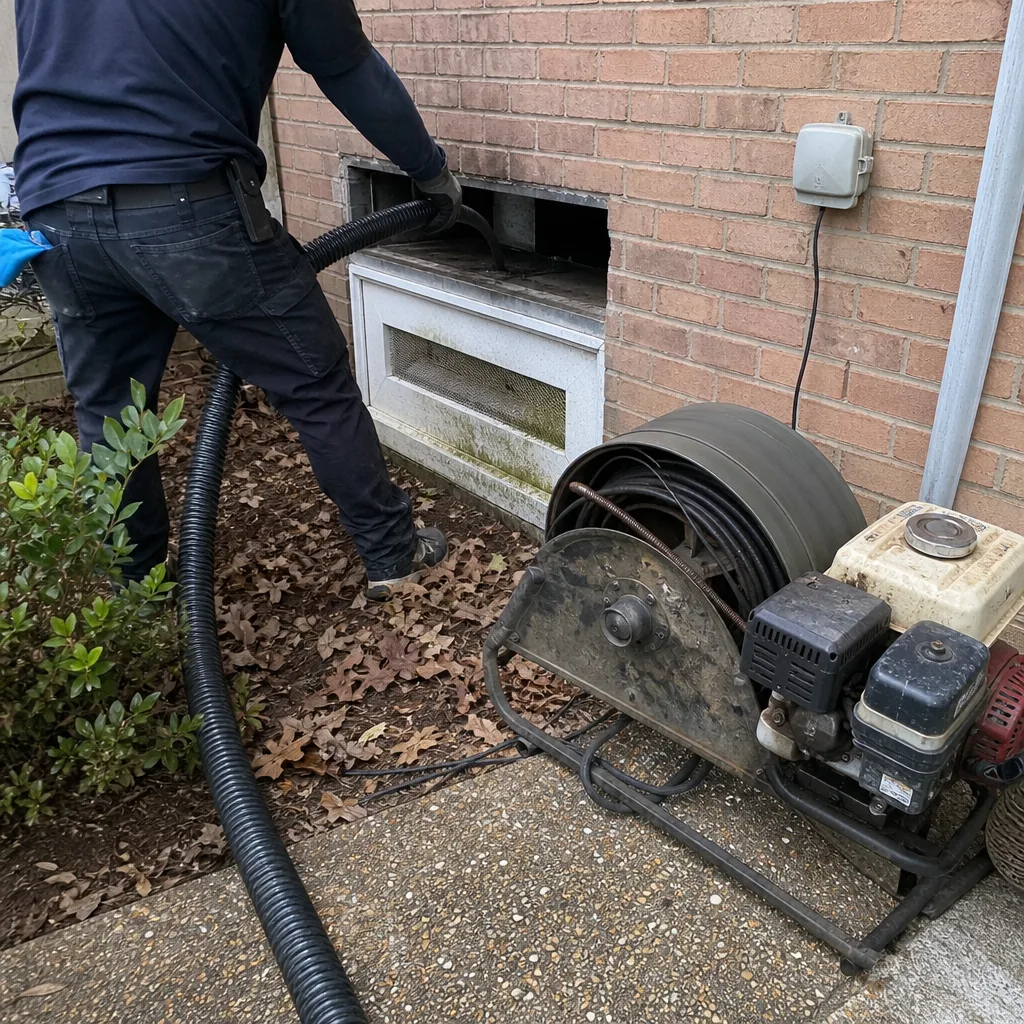 Before
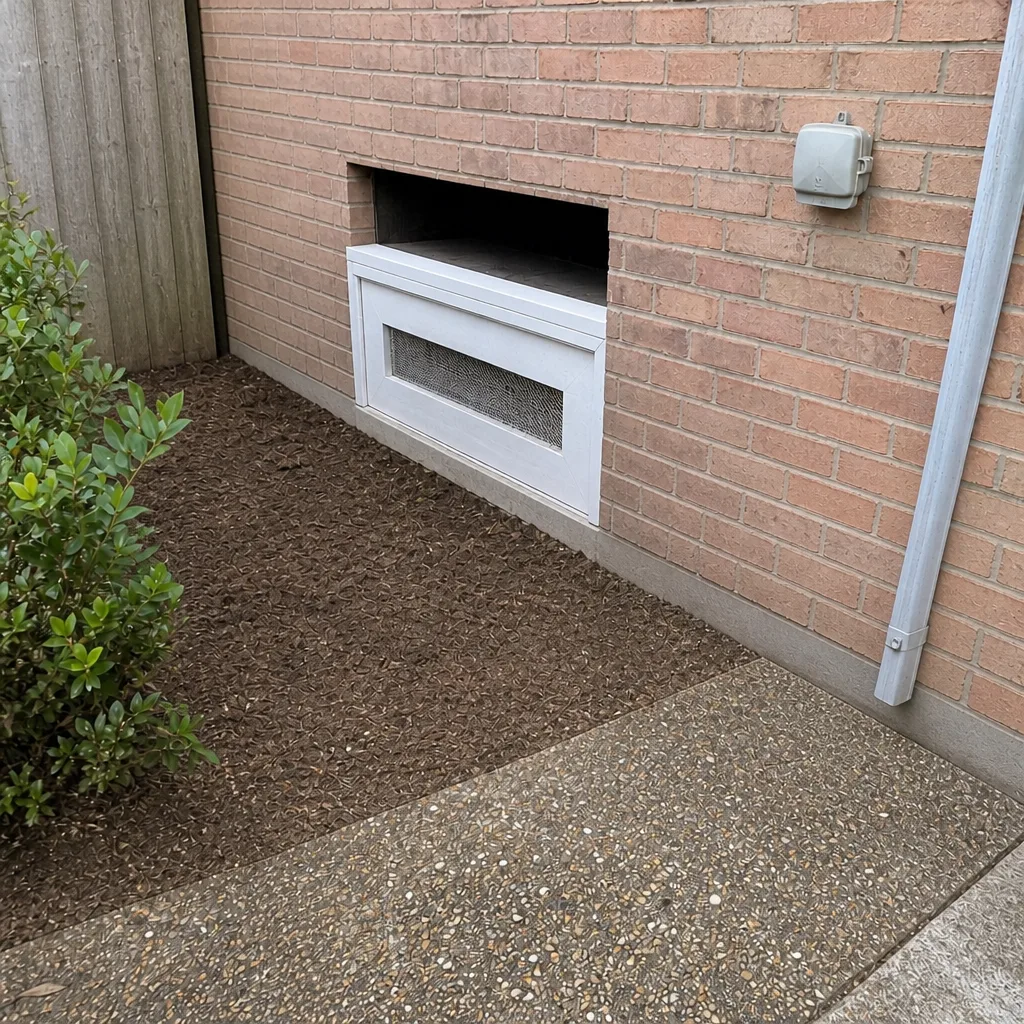 After
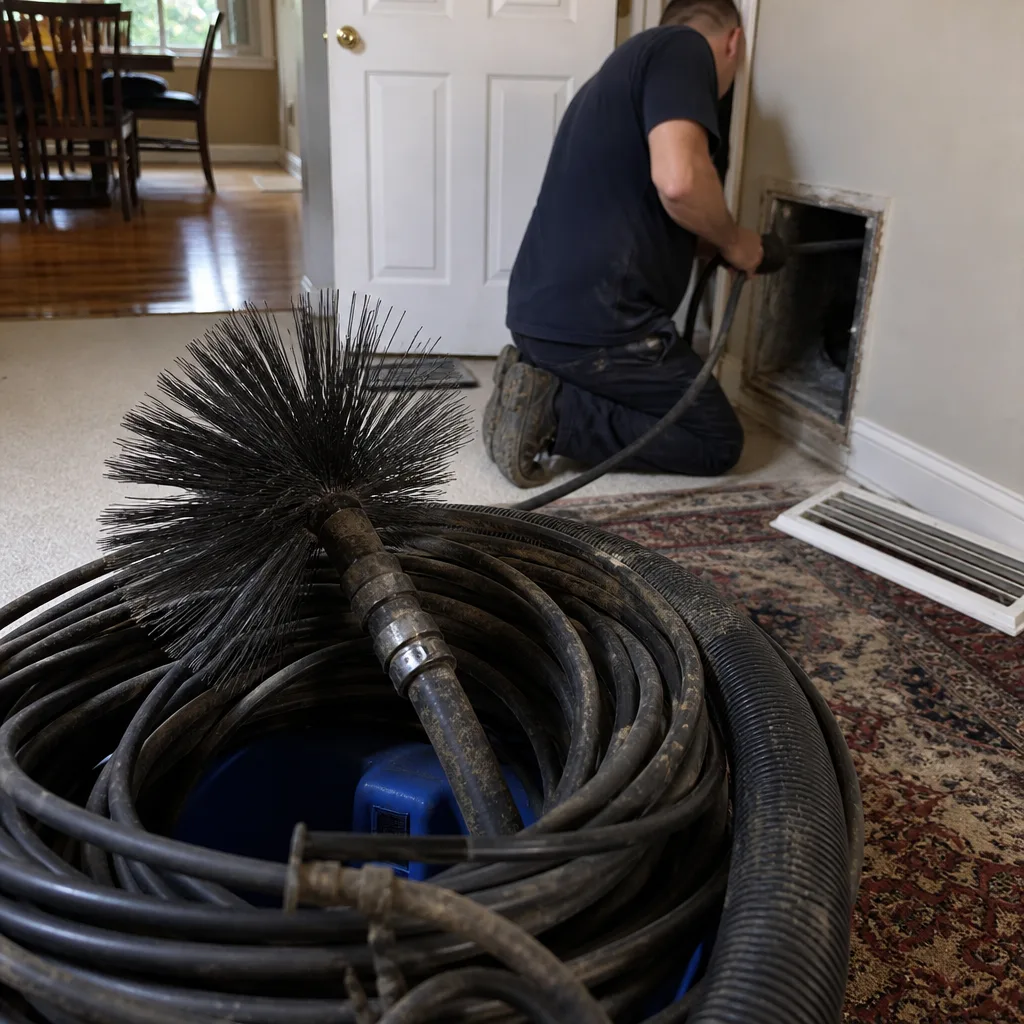 Before
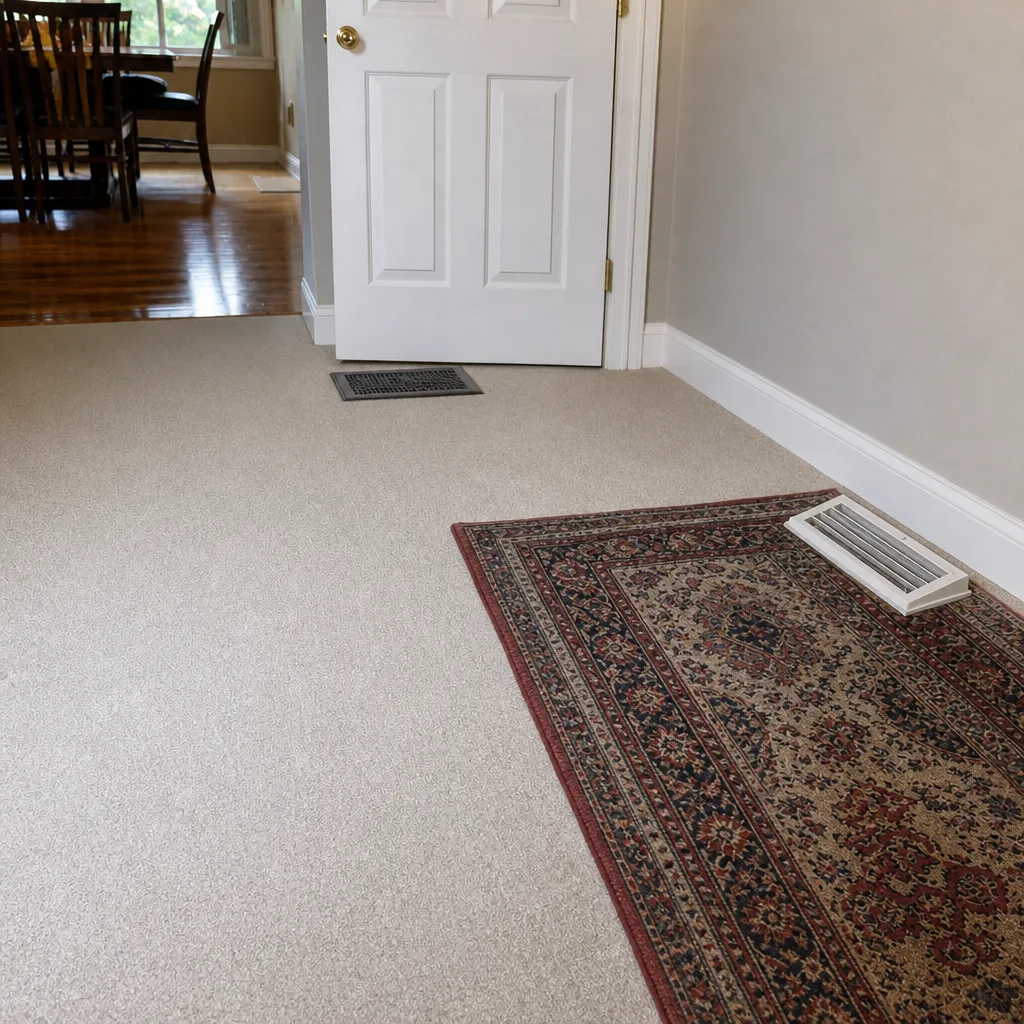 After
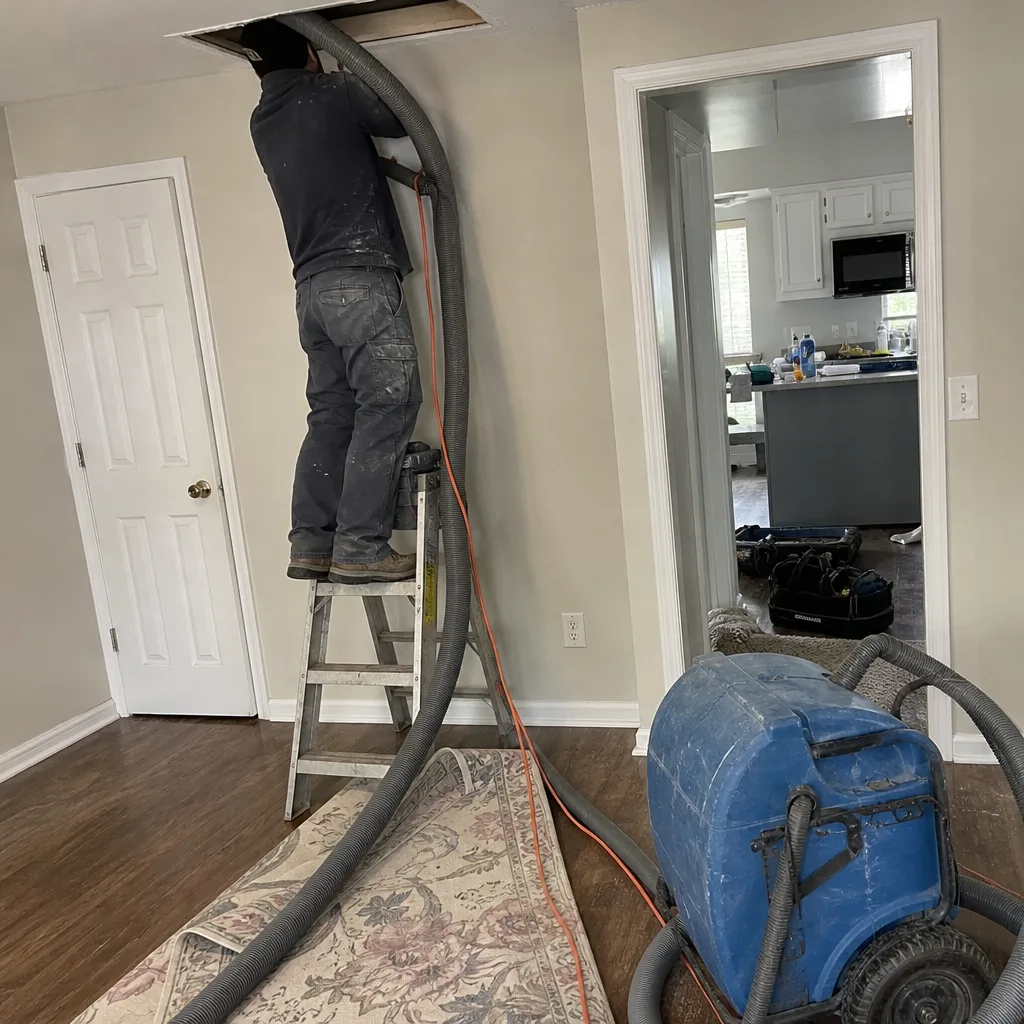 Before
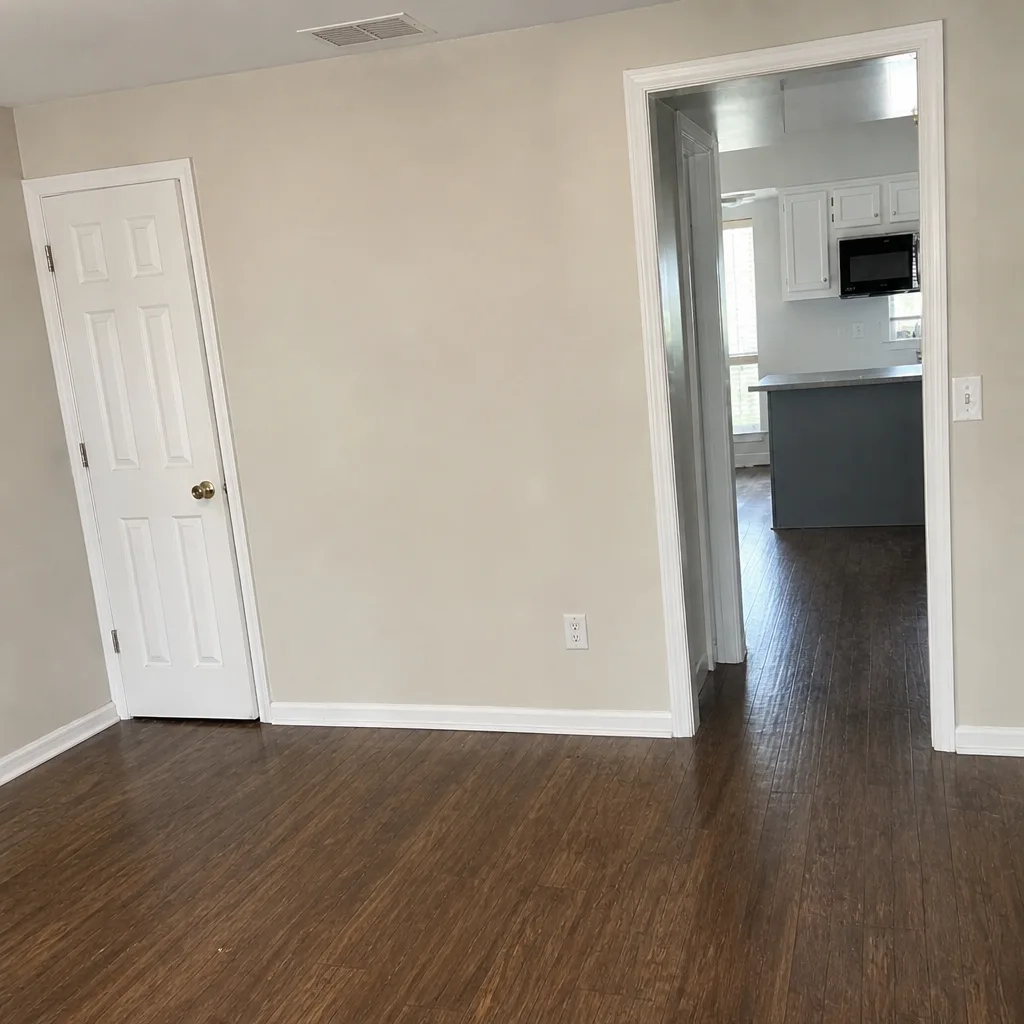 After
When to Call a Professional
Some signs are worth watching for a couple of weeks. Others should get a call. If you’re seeing debris coating the inside of your duct walls, a persistent musty smell that appears when the system starts, a room that gets almost no airflow while others are strong, or a filter that’s loading far faster than it used to, it’s time for a professional walkthrough. A burning smell is a stop-right-now sign – turn the system off and call for service rather than running it to see if it clears. If you’ve had a cleaning done and want to know whether the work was actually completed, before-and-after photos of your own ducts are the way to check. Madison Air Duct Cleaning Co offers free estimates in Madison – call (844) 443-4890. We answer 24/7. Fast dispatch from 7am to 7pm, Sunday through Friday.
Frequently Asked Questions
The first signs are usually visible debris inside a register, a musty smell that appears when the system starts, uneven airflow between rooms, and filters that load faster than they used to. Surface dust on the grille itself isn’t a reliable sign – you have to look inside the duct with a flashlight. If you see dark buildup on the duct walls, that’s the point to call. Call (844) 443-4890 for an exact quote. Estimates are free.
No. A musty smell that only appears when the system first kicks on is more likely a coil drain pan or a wet spot near the plenum than a duct problem. A musty smell that’s constant points to the duct interior and usually means cleaning plus a sanitizing treatment. Getting the distinction right matters because cleaning the wrong area won’t fix the smell. Call (844) 443-4890 and describe when the smell shows up – that’s usually enough to point us to the right system part.
Only if the cause is contamination or a minor blockage. If one room gets almost no airflow while others are strong, that’s more often a branch duct, a damper, or a disconnected run, and cleaning alone won’t fix a duct that’s come loose from its fitting. This is why we keep duct repair and sealing in-house – the joint can be checked and repaired during the same visit. Call (844) 443-4890 to book a walkthrough.
Visible separation at a joint, air you can feel escaping at a seam, insulation that’s soaked or falling away, and a single room with almost no airflow all point to repair before cleaning. A cleaning sign is uniform buildup; a repair sign is a specific failure at a specific location. When the problem is a breach, repair comes first, then cleaning.
Often, yes. A filter loading faster than normal usually means something is being drawn into the system that wasn’t before, and a common cause is a breach pulling air from an attic or crawl space. The fix isn’t a faster filter change schedule; it’s finding where the extra air is coming in. Call (844) 443-4890 for a free estimate on a walkthrough.
Ask what equipment they’ll bring and whether they’ll show you before-and-after photos of your own ducts. A company using rotary-brush and HEPA-class extraction will name the equipment; a company that can’t name it is probably using a shop vacuum. Ask whether repair and sealing are in-house or referred out, and ask what the inspection covers beyond the registers. Call (844) 443-4890 to compare notes with us – estimates are free. We answer 24/7. Fast dispatch from 7am to 7pm, Sunday through Friday.
The Bottom Line
Most duct problems don’t announce themselves – they disguise themselves as HVAC performance issues, allergy flare-ups, or a house that “just runs warm.” The useful skill is mapping each symptom to its likely source: supply side or return side, startup-only or constant, uniform buildup or a local breach. The signs that point to cleaning are different from the signs that point to repair, and getting that distinction right is what saves you a service visit and a repeat dirtying. If you’re seeing any of the signals in this guide, describe them as precisely as you can when you call. That’s the whole game.
Written by the team at Madison Air Duct Cleaning Co.