
Last updated November 24, 2026
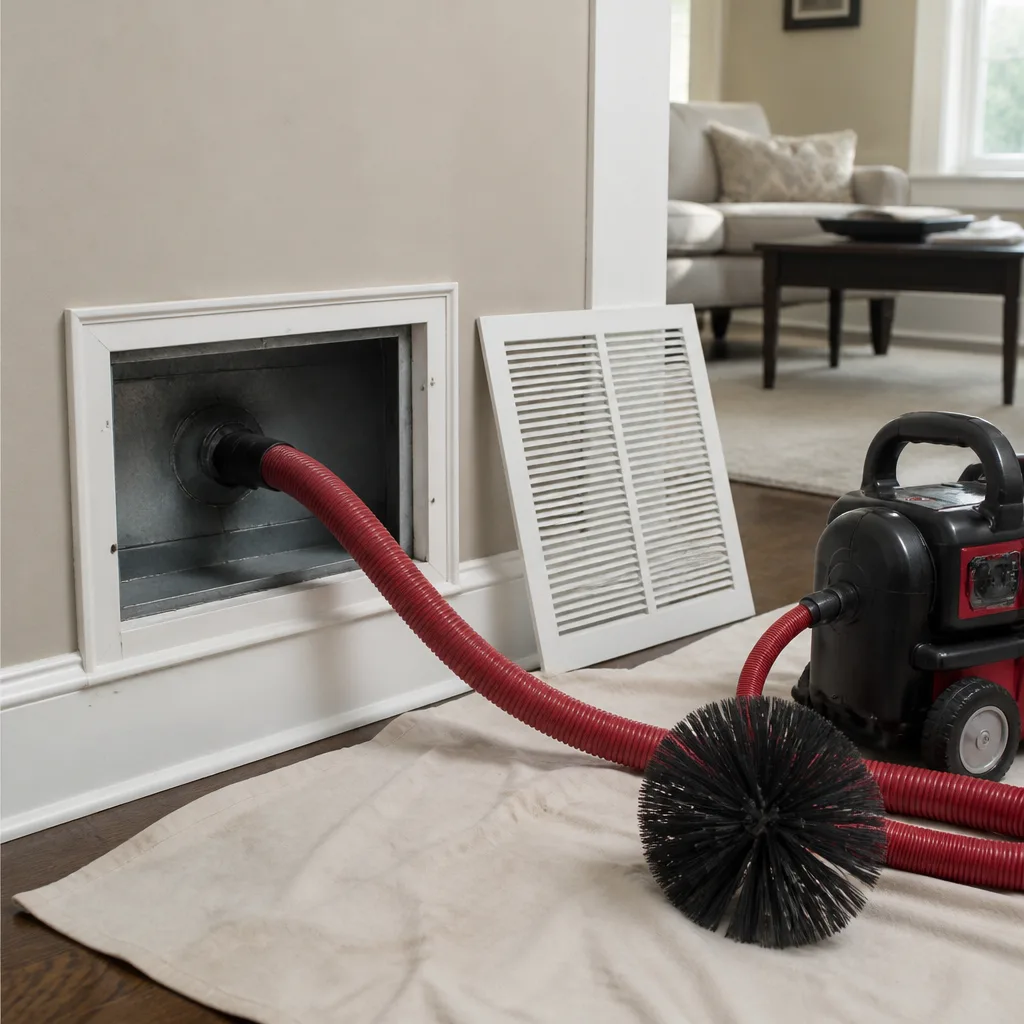 Whole-home duct cleaning
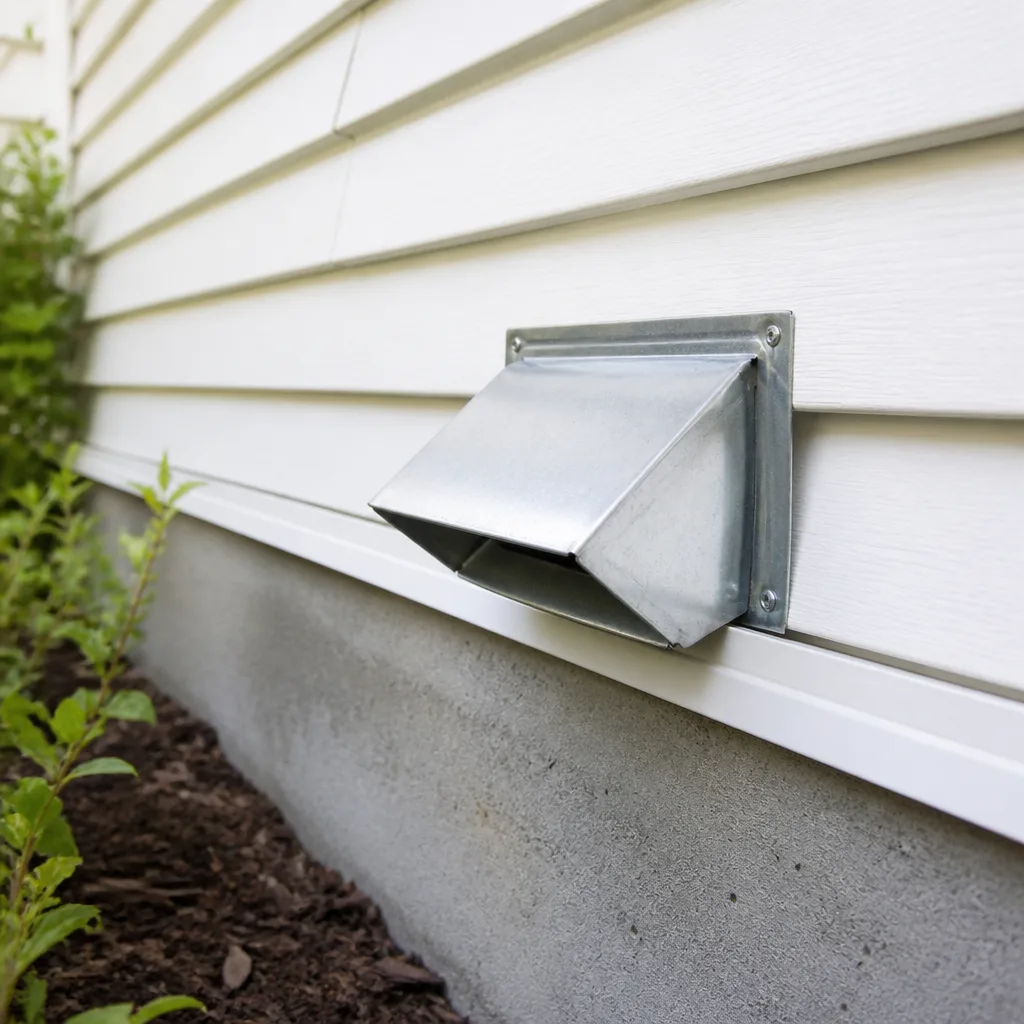 Dryer vent cleaning
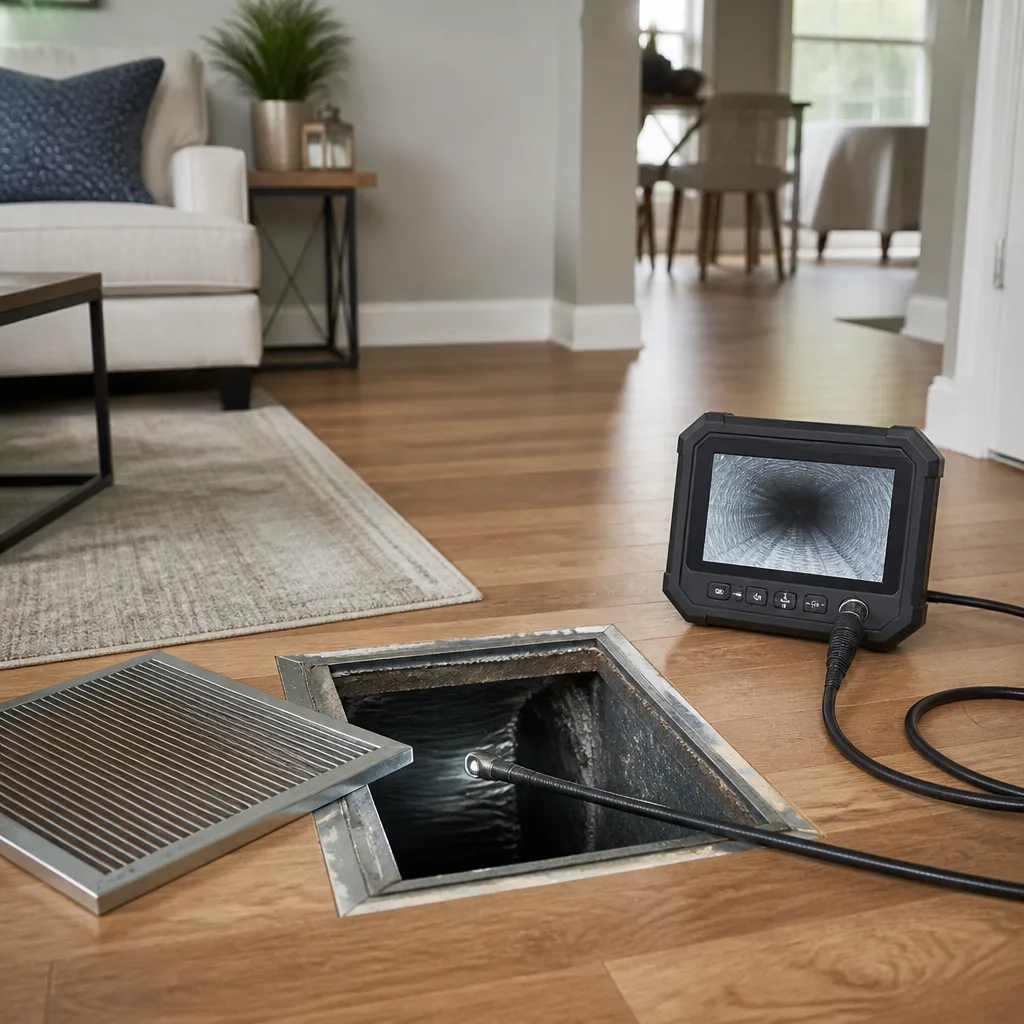 Camera inspection
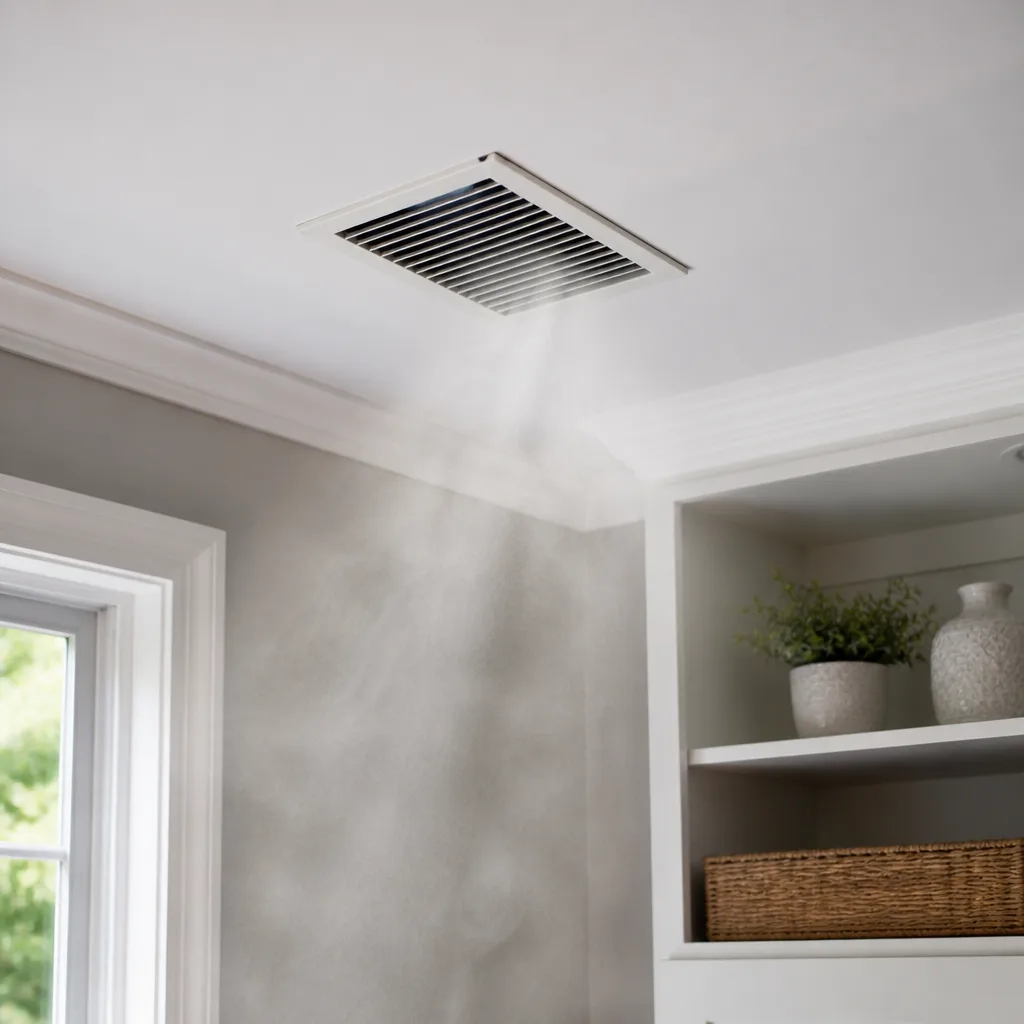 Sanitizing & deodorizing
Whole-system duct and dryer vent check with before-and-after photos - you see exactly what came out of your vents
That "$99 whole-house special" is a bait ad - the real number appears once they are in your hallway, or the "clean" is a shop-vac at the register. We photograph the inside of your ducts before and after instead.
Air Duct Cleaning Troubleshooting in Madison: Common Problems and How to Fix Them
If your ducts were cleaned six months ago and you’re still getting uneven room temperatures or musty odors, the cleaning probably wasn’t the problem – or it wasn’t the complete solution. Most of the duct complaints we hear in Madison trace back to a diagnostic failure, not a dirty system. Someone chased a pressure problem with a vacuum, or treated an odor with a sanitizer when the real source was a leaking joint behind a wall. This guide teaches you to read your own system’s signals before you call anyone: how to tell contamination from airflow loss, what post-cleaning symptoms actually mean, and when sealing or repair – not another cleaning – is the honest next step.
Quick Answer
Most persistent duct problems in Madison homes are not caused by dirt. They’re caused by leakage, pressure imbalance, or a cleaning that never addressed the return side or the air handler. If air is weak but the ducts are clean, look for leaks and blocked returns. If air smells musty after cleaning, look for moisture and a missed section. A camera inspection is the honest next step when a symptom survives two proper cleanings.
Styles & brands we work with
- Whole-home duct cleaning
- Dryer vent cleaning
- Camera inspection
- Sanitizing & deodorizing
Table of Contents
- Contamination vs. Airflow: Which Problem Do You Actually Have?
- The Simple Vent Checks That Tell You Which System You’re Dealing With
- What Post-Cleaning Symptoms Really Mean
- Why Duct Leakage – Not Dirty Ducts – Explains Madison Hot and Cold Spots
- When a Camera Inspection Is the Only Honest Next Step
- Why Some Problems Need Sealing or Repair, Not Repeat Cleaning
- How Middle Tennessee Humidity Changes the Duct Diagnosis
- How to Verify the Work Was Actually Done
Contamination vs. Airflow: Which Problem Do You Actually Have?
Start by separating the two families of duct complaint, because they get solved with different tools. A contamination problem is about what’s in the airstream: dust, debris, microbial growth, rodent evidence, construction residue. An airflow problem is about how much air moves and where it goes: weak registers, hot spots, a system that runs long and never quite satisfies the thermostat. Homeowners often assume the first when the second is true, which is why a second cleaning so rarely fixes a temperature complaint.
Here’s the distinction that matters. Cleaning removes what’s stuck to duct walls and resting in the plenum, boots, and returns. It does not restore pressure lost through leaking joints, disconnected flex runs, or a crushed trunk line in a crawlspace. In Madison, where a lot of the housing stock sits on crawlspaces and pier-and-beam foundations, we routinely trace airflow complaints to flex duct that’s been pinched, sagging, or torn under the floor – problems no amount of brushing will correct.
- Signs of a contamination problem: visible dust puffing from a register when the system starts, musty or stale odor at supply vents, debris visible inside a return grille, recent renovation or pest activity.
- Signs of an airflow problem: one or two rooms that never reach temperature, weak flow at far registers but strong flow near the air handler, whistle or rush noise at a grille, high static pressure felt as a wheeze at every vent.
- Signs of both at once: dust plus weak flow usually means a dirty blower wheel and a filter that’s been overloaded – the two feed each other.
If you can name which family your complaint belongs to before you pick up the phone, you’ll ask better questions and get a more honest answer. That single step prevents most of the wasted visits we see around Madison.
The Simple Vent Checks That Tell You Which System You’re Dealing With
You don’t need instruments to gather useful evidence. A ten-minute walk-through with a tissue or a piece of light paper tells you a lot about whether your system is dirty, starved of air, or leaking. Do these checks with the system running and the filter in place.
- Hold a tissue at each supply register. Strong, steady flutter at every vent suggests the supply side is moving air. Weak flutter at the registers farthest from the air handler points to a restriction or leakage upstream.
- Check the return grilles for pull. A healthy return should draw the tissue firmly. If a return feels lazy, the return side may be undersized, blocked, or leaking – and that alone can starve every supply in the house.
- Look at the filter. A clogged filter is the most common cause of “weak airflow” we find in Madison. A filter that’s collapsed or the wrong size for the slot lets unfiltered air past it and loads the blower wheel.
- Shine a light into a floor or wall register. If you can see a torn liner, a disconnected takeoff, or debris piled at the boot, you’ve found something worth documenting for whoever inspects next.
- Listen. Whistling or roaring at grilles is pressure noise – a sign the system is pushing against a restriction, not a sign it needs more cleaning.
- Smell. A musty note at supply vents that fades when the system is off can mean moisture or growth somewhere in the path, not just dust.
Write down what you find, room by room. That record is the difference between a vague complaint and a diagnosable one. When we trace the full air pathway – from return grille to blower unit – before any cleaning begins, we’re building the same picture you just built, only with equipment. You can read more about how a proper whole-system evaluation works on our air duct cleaning page.
What Post-Cleaning Symptoms Really Mean
This is where homeowners most often misread the signal. If you had the ducts cleaned and something still feels wrong, the symptom itself is a clue. Few post-cleaning complaints mean “the cleaning failed.” Most point to a section that wasn’t reached, a moisture source, or a structural problem that cleaning was never going to solve.
- Odor that returns within days: If the smell comes back quickly, the source is probably still active – moisture in the system, a wet filter, condensate near the air handler, or biological growth on a surface the cleaning didn’t reach. Cleaning removes the debris that feeds growth, but it can’t dry a wet duct or fix a drainage problem.
- Odor that lingers but fades over a week or two: This is often just disturbed dust and dead microbial material settling out. It should taper, not worsen.
- Dust at registers right after cleaning: Some dislodged debris shakes loose as the system restarts. A short burst is normal. New dust that appears week after week is not – it suggests a source still being drawn in, often a filter issue or a leak pulling attic or crawlspace air.
- Reduced airflow after cleaning: Cleaning should never reduce airflow unless something was disturbed, a filter was left clogged, or the system was left in a different configuration. This one is worth a call-back to whoever did the work.
- No change at all: If nothing improved, the original diagnosis was incomplete. You were probably treating a contamination problem that was really an airflow or leakage problem.
Compare notes with what you found during your vent checks. A symptom that matches an airflow finding was never a cleaning issue in the first place. We’ve seen this pattern across Madison enough times to say it plainly: the second cleaning rarely fixes what the first one couldn’t, because the cause was never dirt.
Why Duct Leakage – Not Dirty Ducts – Explains Madison Hot and Cold Spots
If your complaint is about temperature – an upstairs room that bakes, a bedroom over a crawlspace that stays cold, a back addition the system never seems to reach – the odds are good you’re dealing with leakage, not contamination. Duct leakage does two things at once: it bleeds conditioned air into places you don’t live, and it pulls unconditioned air from wherever the leak is – attic, crawlspace, garage, wall cavity – straight into the airstream. That’s why a house with leaky ducts feels stuffy and uneven even when the ducts themselves look clean.
In Madison’s climate, this plays out in a specific rhythm. Summers are humid enough that leaks pulling from a crawlspace or vented attic introduce moist air the system then has to work harder to condition. Winters are mild compared to the north, but heating still loses most of its value through leaks before it reaches a far room. Homes on pier-and-beam foundations, which are common here, often have flex runs and joints that have shifted, sagged, or pulled apart over years of seasonal expansion. The flex duct may look intact at the register and be torn entirely underneath the floor.
Why does this matter for the cleaning question? Because you can clean a leaky system perfectly and still feel every symptom you started with. Clean ducts don’t stop the leak, and the leak is the actual problem. What fixes it is HVAC cleaning paired with a real look at the whole pathway – and, where the joints or runs are damaged, in-house duct repair and sealing to close what cleaning can only expose.
- Leakage clues: hot and cold spots that follow a room pattern, dust returning after cleaning, higher energy use without a change in habits, air movement felt at joints or seams.
- Contamination clues: visible debris, odor, pest evidence, recent renovation – complaints about what’s in the air, not where it goes.
- Both: a musty smell only in the rooms farthest from the air handler is a classic combination – leakage pulling crawlspace air into a run that’s also collecting dust.
When a Camera Inspection Is the Only Honest Next Step
A camera inspection becomes the right move when the symptom is real, the obvious causes have been ruled out, and nobody can see into the duct to say what’s actually going on. It’s the diagnostic that ends guesswork. If a trained technician has to say “the branch line to that room probably runs this way,” that’s the moment to ask for a camera, not another cleaning.
Here’s when we reach for the camera: a persistent temperature or airflow problem that survives a full cleaning, visible damage at a register that continues somewhere behind the drywall, a known rodent or moisture issue, or a sealed system where the run to one room can’t otherwise be traced. The camera reveals what a brush can’t – a crushed flex line under the floor, a fallen liner, water staining on a trunk, a disconnected takeoff, or a joint that’s been open all along.
What a camera inspection should show you: the inside of the duct from the register back toward the air handler, the condition of the liner and insulation, and a clear view of any damage. A thorough inspection also covers returns and the plenum. Ask to see the footage, and ask for an explanation of anything that looks off. If the diagnosis is a damaged section, the fix is repair – which is why we do in-house duct repair and sealing on the same visit rather than handing you off. A camera inspection that ends in “you need another cleaning” without footage to back it up is a red flag.
Why Some Problems Need Sealing or Repair, Not Repeat Cleaning
Repeat cleaning is the wrong prescription when the problem is structural. Cleaning is a maintenance action; sealing and repair are corrective actions. If a joint is open, a takeoff is disconnected, a trunk line is crushed, or a liner is torn, cleaning the system again accomplishes nothing sound. It just re-dirties and re-soils. The honest answer in that case is repair.
Signs you need sealing or repair rather than another cleaning:
- A temperature problem that returns or never resolves, even after a full-system cleaning.
- Dust appearing at a register within days of cleaning.
- Air felt at a joint, seam, or collar while the system runs.
- A camera view showing a damaged, disconnected, or crushed run.
- A musty smell traced to a leak pulling in attic or crawlspace air.
- Visible damage at a boot or register takeoff.
In Madison homes with crawlspaces and attic runs, these six signs come up often enough that we built duct repair and sealing into the service rather than referring it out. Corrective work done on the same visit means the fix is connected to the diagnosis – the person who finds the problem closes it. Sealing a system also protects the cleaning that follows: air stays where it’s meant to go, and the work you paid for holds. That’s the difference between a vacuum pass and a system that actually performs.
How Middle Tennessee Humidity Changes the Duct Diagnosis
Madison sits in a stretch of Middle Tennessee where summer humidity runs high and shoulder seasons swing between humid and dry. That climate pattern shows up in duct complaints in ways colder or drier markets don’t see. Moisture is the single biggest driver of the odor and growth symptoms homeowners mistake for failed cleaning.
- Condensation on cold ducts. In humid stretches, cold supply runs in unconditioned space can sweat. Wet insulation and liner feed biological growth that no vacuum can remove once it’s established.
- Filter and blower loading. High-humidity seasons often coincide with heavy pollen, and a filter that’s doing its job can load fast. A loaded filter starves airflow and stresses the blower – a pressure problem, not a dirt-in-the-ducts problem.
- Crawlspace air. With so much of Madison’s housing on raised foundations, leaks in under-floor runs pull crawlspace humidity into the living air. Sealing those runs is an air-quality move as much as an efficiency one.
- Seasonal shifts. Ducts that performed acceptably in a dry month can show musty symptoms in a wet one, which tells you the difference is moisture, not debris.
This is also why sanitizing only works when it follows a proper cleaning. A sanitizing treatment applied to a system that still has growth and moisture gives you a short-lived smell of clean over an unresolved problem. Sanitizing that follows the cleaning – not a substitute for it – is the sequence that holds.
How to Verify the Work Was Actually Done
You shouldn’t have to take anyone’s word for it. Duct cleaning is a service you can’t see, which is exactly why verification matters. A credible job leaves evidence, and asking for that evidence is the consumer’s best protection against a quick vacuum pass billed as a full cleaning.
- Before-and-after photos of your own ducts. Good technicians document the interior of the runs they clean. Ask to see the images tied to your home.
- Negative-pressure containment. Professional HEPA-class equipment – like the Nikro systems we use – keeps dislodged debris captured instead of blowing through your house. If the work stirs dust you can see or smell in the living space, containment failed.
- Rotary-brush cleaning on the duct walls. A high-powered vacuum alone doesn’t dislodge what’s stuck. A Rotary-brush extraction system – the Rotobrush tool we run – physically contacts the duct interior. Ask what equipment is being used and why.
- Full-scope coverage. Supply and return ducts, the plenum, and the air handler all get addressed. A job that only touches the supply boots is partial.
- A written report. A reputable company documents what was found, what was cleaned, and what, if anything, needs follow-up.
- On-site particulate capture. We deploy Abatement Technologies air filtration during jobs to capture particulates as they’re disturbed – a detail worth asking about if you have allergies or recent renovation dust.
Verification isn’t distrust. It’s how you compare companies on process and scope, not just price. If a company can’t show you what they did, that’s the answer.
Common Mistakes to Avoid
- Assuming a second cleaning will fix a temperature problem. If the complaint is hot and cold spots, the issue is almost certainly leakage or pressure, not dirt. Booking another cleaning chases the wrong symptom.
- Skipping the return side. A lot of “cleaned” systems had only the supply vents touched. Returns carry as much or more debris and are part of the air pathway.
- Ignoring the filter. In Madison’s humid climate, a loaded filter is the most common hidden cause of weak airflow. Check it before assuming the ducts are the issue.
- Treating a musty smell with sanitizer alone. Sanitizing on top of moisture and growth just masks the source. The moisture has to be found and the growth removed first.
- Accepting no documentation. A job with no before-and-after photos and no written report is impossible to verify. Ask for both.
- Overlooking a crawlspace run. With so much raised-foundation housing around Madison, under-floor flex runs are the most missed source of leakage and contamination. Ask specifically whether they were inspected.
- Choosing solely on price. A low quote often means a vacuum pass, not a full-system cleaning. The comparison that matters is equipment, scope, and what gets documented.
See the difference
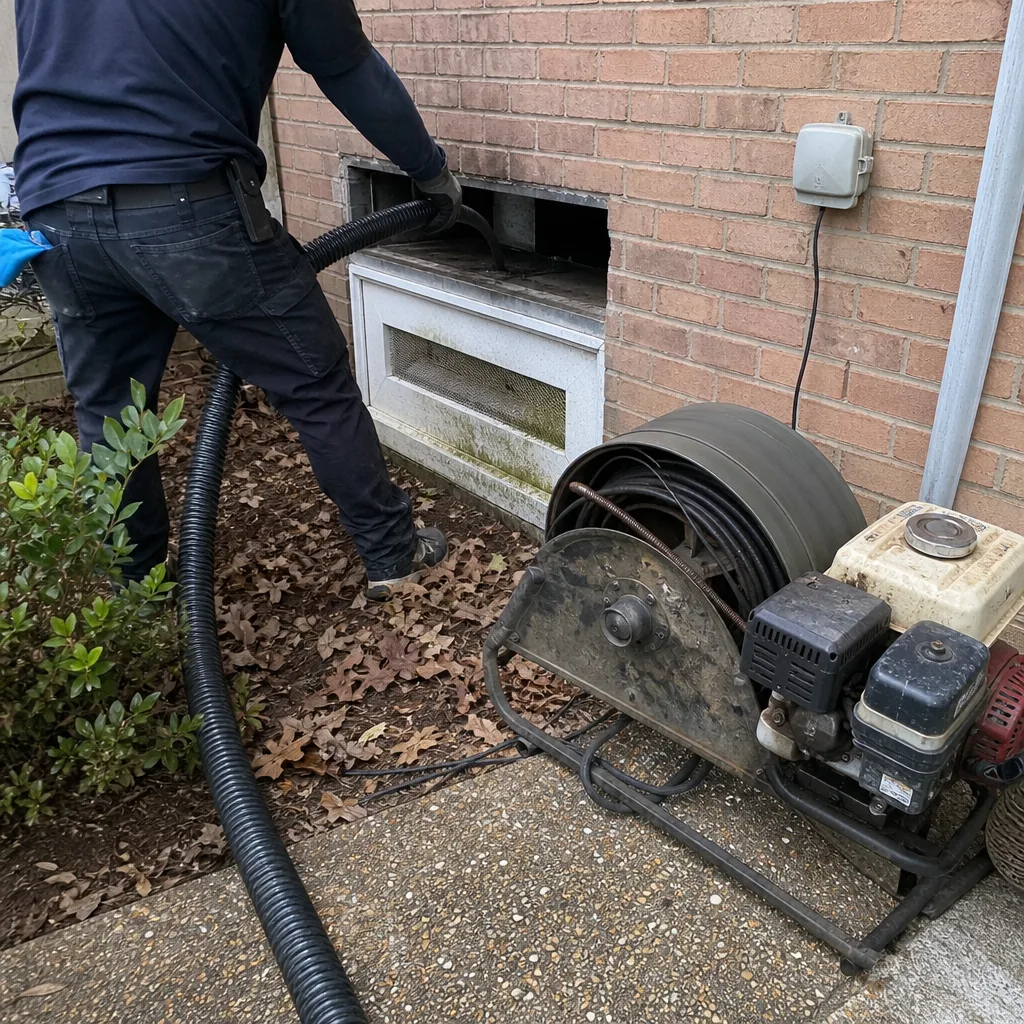 Before
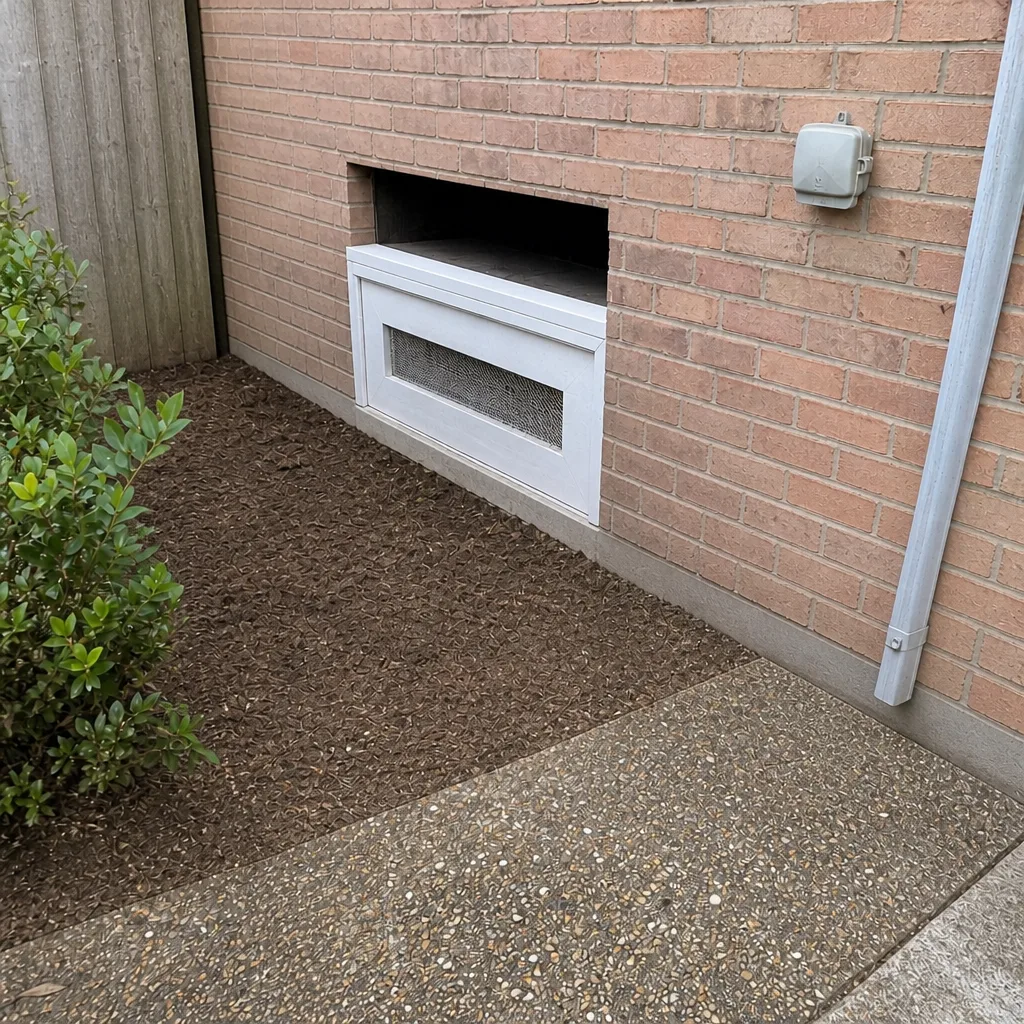 After
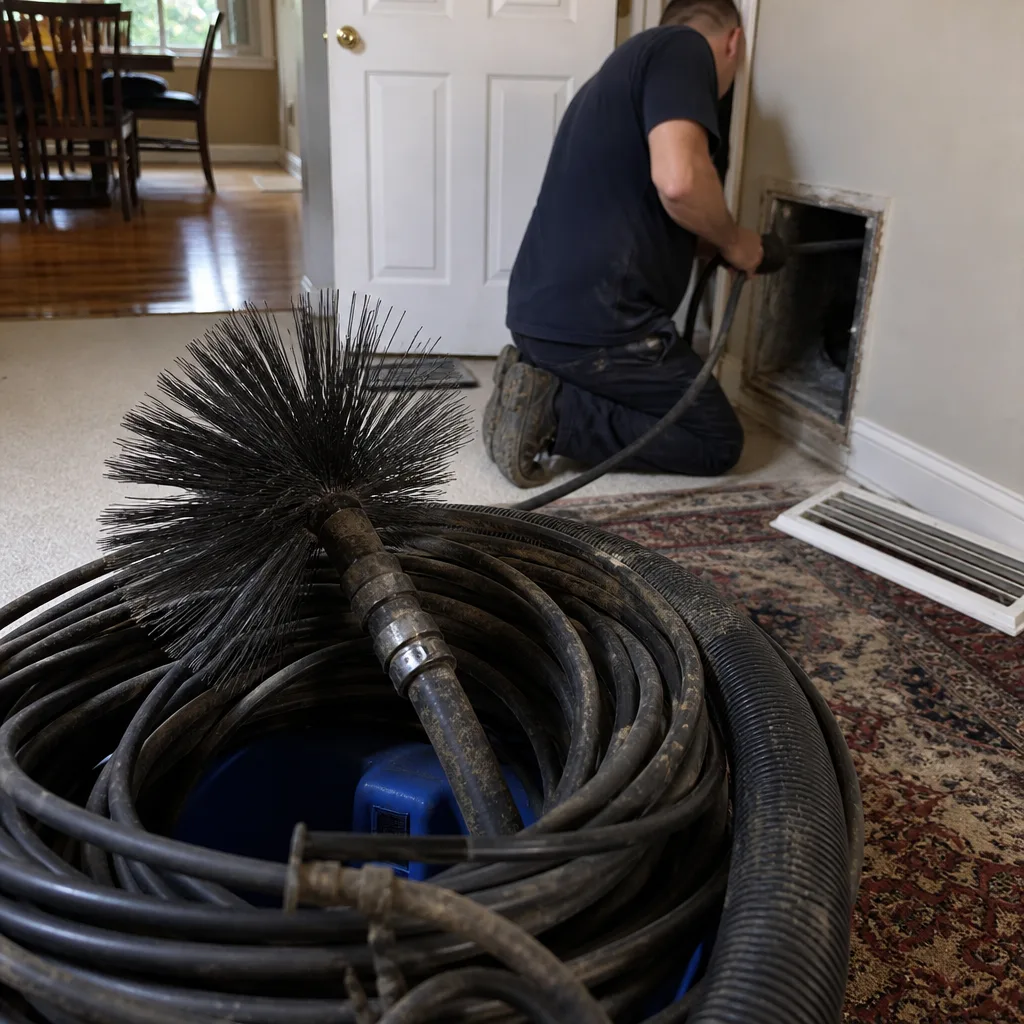 Before
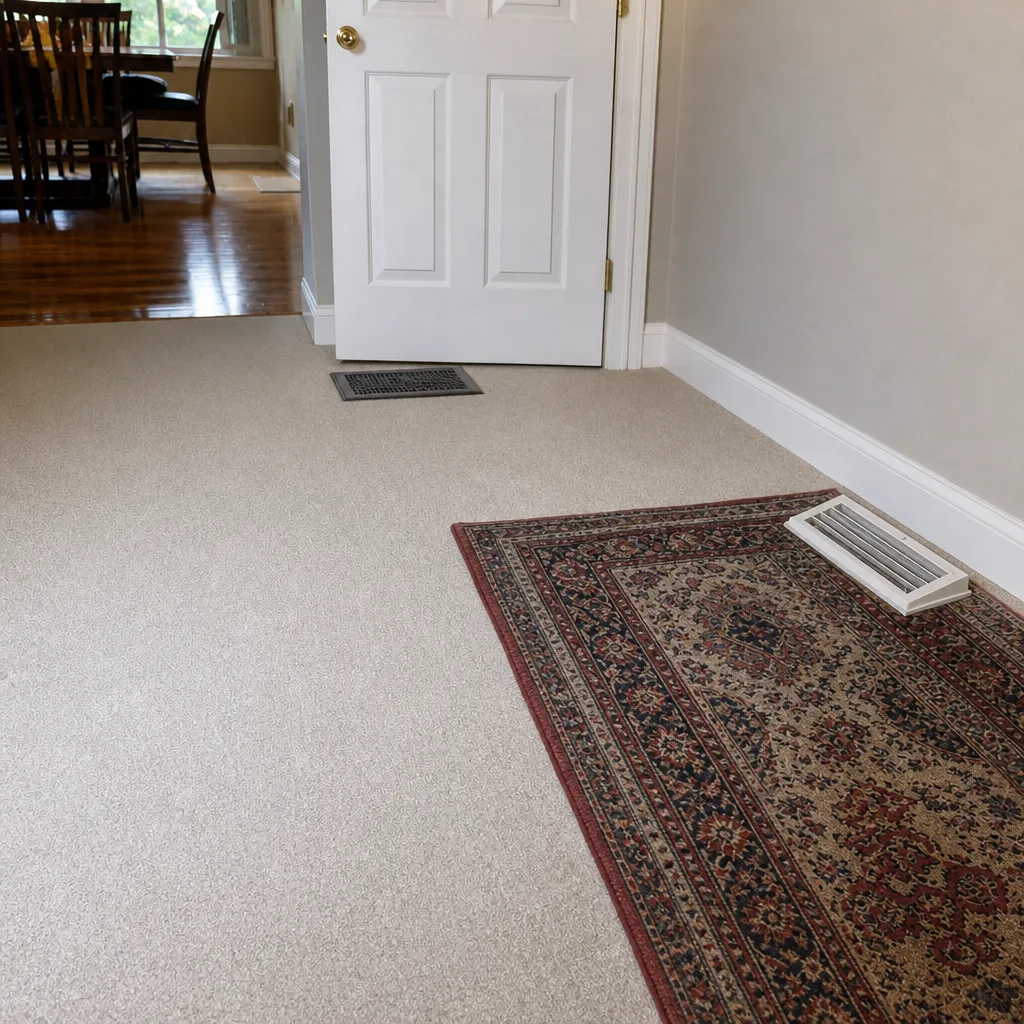 After
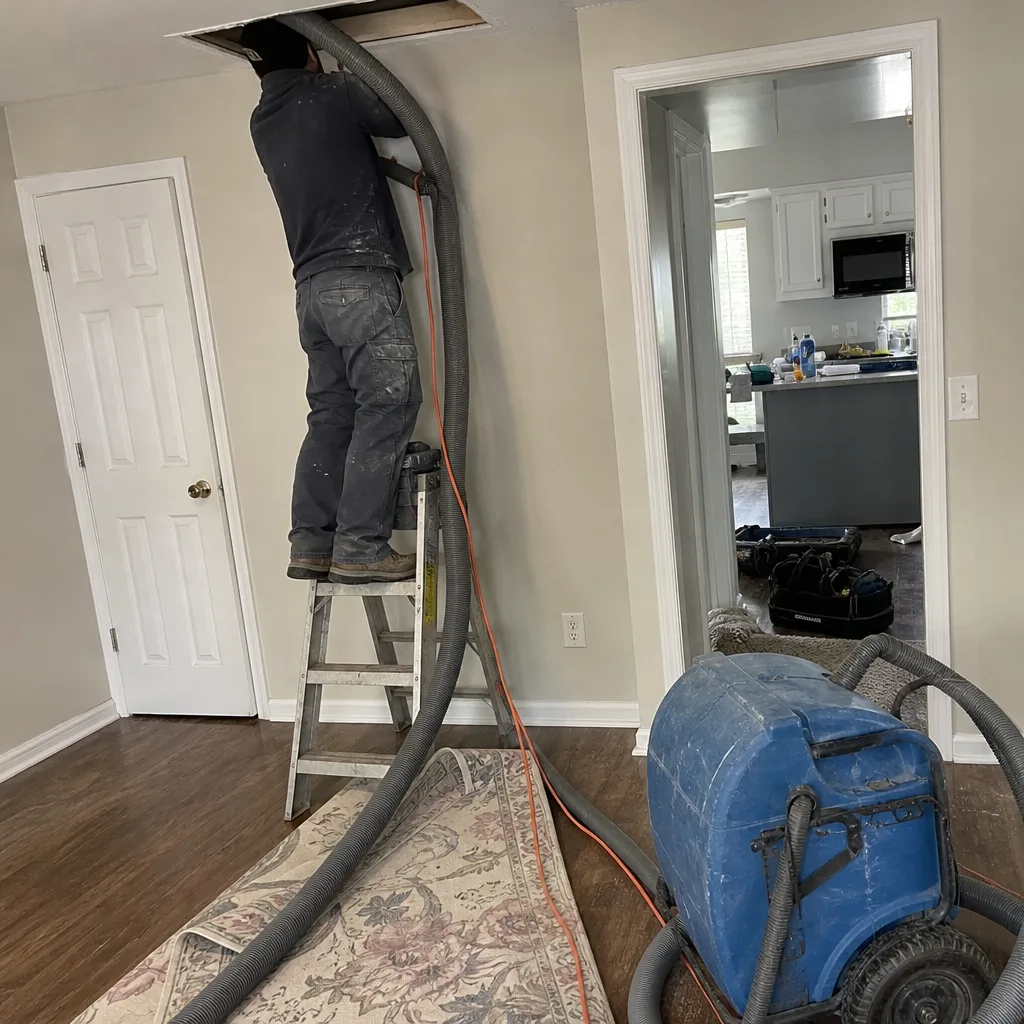 Before
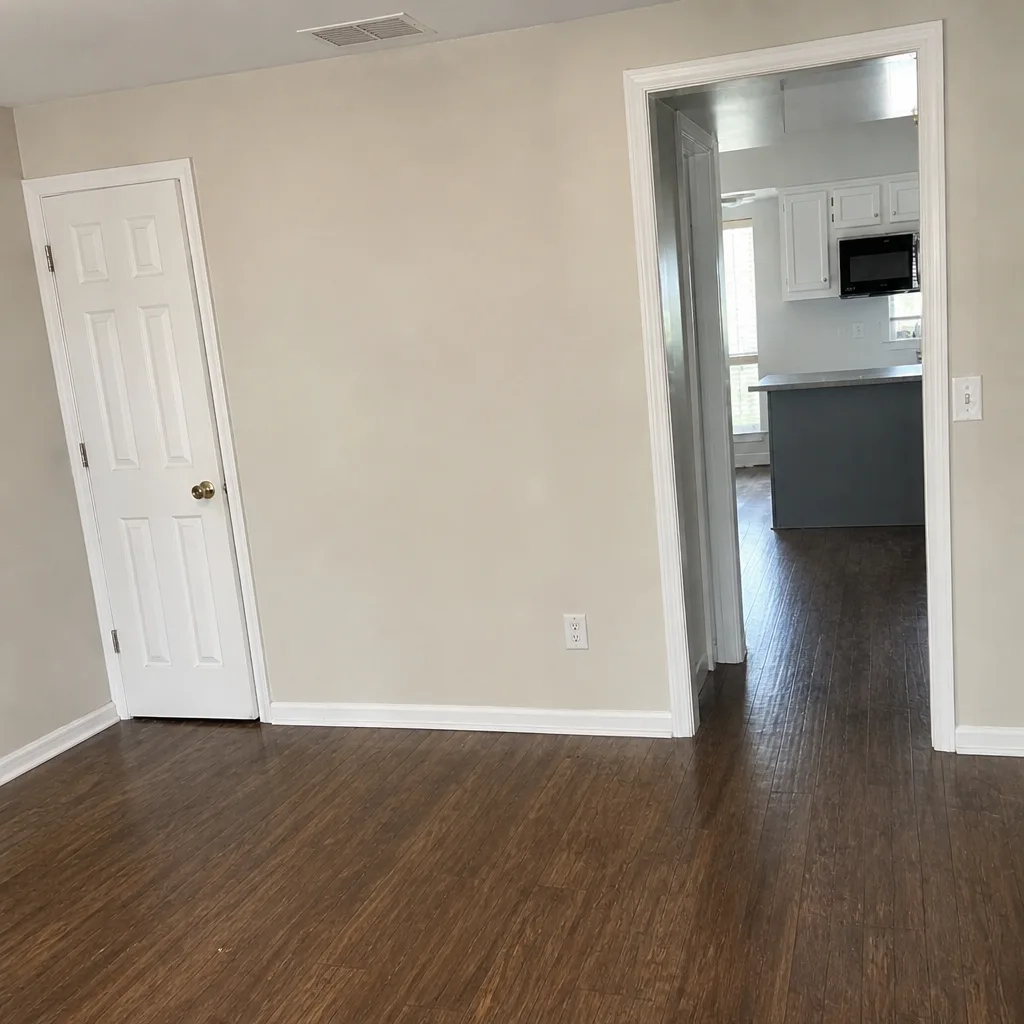 After
When to Call a Professional
Some symptoms call for a trained set of eyes. Call a professional if a temperature or airflow complaint survives a full cleaning, if dust reappears at registers within days, if you smell mustiness at supply vents, if you suspect rodent or moisture activity in the system, or if you’re unsure whether your system needs cleaning or repair. A camera inspection settles that question honestly. If you’ve never had the ducts evaluated and you’ve just finished a renovation or bought a Madison home with an unknown service history, schedule an assessment before assuming the worst. The path from a symptom to a fix runs through diagnosis, not guesswork. For a clear starting point, our Madison Air Duct Cleaning Co team walks through the whole-system approach, and property managers coordinating multiple units get the same documented evaluation.
Frequently Asked Questions
Because the source is probably moisture or growth that cleaning didn’t reach, not debris the cleaning missed. Cleaning removes the material that feeds growth, but it can’t dry a wet duct or stop a leak pulling humid crawlspace air into the system. In Madison’s humid climate, this is the most common cause of a smell that returns quickly. The fix is finding the moisture source and, where needed, sealing the leak.
The problem is likely duct leakage or pressure imbalance, not dirt. Cleaning removes what’s in the ducts; it doesn’t restore air lost through open joints, torn flex, or a crushed run. Uneven temperatures are an airflow complaint. A camera inspection and a leakage check are the honest next steps. Call (844) 443-4890 for a free estimate – we’ll evaluate the pathway before recommending any work.
There’s no universal schedule – it depends on your home, your pets, filter habits, and events like renovation or pest activity. In Middle Tennessee’s humidity, keeping the filter clean and watching for moisture matters more than a fixed interval. Check the vents yourself using the steps above, and schedule a professional evaluation when symptoms appear rather than on a calendar.
Cheap quotes usually cover a vacuum pass over the supply vents, not a full-system cleaning with rotary-brush contact, HEPA containment, and returns. The comparison that matters is equipment and scope. Ask what machine they use, whether returns and the plenum are included, and whether you’ll get before-and-after photos. If a company can’t answer those, the price tells you why.
Ask for before-and-after photos of your own ducts and a written report. Confirm the equipment: a Nikro HEPA-class setup for containment, a Rotobrush rotary-brush system for dislodging debris from duct walls. Ask whether returns, the plenum, and the air handler were included. A documented job is verifiable – a vague one isn’t.
No. Cleaning removes debris; it doesn’t seal a leak, and a leak that’s pulling attic or crawlspace air will keep delivering the smell. What fixes a leak-driven odor is finding the leak and repairing or sealing it – work that belongs in the same service visit as the cleaning. Call (844) 443-4890 for a free estimate and a proper diagnosis.
The Bottom Line
Most duct problems in Madison aren’t cleaning problems at all – they’re diagnostic failures. If your complaint is about temperature, airflow, or a smell that keeps coming back, the fix is most likely in the leaks and pressure issues behind the drywall and under the floor, not in another brush pass. Learn to read your system’s signals with the vent checks, ask for photos and a written report, and don’t accept repeat cleaning as a solution to a structural problem. When the symptom survives the obvious causes, a camera inspection is the honest next step. Our technicians have up to 15 years of experience tracing the full air pathway, and we repair what we find on the same visit – with professional-grade Rotobrush and Nikro systems, not shop vacuums in a van. Whether you’re a homeowner or a property manager with a whole building to evaluate, the diagnosis comes first. For dryer vents and air quality handling beyond the ducts, see our dryer vent cleaning service.
Contact
If you’ve followed the checks in this guide and still aren’t sure whether your system needs cleaning, sealing, or repair, call (844) 443-4890 for a free estimate. We’ll evaluate the full air pathway and explain what we find. We answer 24/7. Fast dispatch from 7am to 7pm, Sunday through Friday, closed Saturday. Cleaner air backed by equipment you can name – and a diagnosis you can trust before anyone touches your ducts.
Written by the team at Madison Air Duct Cleaning Co.