
Last updated November 24, 2026
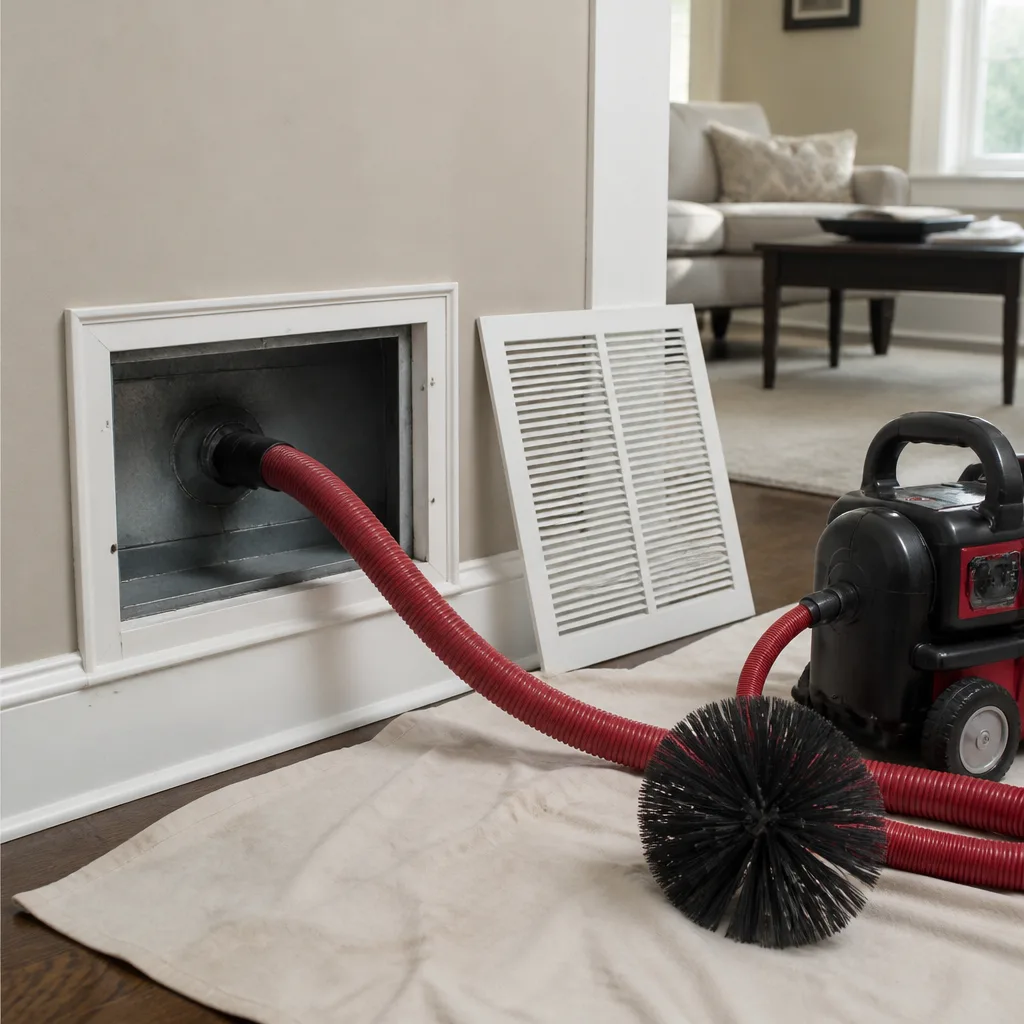 Whole-home duct cleaning
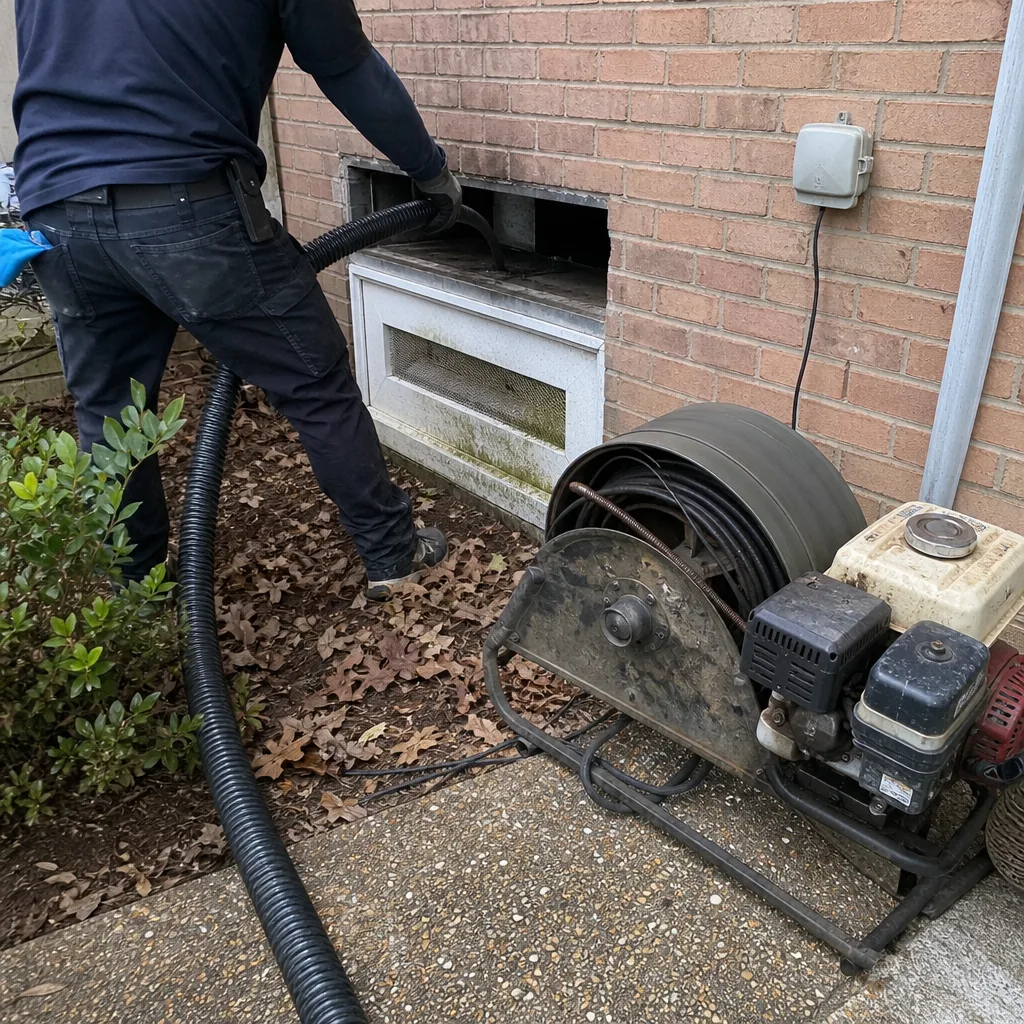
 Dryer vent cleaning
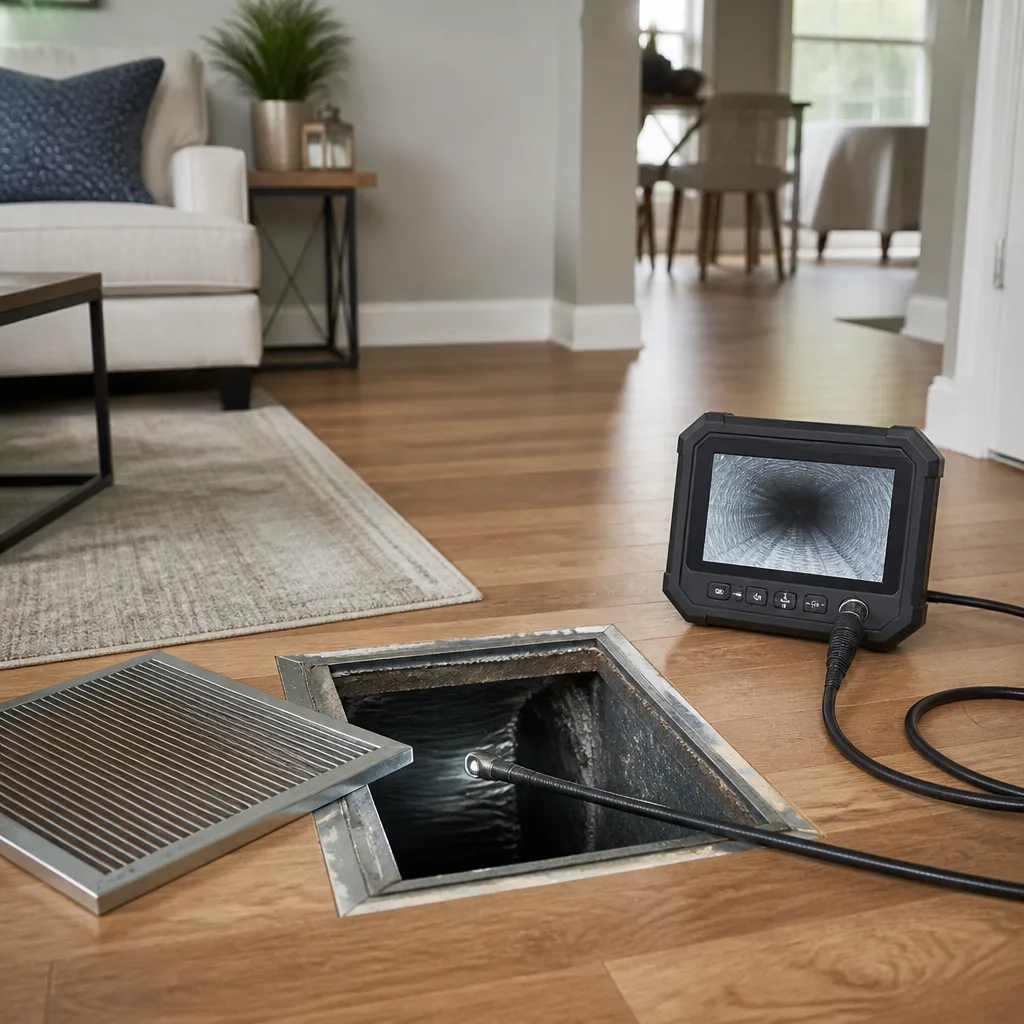 Camera inspection
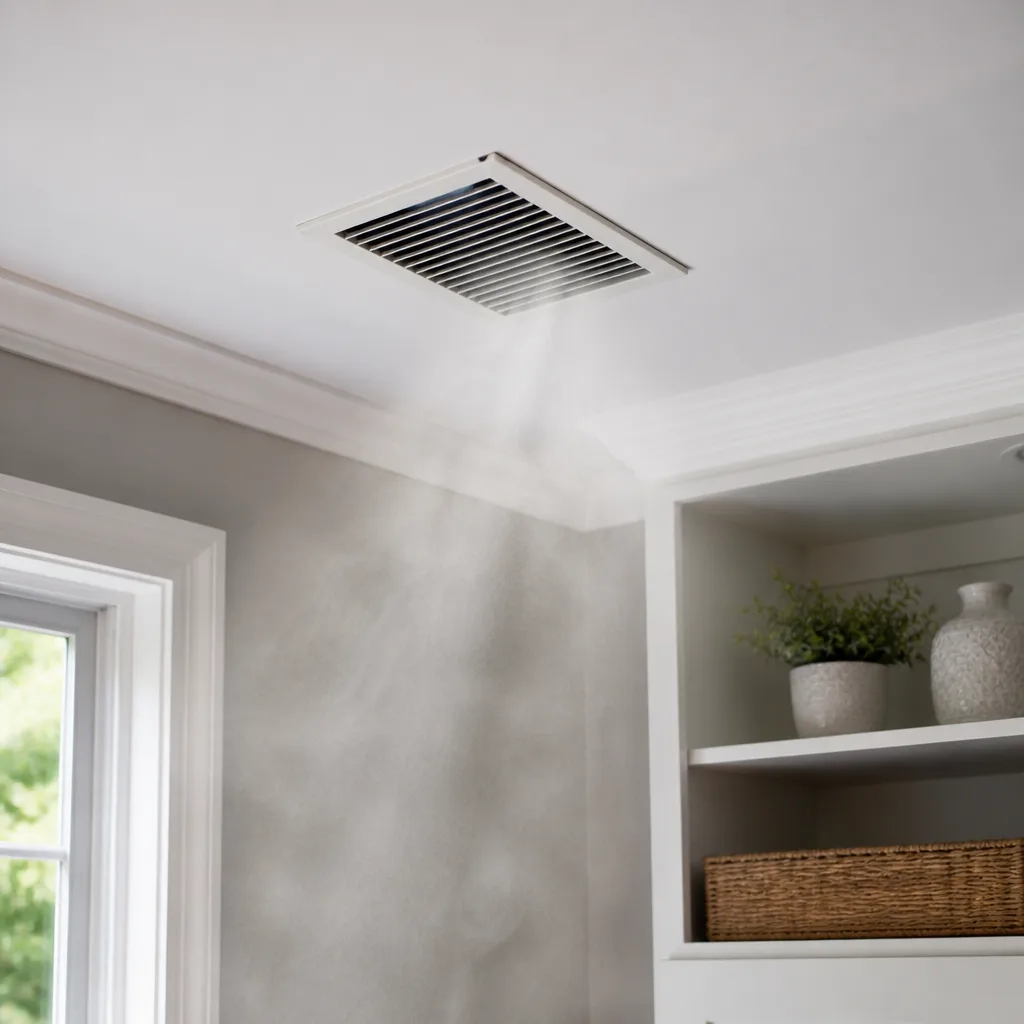 Sanitizing & deodorizing
Whole-system duct and dryer vent check with before-and-after photos - you see exactly what came out of your vents
That "$99 whole-house special" is a bait ad - the real number appears once they are in your hallway, or the "clean" is a shop-vac at the register. We photograph the inside of your ducts before and after instead.
Air Duct Cleaning Maintenance Checklist for Madison Homeowners
Most homeowners treat the filter like a light bulb: dark means change it, and that’s the whole conversation. But the filter slot is the one part of your duct system you can inspect with your own eyes every month, and it’s telling you far more than whether it needs swapping. Loading pattern, color distribution, and odor each point to something specific happening downstream. In Madison, where a long pollen season runs into a humid summer and then a fast, cold winter, those signals shift with the calendar. This guide gives you a checklist you can actually run yourself, most of it in under 20 minutes with no tools, and it shows you how to record what you find so a technician can read change over time instead of starting from zero.
Quick Answer
A homeowner duct maintenance checklist has three parts: a monthly walk of every supply register and the filter slot, seasonal inspections tied to Middle Tennessee’s climate (pre-pollen return checks, post-summer humidity review, pre-heating blower compartment review), and a simple written baseline of dates, photos, and filter weights so you can spot change. Most of the checklist is observation. Two actions genuinely slow contamination, keeping a properly sized filter clean and maintaining zero-condition airflow; the rest of the work, cleaning, sealing, and sanitizing, belongs to a professional with rotary-brush and HEPA-class equipment.
Styles & brands we work with
- Whole-home duct cleaning
- Dryer vent cleaning
- Camera inspection
- Sanitizing & deodorizing
Table of Contents
- The Monthly Register Walk-Through
- Reading a Loaded Filter as a Diagnostic Tool
- Your Madison Seasonal Calendar
- Building Your System Baseline
- What Works and What Backfires
- Sealing, Repair, and Air Pathway Integrity
- Photographing Your System Like a Technician
- When Professional Cleaning Makes Sense
The Monthly Register Walk-Through
Start at the supply register farthest from the furnace and work toward it. This order matters because a system loses pressure along its longest run, so the far register tells you the most about the system’s overall health. Set your thermostat to fan-only if you can, then look, listen, and feel for about five minutes per register.
What qualifies as a clean duct is an interior you can inspect without seeing debris buildup. Since you can’t see inside most of the run, you read the register grille instead. A light, even film of house dust is normal. What you’re hunting for is anything uneven or unexpected.
- Streaky black deposits on the grille louvers or the surrounding drywall. That pattern usually means air is moving not just through the duct but around it, from a gap, a loose boot, or a disconnected collar.
- Visible dust puffs when the blower starts. This points to debris sitting in the run, not just at the edge.
- Lint or fiber accumulation that looks like felt or hair rather than fine dust. That suggests deteriorating duct liner or insulation.
- Rust or water staining at the register flange. Condensation at the boot is often the first visible sign of a humidity problem.
- A whistle or rattle at high fan speed. Air is forcing its way through a restriction, a partly closed damper, or a loose connection.
- Cold spots or weak airflow at one register while others feel strong. A leak or blockage is likely between the trunk and that run.
Write down which registers show anomalies and when. These notes become genuinely useful to a professional later. When we trace the full air pathway, from return grille to blower unit, those observations tell us where to focus rotary-brush work rather than cleaning blind. That saves you the cost of cleaning ducts that didn’t need it.
Reading a Loaded Filter as a Diagnostic Tool
A loaded filter is a record of what has been moving through your household air. Most people glance at it and decide replace or keep. Read it instead.
Loading pattern. An evenly gray filter across the whole face is doing its job. A filter that loads heavily on one side and stays clean on the other is a red flag: air is bypassing the filter medium, often because the filter frame doesn’t fit the slot, the pleats have collapsed or partially torn, or the filter has pulled out of the return housing. Bypass means dust hits your blower and evaporator coil directly.
Color distribution. Gray-brown is dust. Black streaks and soot are worth a conversation about combustion sources, candles, or a nearby fireplace. Rust-orange tinting on a filter in Madison often lines up with a return grille just above a floor grate or near an exterior door, where soil is being drawn in. Sooty or uniformly dark filters from a well-kept home mean the system is capturing something other than everyday dust.
Odor. Sniff the filter after you pull it. A faint, clean paper smell is normal. A musty smell means microbes are colonizing somewhere damp upstream: a wet coil, a duct with condensation issues, or a return path running through a humid space. That smell cannot be cured with a fresh filter. It points to the need for a sanitizing treatment after cleaning, not instead of it.
Also note whether the filter has begun to bow. A bowed filter has lost its structural seal and will let unfiltered air past its edges. Comparing the filter’s condition to its install date is the single most useful diagnostic you can record.
Your Madison Seasonal Calendar
Madison’s climate has three distinct pressure points for ducts: the spring pollen push, the humid summer, and the first cold snap that launches heating season. Line up your checklist with these three transitions. Doing the checks at the same time each year turns your notes into a baseline you can compare against.
- Early spring, before pollen peaks. Check the return registers and the filter slot. Pollen season in Middle Tennessee pushes a lot of fine material through the return path, and a filter installed in autumn may be partially loaded already. A fresh, properly seated filter now protects you through the heaviest weeks. Also check that return grilles are unobstructed by furniture you moved during winter.
- Late summer, the humidity inspection. After months of high humidity, look for condensation at registers, damp drywall near boots, and any musty smell when the fan first starts. Also check whether the blower cabinet or coil area has condensation staining. Damp duct interiors are the condition that turns ordinary dust into biological growth, so this check is the one that prevents the problems a cleaning can only fix after the fact.
- Early autumn, the pre-heating blower review. Before you switch to heat, have the blower compartment and air handler inspected. Dust that settled all summer now gets blown into the living space when the burners or heat strip run. A blower compartment review as part of routine HVAC cleaning catches the accumulation before you smell that first heat-cycle dust.
- Mid-winter, the airflow re-check. With the system running hard, redo the register walk-through. This is when restrictions and leaky runs show up most clearly, because demand is highest and any weak connection is working hardest.
One more calendar note: your dryer vent should be inspected at least annually and cleaned on a schedule tied to load volume and vent length, not just once a year. Read dryer vent cleaning for what the inspection looks for.
Building Your System Baseline
A technician’s job is far easier when they can read change over time. Starting from zero means they clean to a general standard; starting from a documented baseline means they can tell you whether your system is getting worse. Build the record once, then update it at each seasonal check.
- Map your system. Number every supply register and note its location on a simple sketch. Pair each with a rough sense of relative airflow, from weak to strong. This becomes your map for the monthly walk.
- Photograph the before state. Take well-lit photos of every register grille, the filter slot, and the visible portion of the air handler. Include a coin or a hand for scale. These are your reference images.
- Weigh the filter. A kitchen scale gives you a number. A new filter weighed at install and weighed monthly shows loading rate instead of a subjective look-and-guess.
- Record dates. Note every filter change with the date and the filter’s MERV rating. A pattern of loading in weeks rather than months tells you the system is working harder than it should.
- Note odors and events. Write down the first musty smell, any renovation dust, any roof or plumbing leak. These are the small facts that explain a change months later.
Keep the whole thing in a folder or a phone note. When you call us, you can hand over a baseline that lets us move straight to the specific run or register that’s changed. Professional-grade Rotobrush and Nikro equipment does the heavy work, but your records make sure we use it where it counts.
What Works and What Backfires
Honest answer: most of what you can do yourself is observation and airflow hygiene. Two actions genuinely slow the rate of contamination. Everything else is either neutral or actively makes things worse.
What works: First, keep a correctly sized filter clean and correctly seated. This protects the blower and coil and is the single highest-value action you control. Second, ensure no returns are blocked and that every supply register is open, so pressure across the system stays balanced. A balanced system moves the same air with less velocity through any one run, and less velocity means less shearing of dust off duct walls. Those two actions do more than a cabinet full of gadgets.
What backfires: Spraying deodorizers, anti-microbial misters, or “duct cleaner” aerosols into registers. These do not remove debris. They wet the dust layer, which then binds to the duct wall, an ideal condition for microbial growth downstream. Once that layer is bonded, it takes mechanical rotary brushing to dislodge, and sanitizing that follows cleaning becomes mandatory rather than optional. The same goes for sticking a shop vacuum hose into a register: it can dislodge debris from one spot and push it further into the run, and it can pull a flexible duct liner loose.
In our experience, the well-kept systems we see in Madison tend to have three habits in common: a clean, properly fitted filter; unrestricted returns; and a yearly professional pass that includes sealing as well as cleaning. That last one matters because a clean, leaky duct re-contaminates from the house side.
Sealing, Repair, and Air Pathway Integrity
Cleaning removes what’s inside the duct. Sealing decides whether it stays clean. A system with leaky joints, disconnected collars, torn liner, or crushed flex run pulls air from crawlspaces, attics, and wall cavities, and that air carries soil, insulation fibers, and moisture straight into the pathway. You can clean a leaky duct every year and never get ahead of it.
This is why we perform duct repair and sealing in-house rather than referring it out. When a cleaning reveals a split boot or a disconnected run, we can correct it on the same visit. That keeps the whole scope, cleaning, repair, and air quality, coordinated in one place, which matters more than it sounds.
Look for these during your own walk-through:
- Staining or dark dust trails around register flanges and ceiling boots.
- Grilles that pull away from the wall or ceiling when you touch them.
- Crushed, kinked, or sagging flexible duct runs visible near the air handler.
- Conditioned air leaking into the attic or crawlspace, which shows up as a pressure difference you can sometimes feel with a hand near a seam.
- Return paths that draw from an unconditioned space.
For the deeper structural picture and what a full cleaning involves, see our air duct cleaning page. For ongoing air-quality improvements after a cleaning, Honeywell and Aprilaire products integrate with your existing system and address filtration or humidity at the source rather than at the register.
Photographing Your System Like a Technician
Photos are the cheapest diagnostic tool you own. The trick is to take them the same way each season so change is visible at a glance. A technician comparing two images taken from the same spot on the same register can read deterioration that no written description captures.
- Pick fixed reference points. Stand in the same spot for the same register each time, same angle, same height.
- Light it well. Use a phone flashlight across the surface rather than straight on. Raking light makes dust layers and delamination visible.
- Include the grille and the surrounding wall. Staining around the flange tells you about leaks that the grille alone hides.
- Photograph the filter in the slot before you remove it. Loading pattern and seating gaps are what you need to see, and once it’s out, that information is gone.
- Date-stamp and label. Register number, location, and date. Labeling takes seconds and makes the whole folder usable.
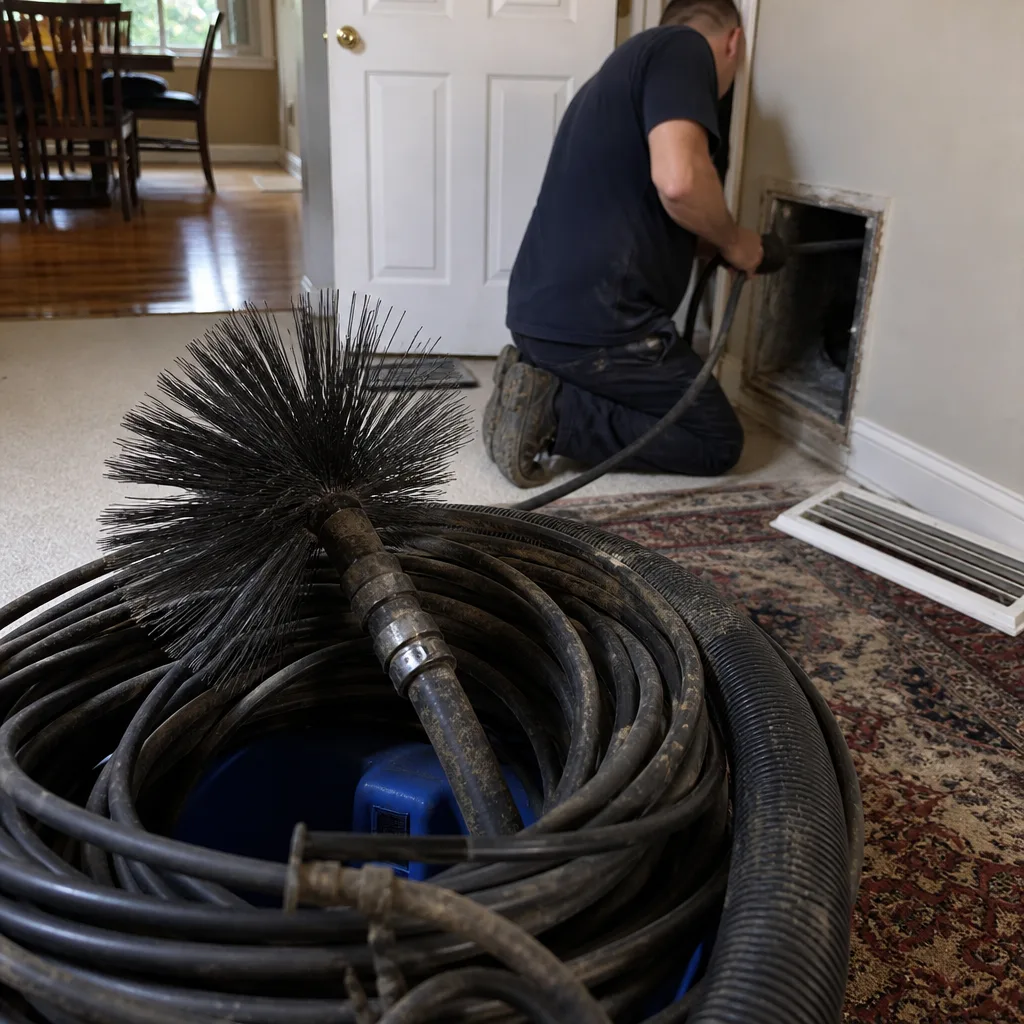
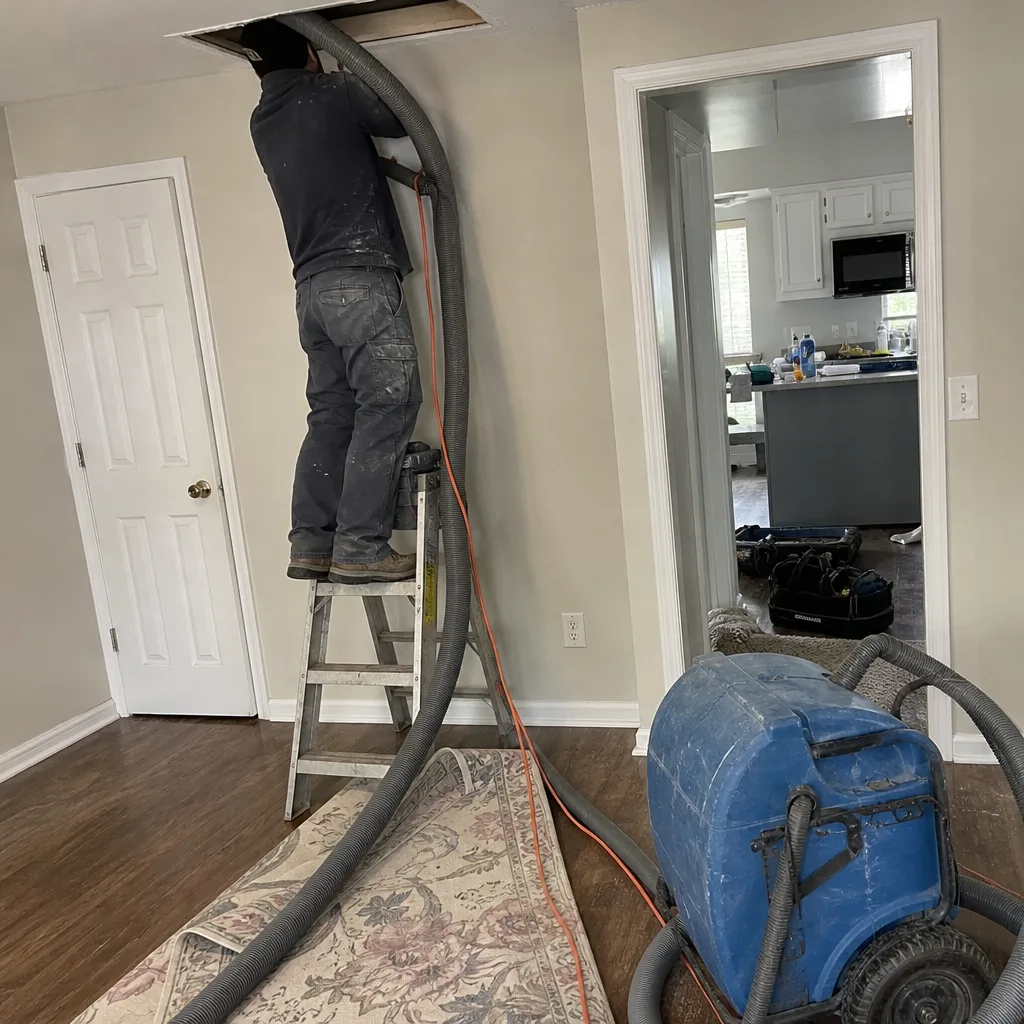
When you hand over a folder of dated photos, we can see the same thing a trained eye reads: which runs are getting worse, which are stable, and where sealing would change the trajectory. Before-and-after photos are also how we show our own work. You should expect to see them of your ducts, not a stock image of someone else’s.
When Professional Cleaning Makes Sense
The checklist tells you when observation is no longer enough. Call a professional when you find any of the following: visible dust plumes at more than one register, persistent musty odor that returns after a filter change, water staining or condensation in the duct system, a recent renovation or roof leak that pulled debris into the returns, or an animal intrusion. These are conditions where mechanical cleaning and sanitation with proper equipment, in the right order, becomes the only fix.
Cleaning done well is more than a vacuum at the register. Professional-grade Rotobrush rotary-brush equipment dislodges debris from duct walls, Nikro HEPA-class negative-pressure equipment contains it, and Abatement Technologies air filtration captures particulates as they’re disturbed rather than recirculating them through your home. Madison Air Duct Cleaning Co performs all of this, plus dryer vent cleaning and HVAC unit cleaning, under one roof. When you compare quotes, ask what equipment the company brings and whether they seal what they find. Those questions separate a real duct company from a fly-by-night operation.
We answer 24/7. Fast dispatch from 7am to 7pm, Sunday through Friday, estimates are free, and the written estimate sets the final price.
Common Mistakes to Avoid
- Judging a filter by color alone. Loading pattern and seating gaps matter more than how dark it is. A dark, well-seated filter is often working harder than a light, badly seated one.
- Spraying deodorizers into registers. They wet the dust layer and bind it to the duct wall, turning ordinary dust into a growing condition. Cleaning is mechanical, not aromatic.
- Skipping the pre-heating blower review. In Madison, dust settled all summer gets blown into the living space on the first heat cycle. Check the blower compartment in early autumn.
- Cleaning a leaky system without sealing it. The duct re-contaminates from the house side. When we find leaks, we fix them on the same visit.
- Starting from zero with every technician. Without a baseline of dates, weights, and photos, no one can tell you if your system is getting worse.
- Pushing a shop vacuum into a register. It can force debris deeper into the run or tear a flexible liner. Observation is your job; mechanical cleaning is ours.
- Ignoring one weak register. A single weak register is often the first sign of a gap or blockage between the trunk and that run, not just an airflow quirk.
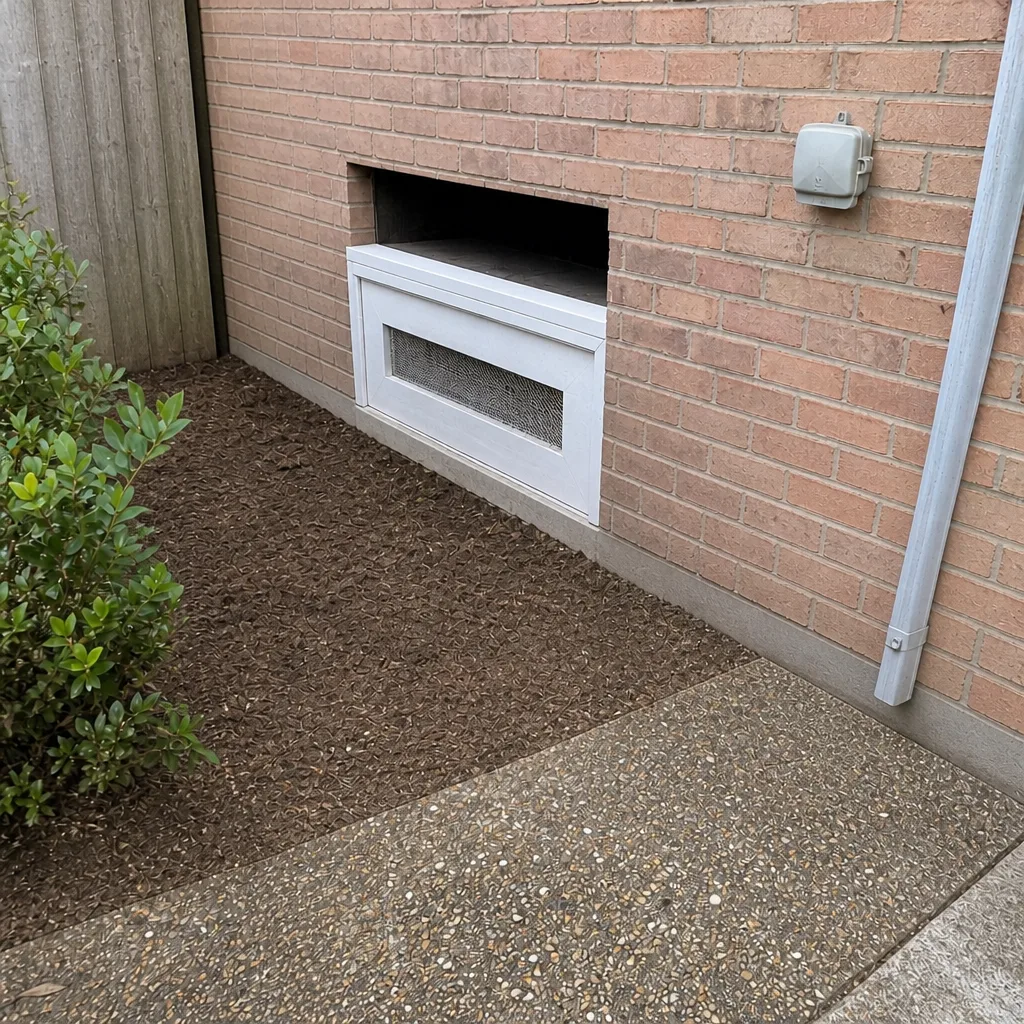
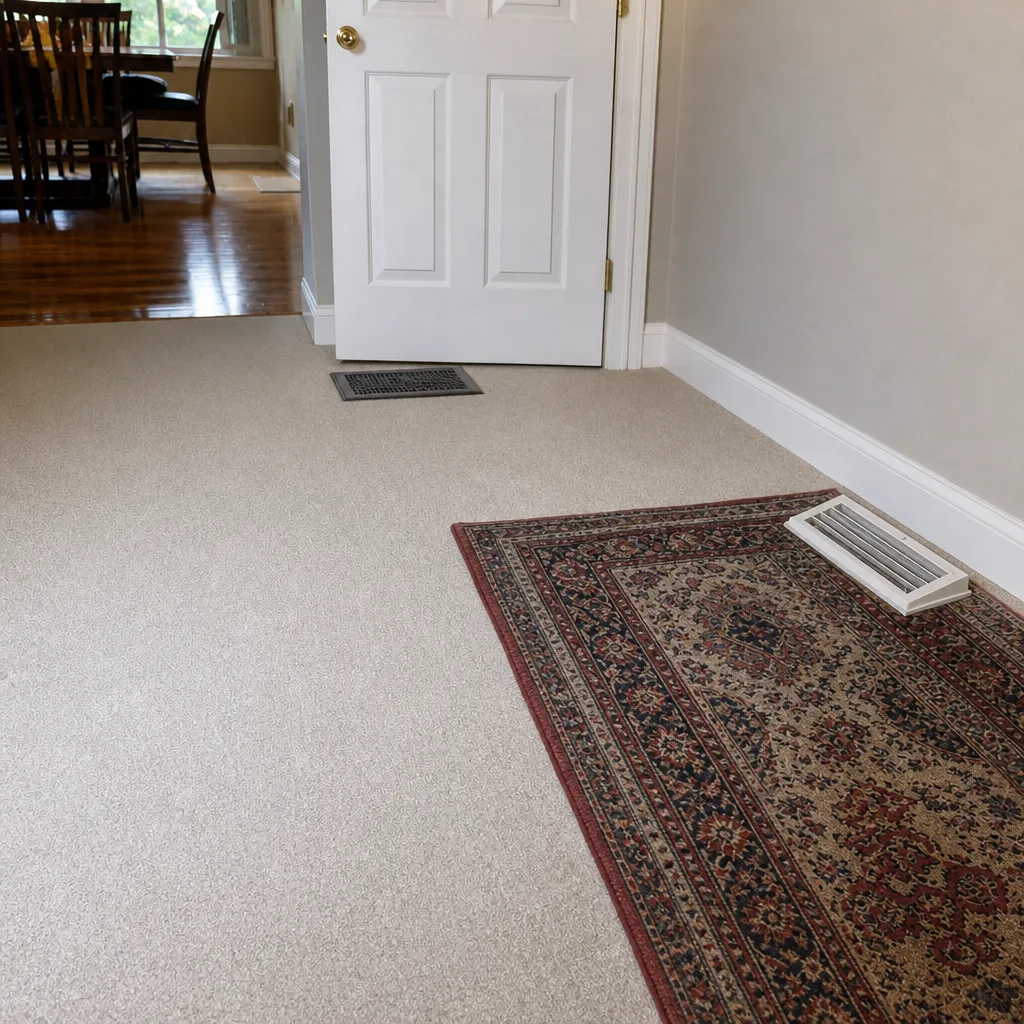
See the difference
 Before
 After
 Before
 After
 Before
 After
When to Call a Professional
Call when the checklist surfaces a problem you can’t resolve with a filter and a return grille. That means dust plumes at multiple registers, a musty smell that survives a filter change, condensation or water staining in the duct system, a recent renovation or roof leak, an animal intrusion, or a system that’s simply due for its periodic full cleaning with proper equipment. If you’re comparing companies, ask about equipment and scope before price. Madison Air Duct Cleaning Co offers free estimates in Madison, and our technicians have up to 15 years of experience with the air pathway from return grille to blower. Call (844) 443-4890. We answer 24/7. Fast dispatch from 7am to 7pm, Sunday through Friday. For the full picture of what a professional visit involves, start with Madison Air Duct Cleaning Co.
Frequently Asked Questions
Walk your supply registers once a month and read the filter at the same time. That’s under 20 minutes and catches change while it’s still cheap to fix. Add the three seasonal checks, pre-pollen in early spring, post-summer humidity inspection, and a pre-heating blower compartment review in early autumn, so your notes line up year over year in Madison’s climate.
Cleaning with professional-grade equipment removes accumulated debris from duct walls, and when it’s paired with sealing and sanitizing, the system stays cleaner longer. The measurable part for you is the baseline you build: being able to show a technician what’s changed over time lets them clean the right areas, not clean blind. Cleaning alone on a leaky system is the case where results fade, which is why we repair and seal in-house.
No. Sprays and deodorizers don’t remove debris; they wet the dust layer, so it binds to the duct wall, which encourages microbial growth downstream. Sanitizing that follows mechanical cleaning is the right order, and it’s a professional step, not a spray in the register. For the full cleaning process, see our guide to air duct cleaning.
A full pathway specialist cleans supply and return ducts, cleans the HVAC unit itself, cleans the dryer vent, and repairs and seals what the cleaning reveals. A single-service duct cleaner stops at the duct opening. We cover all of it in-house, using Rotobrush, Nikro, and Abatement Technologies equipment, so nothing gets referred out and the air-quality work continues after the cleaning.
New construction can leave debris in the system, and a first-year baseline is the most useful record you’ll ever keep. Photo and weigh the filter from the start, check the pre-heating blower compartment in early autumn, and call if you find visible construction dust at the registers. Madison homes that start with a baseline spend less over time because problems get caught before they compound.
The dryer vent is part of the same air pathway discipline, just a different one. Lint buildup is a fire risk and an airflow problem, so inspect it at least annually and clean it on a schedule tied to load volume and vent length. Read more in our guide to dryer vent cleaning. When you call, we can scope both the ducts and the dryer vent in one estimate.
The Bottom Line
Duct maintenance is observation, timing, and record-keeping. Your filter slot is telling you whether air is bypassing the filter, where soot and soil are coming from, and whether something damp is growing upstream. Madison’s climate adds a seasonal rhythm: return checks before pollen, humidity inspection after summer, blower compartment review before heating season. Do the monthly walk and the two real actions, a properly seated clean filter and unobstructed returns, and skip the sprays. Keep a dated photo-and-weight baseline. When the checklist shows a problem that needs rotary brushing, HEPA containment, or sealing, that’s our job. Call (844) 443-4890 for a free estimate, and ask about our scope for HVAC cleaning as well as dryer vent cleaning while you’re at it.
Written by the team at Madison Air Duct Cleaning Co.