
Last updated November 24, 2026
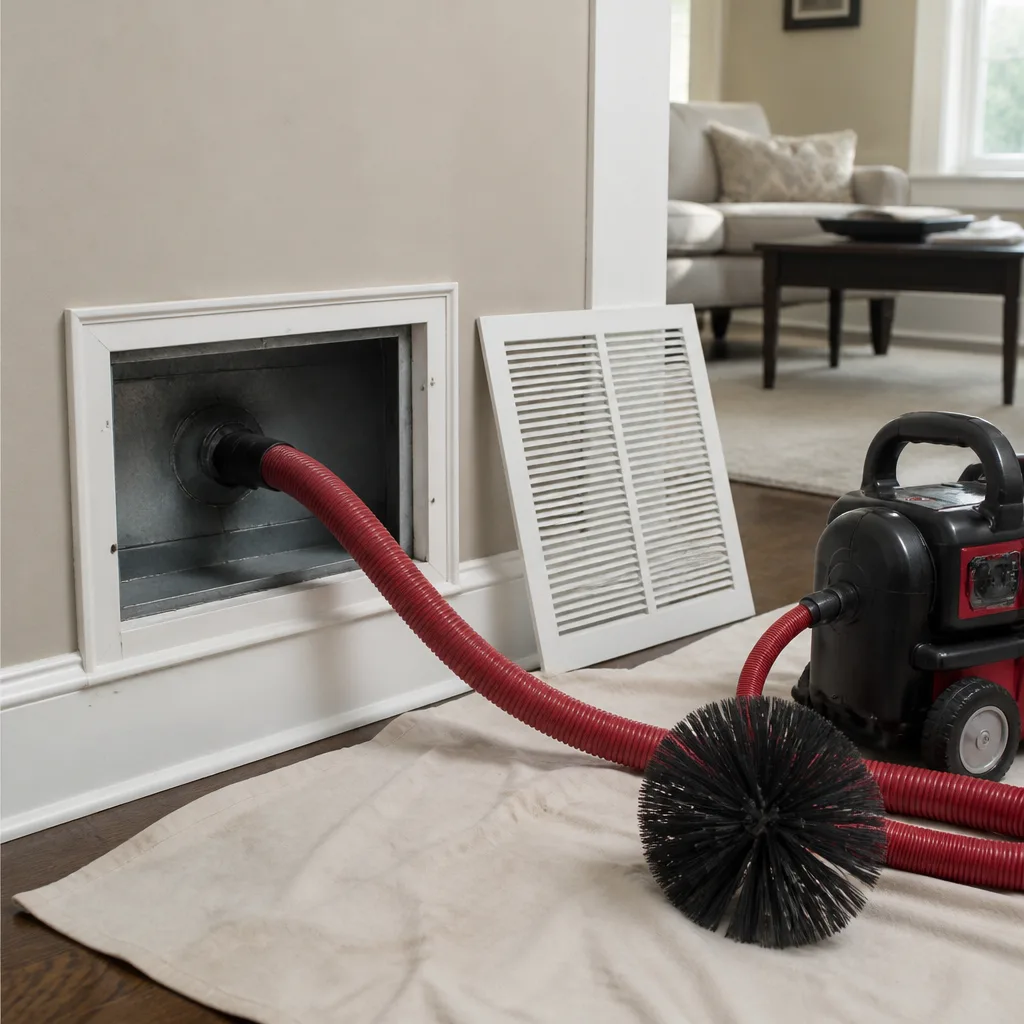 Whole-home duct cleaning
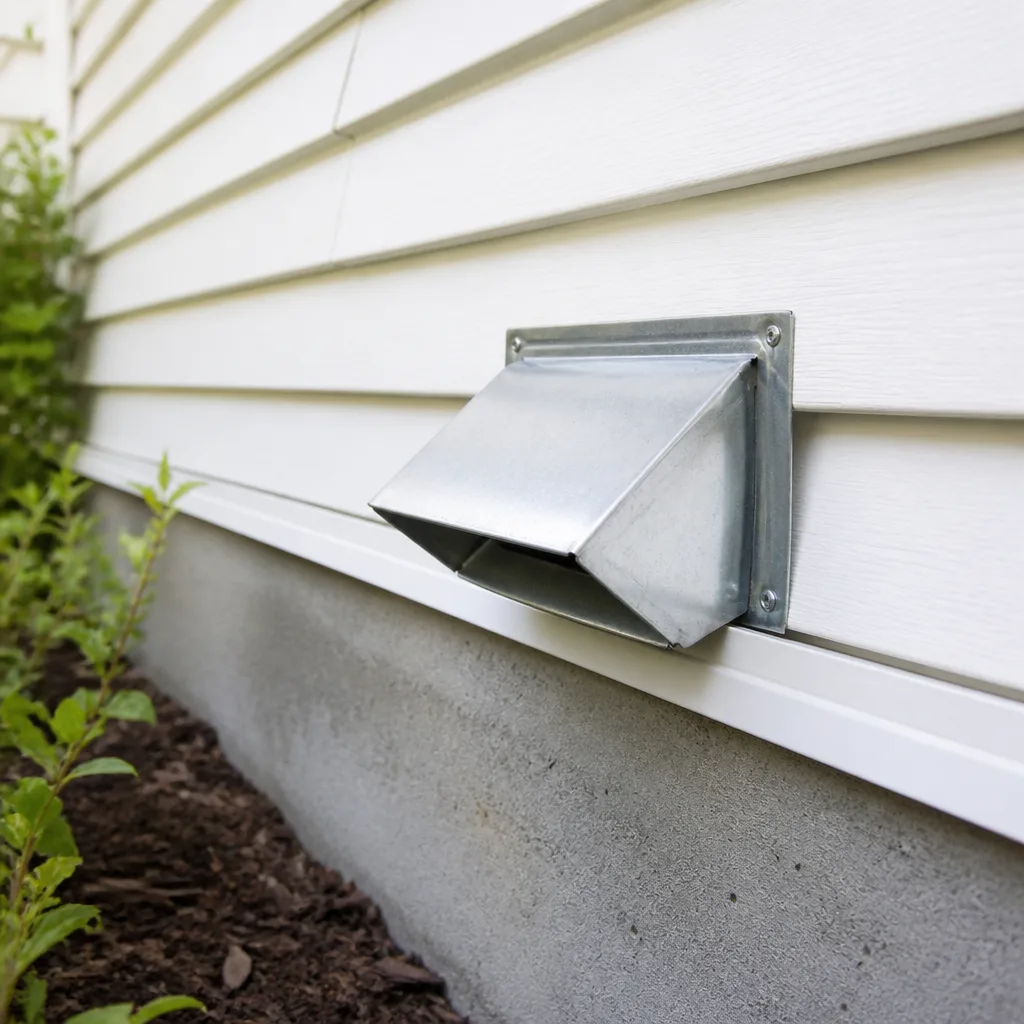 Dryer vent cleaning
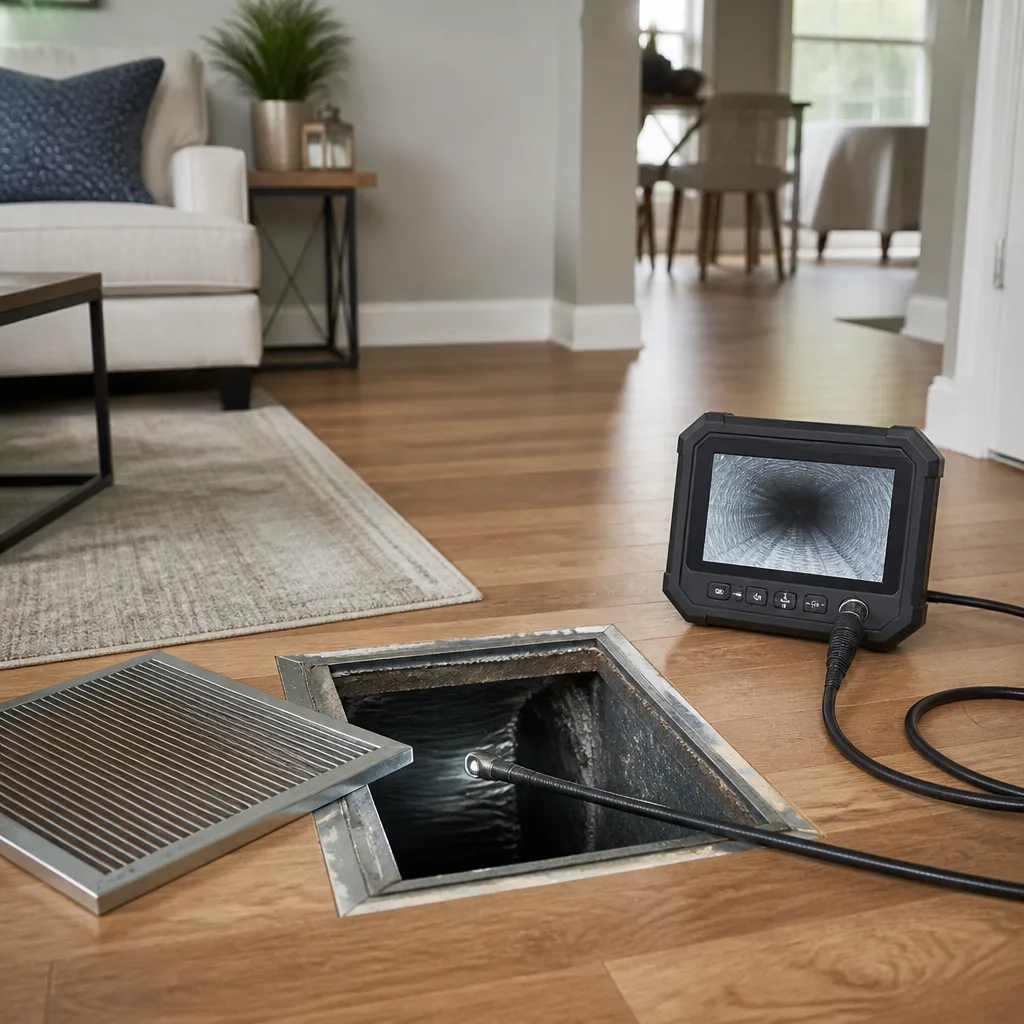 Camera inspection
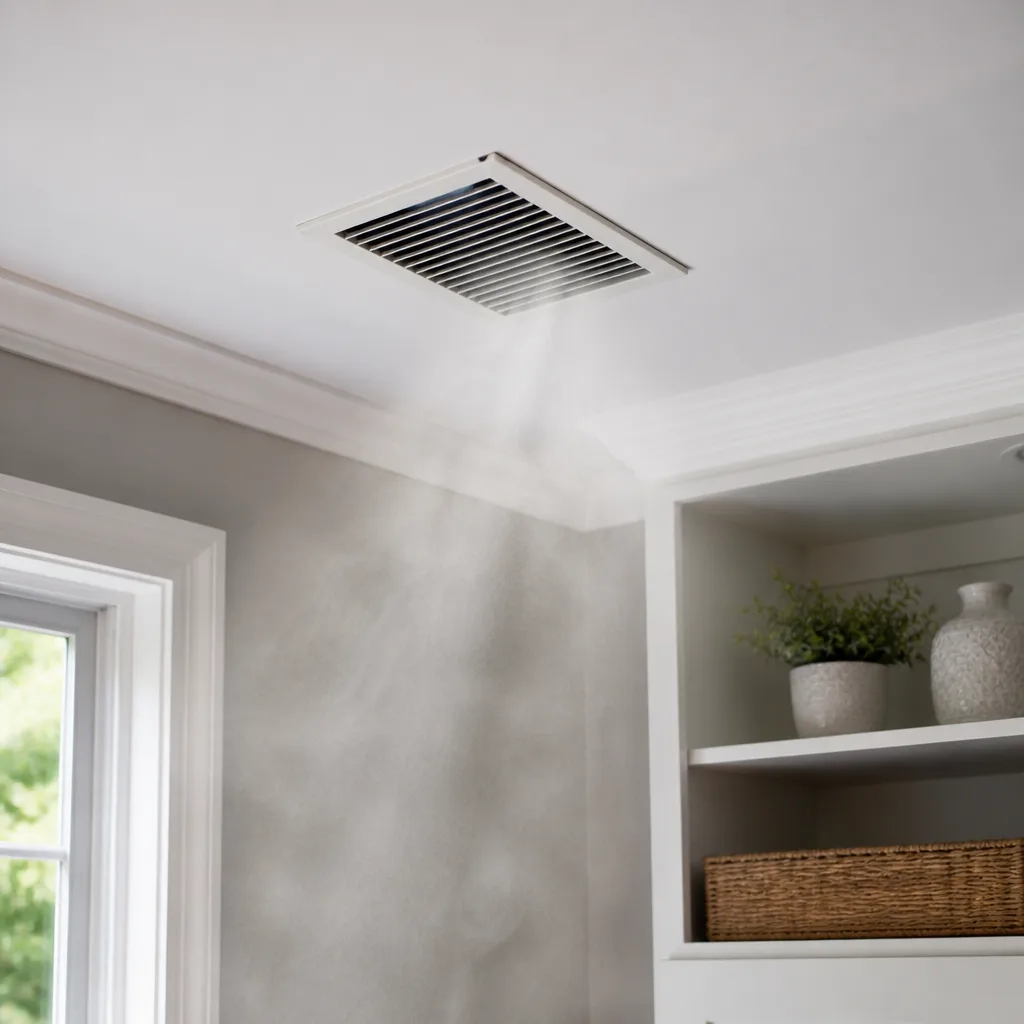 Sanitizing & deodorizing
Whole-system duct and dryer vent check with before-and-after photos - you see exactly what came out of your vents
That "$99 whole-house special" is a bait ad - the real number appears once they are in your hallway, or the "clean" is a shop-vac at the register. We photograph the inside of your ducts before and after instead.
Air Duct Cleaning Cost Breakdown: The Madison Homeowner’s Reference for 2026
The $89 duct cleaning coupon and the $900 full-system quote can both be honest prices. They’re just not for the same job, and most homeowners have no way to tell which one their house actually needs. That’s the problem this guide solves. We’re going to open up the duct cleaning price in Madison the way a technician sees it: system size, duct material, access, equipment class, and what verification you get at the end. By the time you finish, you’ll be able to read any quote and know exactly what’s inside the number. No coupons, no pressure, just the anatomy of a fair estimate.
Quick Answer
Air duct cleaning in Madison, TN in 2026 typically runs roughly $300 to $500 for a smaller home, $400 to $700 for a standard 2,000 square foot house, and $600 to $1,200 or more for larger or multiple-zone systems. Those ranges assume a whole-system, negative-pressure cleaning with professional rotary-brush and HEPA equipment and a written scope of work. A price of $89 to $150 usually covers a partial or single-trunk cleaning, not a full house.
Styles & brands we work with
- Whole-home duct cleaning
- Dryer vent cleaning
- Camera inspection
- Sanitizing & deodorizing
Table of Contents
- Why Two Honest Quotes Can Differ by $700
- What Actually Drives the Price: The Five Cost Drivers
- Per-Vent Pricing vs. Whole-System Negative Pressure
- Cost by Home Size: 1,500, 2,000, and 2,500 Square Feet
- Add-Ons With Real Cost Justification, and Upsells Without
- How to Read a Written Scope of Work
- Equipment Class: Why the Machine Behind the Price Matters
- Verification: How You Know the Work Was Done
Why Two Honest Quotes Can Differ by $700
Walk through any online review page for duct cleaning in Madison and you’ll see the same two stories side by side. Someone paid $99 and felt they got exactly what they paid for. Someone else paid $850 and felt it was the best money they ever spent on their HVAC system. Both are usually telling the truth. The number alone tells you almost nothing because duct cleaning is not one service; it’s a family of services that share a name.
The difference comes down to three questions. What was cleaned? What equipment was used to clean it? And how did the homeowner know it was actually clean when the technicians left? Two companies can show up at the same house and quote a $700 gap without either one being dishonest. One is quoting a partial surface vacuum of the visible grilles and a few feet of trunk line. The other is quoting a full air-pathway clean: every supply and return, the blower compartment, the plenum, with live HEPA filtration scrubbing the air during the job and a camera inspection at the end.
Here in Madison, we’ve seen this play out in every kind of house: the 1970s ranch homes off Neelys Bend Road with original sheet-metal trunk lines, the newer builds out toward the lake with flex duct run through tight chases, and the split-level rentals where the same system serves both floors. The house dictates a lot of the price. But the company’s scope and equipment dictate the rest, and that’s the part you can control.
Hold onto one principle while you read the rest of this guide: a legitimate price is a price for a clearly defined job, and no scope means no meaningful comparison. When you’re ready to see what that definition looks like on paper, our main Madison Air Duct Cleaning Co page lays out the full air-pathway approach we bring to every estimate.
What Actually Drives the Price: The Five Cost Drivers
Every honest quote you’ll get in Madison breaks down into roughly the same five cost drivers. When you understand them, you can look at any estimate and see whether the number is being driven up by your house or by the company’s sales script.
1. System Size and Zone Count
Square footage matters, but it’s not the whole story. What matters more is how many separate supply branches, return trunks, and zones the system has. A 2,200 square foot house with a single-zone system can cost less to clean than a 1,800 square foot house with two zones because there’s more ductwork and more transitions to reach. When a company quotes by square footage alone, it’s estimating. When it walks the house and counts branches and returns, it’s quoting.
2. Duct Material Type
Rigid sheet metal cleans differently than flex duct, and flex duct cleans differently than ductboard. Sheet metal responds well to a rotary brush and high-vacuum extraction. Flex duct requires gentler agitation and more careful negative pressure so the liner isn’t damaged. Ductboard needs a different touch again. Material affects labor time, and labor time is price.
3. Access Difficulty
This is the driver most often left out of cheap quotes, and it’s the one that causes the biggest surprise on the day of the job. Access means how easily the technicians can reach the plenums, connect negative pressure, and maneuver around attic insulation, crawlspaces, tight closets, or a finished basement ceiling. A system with every access point in the garage or attic is a straightforward job. A system buried behind drywall and in low-clearance attic space is not.
4. Equipment Class
We talk about this in detail further down, but it belongs on the cost-driver list because it’s the single biggest technical variable. A shop vacuum and a hose is not the same as a rotary-brush drive system paired with a HEPA-class negative-pressure unit. The company’s equipment determines what’s possible, not just how fast it happens.
5. Post-Job Verification
Verification can be as simple as before-and-after photos you keep, or as thorough as a camera inspection of the trunk lines with dated documentation. A company that builds verification into the price is telling you it can stand behind the result. A company that doesn’t verify is leaving the question of “was it actually done” entirely to your imagination.
Per-Vent Pricing vs. Whole-System Negative Pressure
Here’s where a lot of Madison homeowners get confused, and understandably so. Some companies advertise a per-vent price. Others quote one flat price for the whole system. These aren’t comparable numbers, and comparing them side by side will lead you to the wrong conclusion every time.
Per-vent pricing is a menu, not a scope. It means the company will charge you a set amount for each supply or return opening it treats. It doesn’t tell you whether the trunks and plenums are being cleaned, whether negative pressure is being maintained throughout the job, or whether the blower compartment is included. It’s also easy to manipulate: a company can quote a low per-vent number because it’s only doing a light surface pass at each grille, or it can quote high because it’s genuinely thorough. The number on its own won’t tell you which.
Whole-system negative-pressure pricing quotes one number for a defined job. The technicians set up a large HEPA-class vacuum unit connected to the duct system, seal the system, and clean from each opening while the pressure unit captures the dislodged debris at the extraction point instead of letting it vent into the house. Every branch is covered by definition because the process works on the whole system at once.
For a homeowner in Madison, the practical way to use this is straightforward: ask for a flat price per system, not a per-vent number, and ask what that flat price covers. Any company worth considering will answer that without hesitation. Our air duct cleaning page spells out the coverage we include so you can see what whole-system means in practice.
Cost by Home Size: 1,500, 2,000, and 2,500 Square Feet
Below are typical 2026 price ranges for a full-system, negative-pressure cleaning in the Madison and Madison County market. These are estimates, not quotes. The written estimate you receive after a walkthrough sets the final price, and anything unusual about the house (access difficulty, added zones, flex transitions) can move the number. What these ranges do give you is a sanity check, so you’ll know a suspiciously low number when you see one.
- ~1,500 square feet, single-zone: roughly $300 to $500. Typical of smaller ranch homes and single-story builds where the duct runs are simple and access is uncomplicated.
- ~2,000 square feet, single-zone: roughly $400 to $700. The most common size we see in Madison. Price lands higher when the attic insulation is dense or the return trunk runs through a tight chase.
- ~2,500 square feet, single or dual-zone: roughly $600 to $1,200 or more. Multi-zone systems, finished basements, and additions push this higher because there’s genuinely more ductwork to clean and more access to set up.
- Dryer vent cleaning (roll-in on the same visit): typically adds $100 to $200. Worth it because the vent serves a genuinely different safety purpose than the HVAC ducts, and it’s far easier to do once the equipment is already on-site.
- Sanitizing treatment applied after cleaning: typically adds $150 to $300 depending on system size. Only meaningful as a second step. Sanitizing on top of a dirty duct is a waste of money; sanitizing after a verified clean is the point.
- Duct repair and sealing performed in-house: priced per job, typically $200 and up depending on the extent of leakage or damaged sections. Findings come out of the cleaning inspection, not a separate visit.
A quick word about your climate and calendar. Madison sits in middle Tennessee, where the HVAC system works hard through a humid summer and a cold winter, cycling a lot of air in both directions. In practice, in our experience, that means return trunks can accumulate dust faster than homeowners expect, and the shoulder seasons in spring and fall are the best time to schedule before the system goes back into heavy use. We schedule Sunday through Friday, 7am to 7pm, and we’re closed on Saturday. If you call on a Saturday and we’re closed, the call still reaches us and we book you into the next opening.
Add-Ons With Real Cost Justification, and Upsells Without
Duct cleaning estimates sometimes arrive with a cluster of add-ons at the bottom. Some of these are genuinely part of doing the job right. Some are margin. Here’s how to tell them apart.
Add-ons that justify their cost
- Dryer vent cleaning. The dryer vent is a separate exhaust path, unrelated to your HVAC ducts. Keeping it clear is a genuine fire-safety practice recommended by most fire codes and the dryer manufacturer. It’s a real service with a real reason to exist.
- Coil cleaning or HVAC cleaning. The evaporator coil and blower wheel sit in the air path and collect dust and debris the same way the ducts do. Cleaning them alongside the ducts is more efficient than a separate visit and can help the system run the way the manufacturer intended. If the ducts are dirty, the coil very often is too.
- Biological sanitizing treatment. Applied after the cleaning, not before. It doesn’t replace cleaning; it’s a follow-up step that makes sense when moisture, pet dander, or a recent water intrusion has produced something to sanitize. Applied on top of a verified clean system, it’s a reasonable line item. Applied alone, it’s not doing what the name suggests.
- Duct repair and sealing. Genuinely valuable when there’s leakage. Gaps at the plenum or a torn flex run means the system is pulling attic air into your supply. Cleaning a leaky system is a temporary fix at best. We perform this in-house on the same visit so a legitimate finding during cleaning gets corrected, not referred out.
Add-ons without strong evidence behind them
- Fragrance or deodorizing pucks. Adding scent to a clean system doesn’t clean anything. If the ducts smell, the fix is cleaning and addressing moisture, not masking.
- UV sterilization only. UV has a role in some HVAC setups, but a UV light without full cleaning is putting a lamp next to a dirty coil. It’s not a substitute for the cleaning you called about.
- Any add-on offered only “because we’re already here.” If the technician can’t tell you what’s in the add-on and why it’s in your house specifically, it’s a sales line, not a recommendation.
Reasonable equipment should be named. We work with Honeywell and Aprilaire air-quality components when a cleaning is the start of a broader indoor-air improvement, and we deploy Abatement Technologies filtration units during the cleaning itself to capture particulates while they’re being dislodged. When a company can name the equipment, you know what you’re paying for.
How to Read a Written Scope of Work
The single most useful thing you can do before you sign a duct cleaning estimate in Madison is to insist on a written scope. It’s the document that lets you compare any two quotes apples to apples, even when the headline numbers are hundreds of dollars apart.
Here’s how to check one, in order.
- Confirm the number of supply and return openings in writing. The scope should list how many supply branches and return trunks the system has. If the document doesn’t list them, ask. The count is what the price is against.
- Confirm the plenums and blower compartment are included or explicitly excluded. A reputable scope will state clearly whether the plenum and the blower wheel are part of the price. If they’re excluded, you should be told why and what adding them costs.
- Confirm the equipment class. The scope should say what equipment is being used, in named terms. “Vacuum truck” or “power vacuum” is not specific enough. Ask for the equipment brand if it isn’t printed.
- Confirm the containment method. Negative pressure maintained at all times is the standard. Ask how the company keeps debris out of living spaces. If the answer is “we cover the furniture,” the scope is missing something.
- Confirm the verification method. Photos, a written report, or camera documentation. Before-and-after photos of your own ducts are the minimum. Without them you’re accepting the technician’s word; with them you’re accepting evidence.
- Confirm what happens if the technician finds a leak, a torn flex section, or disconnected duct during cleaning. A company that does repair in-house can resolve it on the visit. A company that doesn’t will send you to someone else, and that’s a second bill.
A quick comparison example
Company A quotes $149 for “up to 10 vents, surface vacuum with power vacuum, no plenum cleaning, no photos, repairs referred out.” Company B quotes $550 for “full system, 18 openings, plenums and blower included, negative pressure maintained, photos provided, in-house repair available.” Set side by side on paper, the numbers are no longer confusing. Company A is quoting a partial clean with limited scope. Company B is quoting a full-system clean with verification. They’re priced for different services, and you can now choose which service you actually want.
Equipment Class: Why the Machine Behind the Price Matters
Ask a Madison homeowner what determines a duct cleaning price and most will say the size of the house. The size matters, but the equipment matters more for what the price actually buys you. Two companies can show up at the same house with the same square footage and deliver dramatically different results because the machines behind them are a class apart.
The professional standard for cleaning the walls of the duct is a rotary brush drive system. We use Rotobrush, which is the same rotary-brush family used by commercial and industrial contractors. It’s not a consumer shop vac with a flexible hose. The brush is driven against the duct wall to dislodge adhered debris, and the debris is captured at the same time by the extraction unit. Surface-only tooling leaves the coating on the duct wall that the brush is designed to strip.
For containment, we use Nikro HEPA-class equipment to maintain negative pressure throughout the job. The system is sealed and the extraction point is outside the living space, so the dust that gets dislodged gets captured at the source rather than recirculated through your home. During cleaning we also deploy Abatement Technologies air filtration units on-site to scrub the air further. The goal is that debris disturbed during the cleaning doesn’t end up redistributed onto your furniture.
If you’d like to see what this setup looks like in a real job, our dryer vent cleaning page describes the same equipment philosophy on a different duct system. Same discipline, different pathway.
Verification: How You Know the Work Was Done
The most justified skepticism in this trade is this: the technicians pack up a giant machine and drive away, and the homeowner has no way to know what happened inside the ducts. Once the machine is gone, so is the evidence. That’s why verification is worth paying for, and why a quote that doesn’t include it is worth scrutinizing.
Here’s what reasonable verification looks like.
- Before-and-after photos at the grille and inside the trunk. Not stock photos, and not photos of a different job. Photos of your system, taken at the same access point, before and after.
- A written record of the work performed. Which openings were cleaned, which equipment was used, and what the technician found. Keep this with the house’s maintenance records.
- Findings documented, not just performed. If a return trunk had a gap, if a flex run was disconnected, or if a coil needed cleaning, the technician should note it and tell you what was found, whether it was fixed on the same visit, or whether it needs a follow-up.
- A camera walk-through when it’s warranted. For complicated runs, or when there’s been a known water issue or pest intrusion, a camera inspection is a legitimate verification step. Not every job needs it. When it’s offered, it should be because there’s a reason.
None of this is exotic. It’s the standard we hold ourselves to on every job in Madison, and it’s a reasonable thing to ask of any other company you’re considering. If a company isn’t willing to provide before-and-after photos of your system, that’s the most useful piece of information you’ll get from the whole process.
Common Mistakes to Avoid
- Comparing headline numbers without comparing scope. A $99 quote and a $900 quote are two prices for two different jobs. Comparing them without a written scope is like comparing an oil change to a transmission rebuild.
- Assuming per-vent pricing covers the whole system. Per-vent pricing is a menu item. Ask explicitly what’s included in the trunks, plenums, and blower. If the answer is vague, that’s a preview of how the job will go.
- Buying sanitizing without cleaning. Sanitizer applied to a duct that still has debris on the wall isn’t a service, it’s decoration. Sanitize after cleaning or skip it.
- Skipping the dryer vent because the ducts are already getting done. The dryer vent is a separate path with a separate risk. Rolling it into the same visit is efficient, but it only helps if it’s actually on the scope.
- Trusting the word “professional” on the truck without asking what’s in it. Equipment is a factual claim. Ask for the equipment brand. If the answer is a shrug, the machine behind the price is probably a shop vacuum.
- Not keeping documentation. If a property manager or a future buyer asks when the ducts were last cleaned and what was found, the answer should be a document in a folder, not a memory. In Madison’s rental market, property managers who keep this record save themselves a lot of back-and-forth at turnover.
- Ignoring the season. Scheduling a cleaning just as the AC goes back on in late spring means debris that gets dislodged may not have time to settle before the system is working hard again. In our experience, early spring and early fall are calmer windows for both the schedule and the house.
See the difference
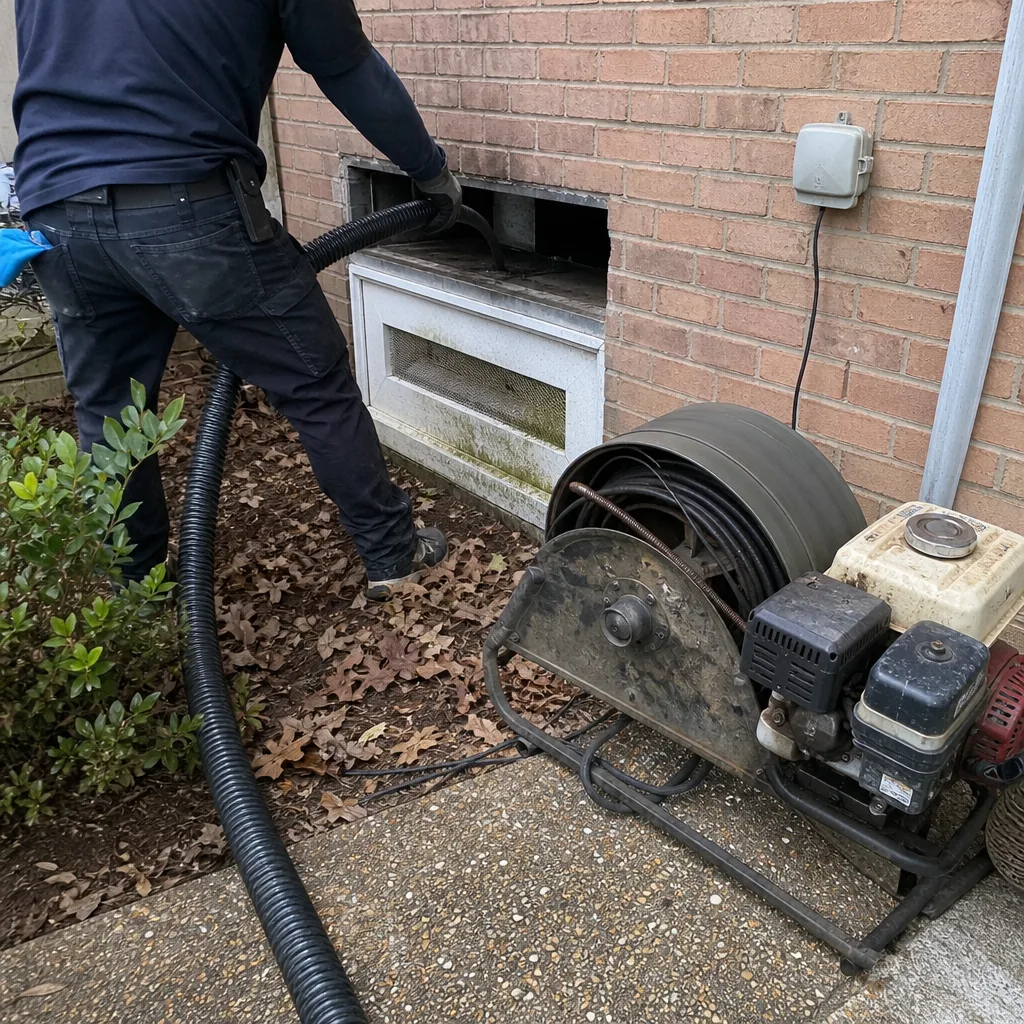 Before
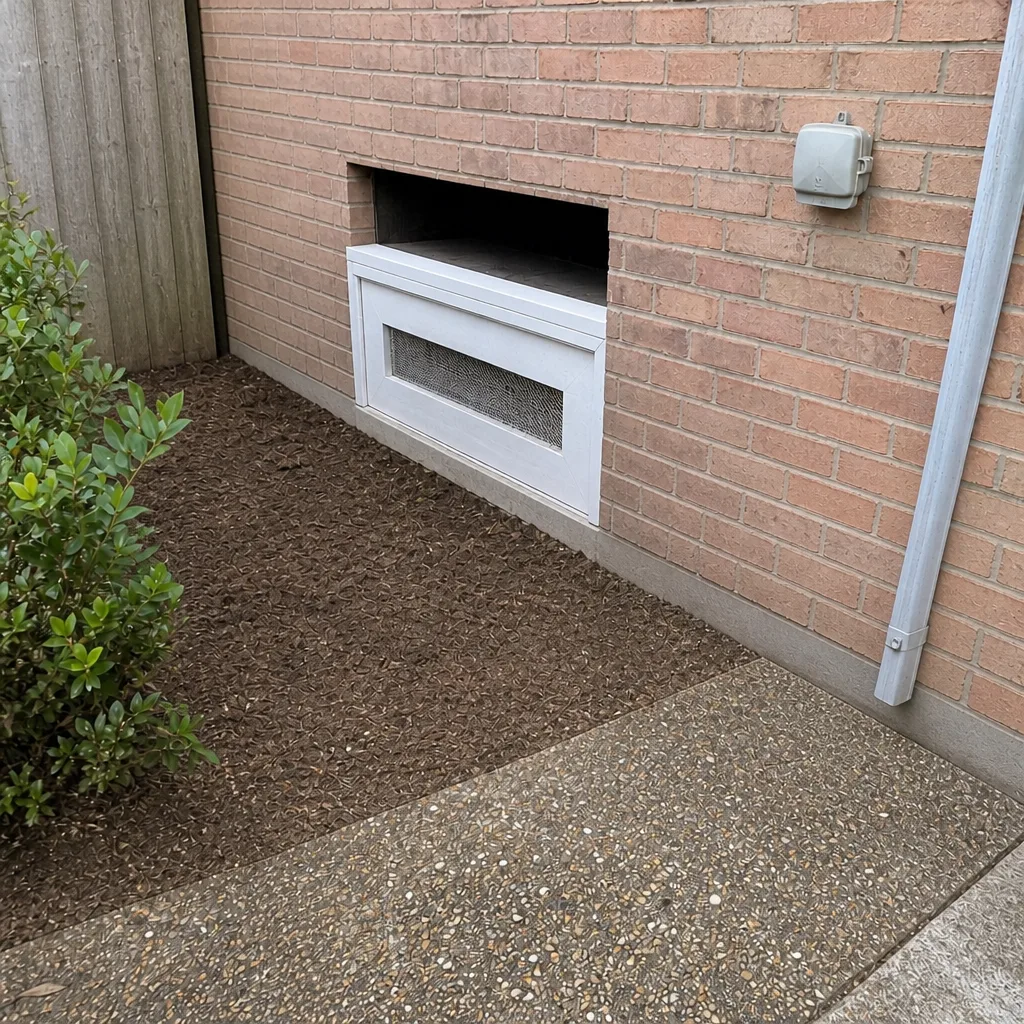 After
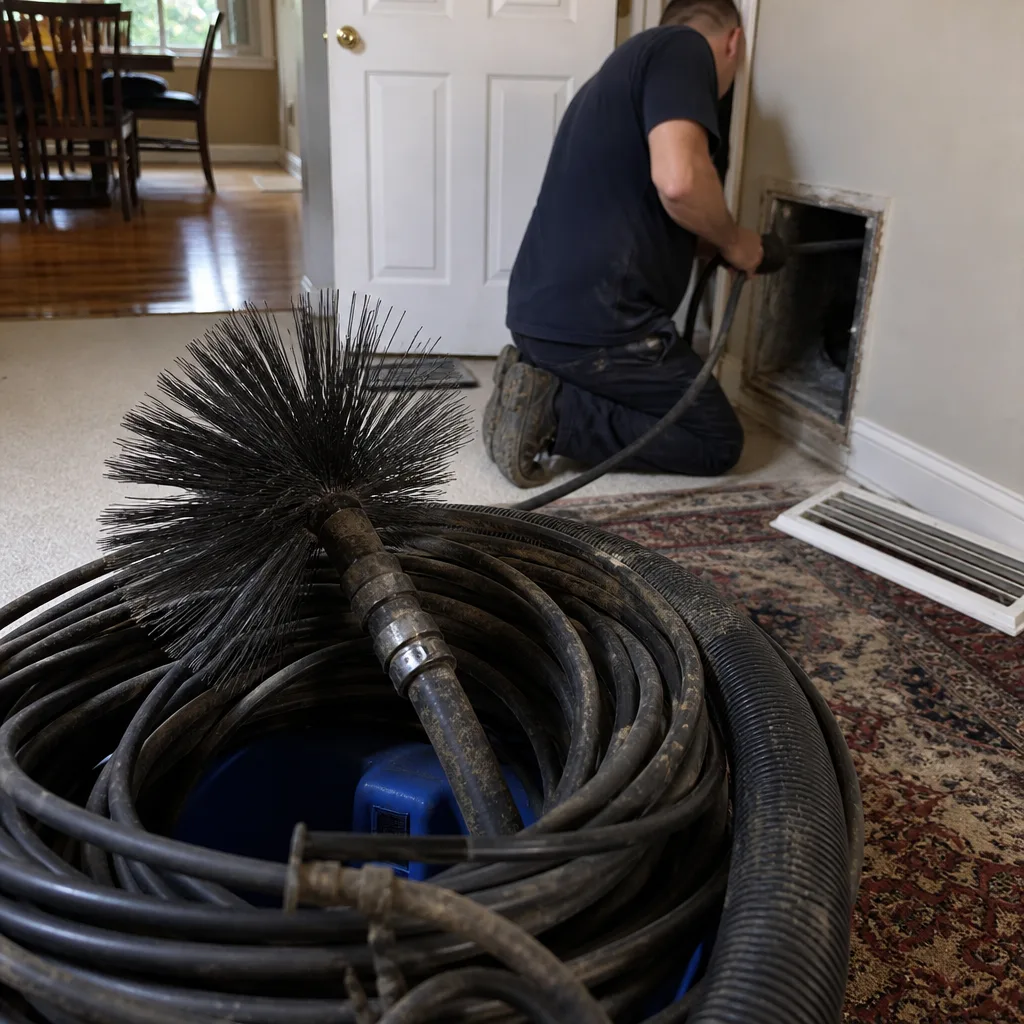 Before
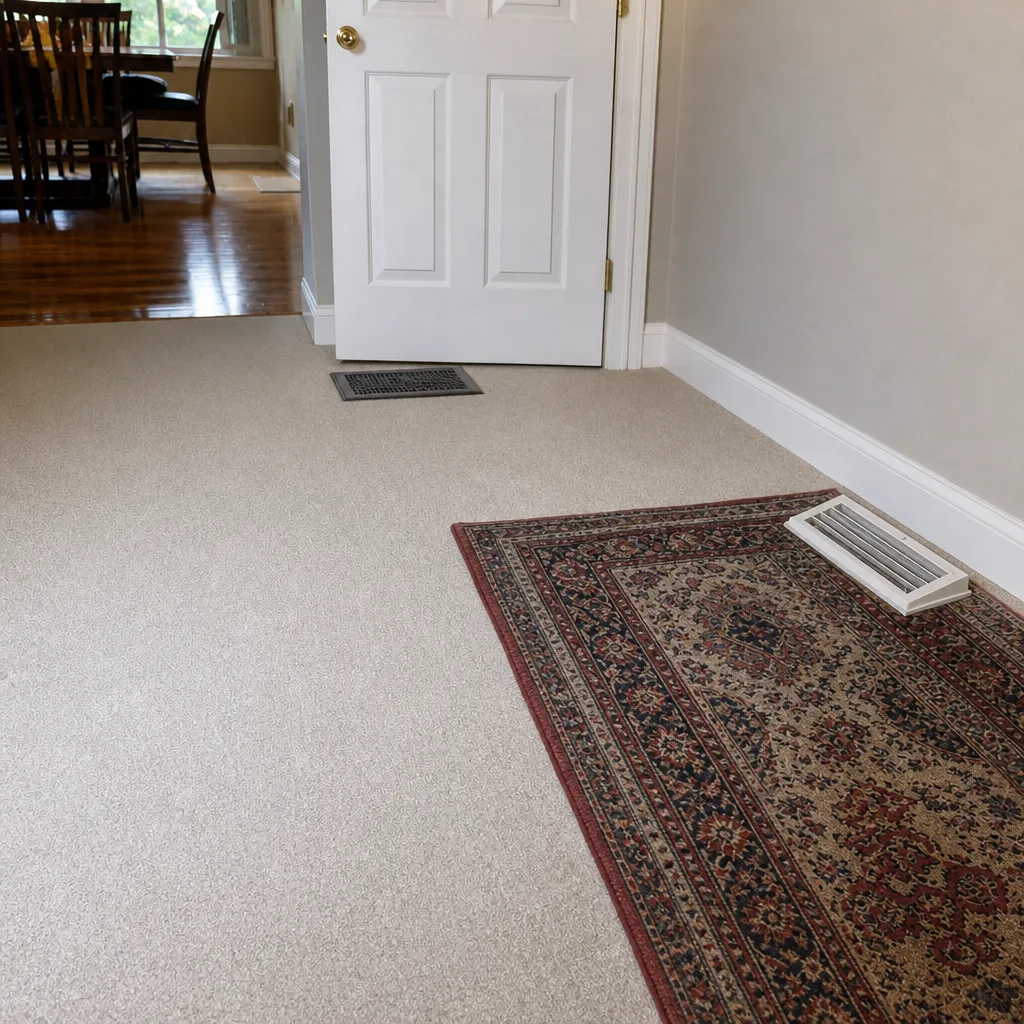 After
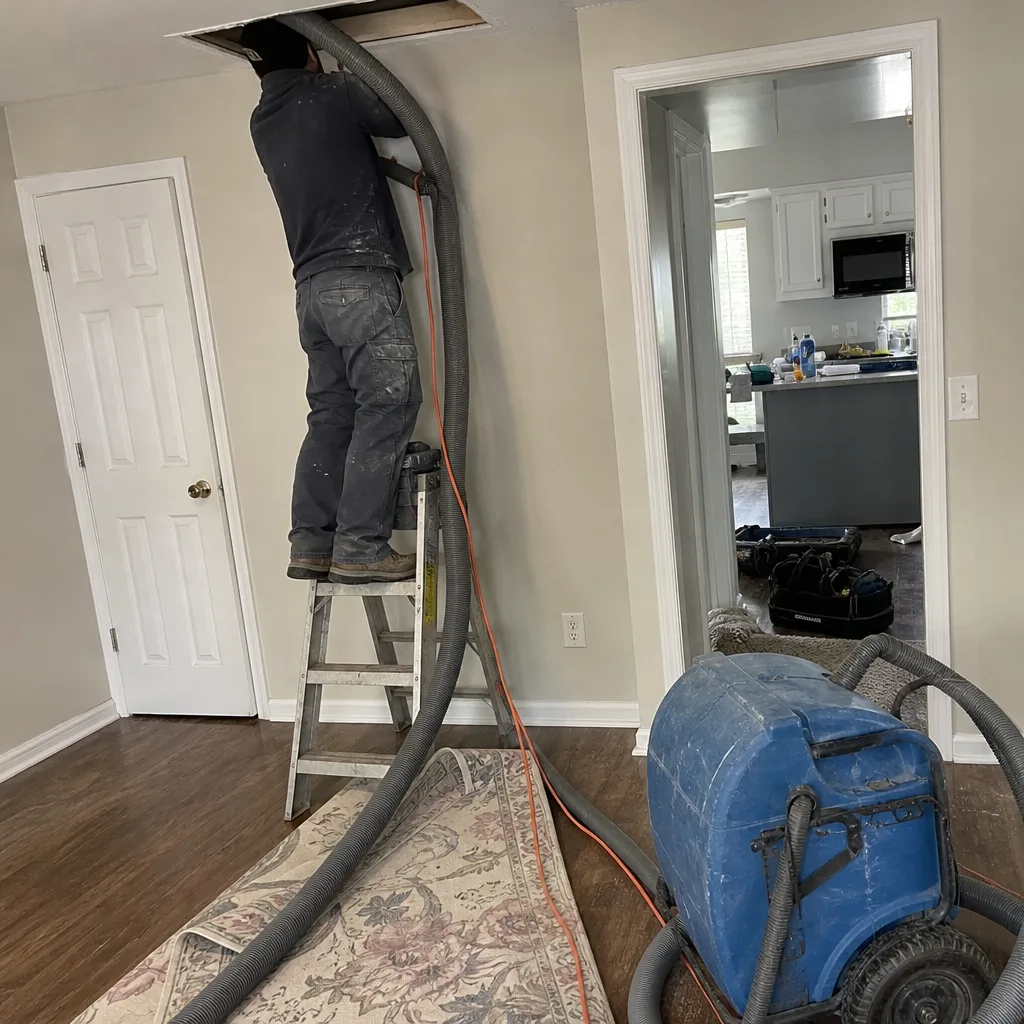 Before
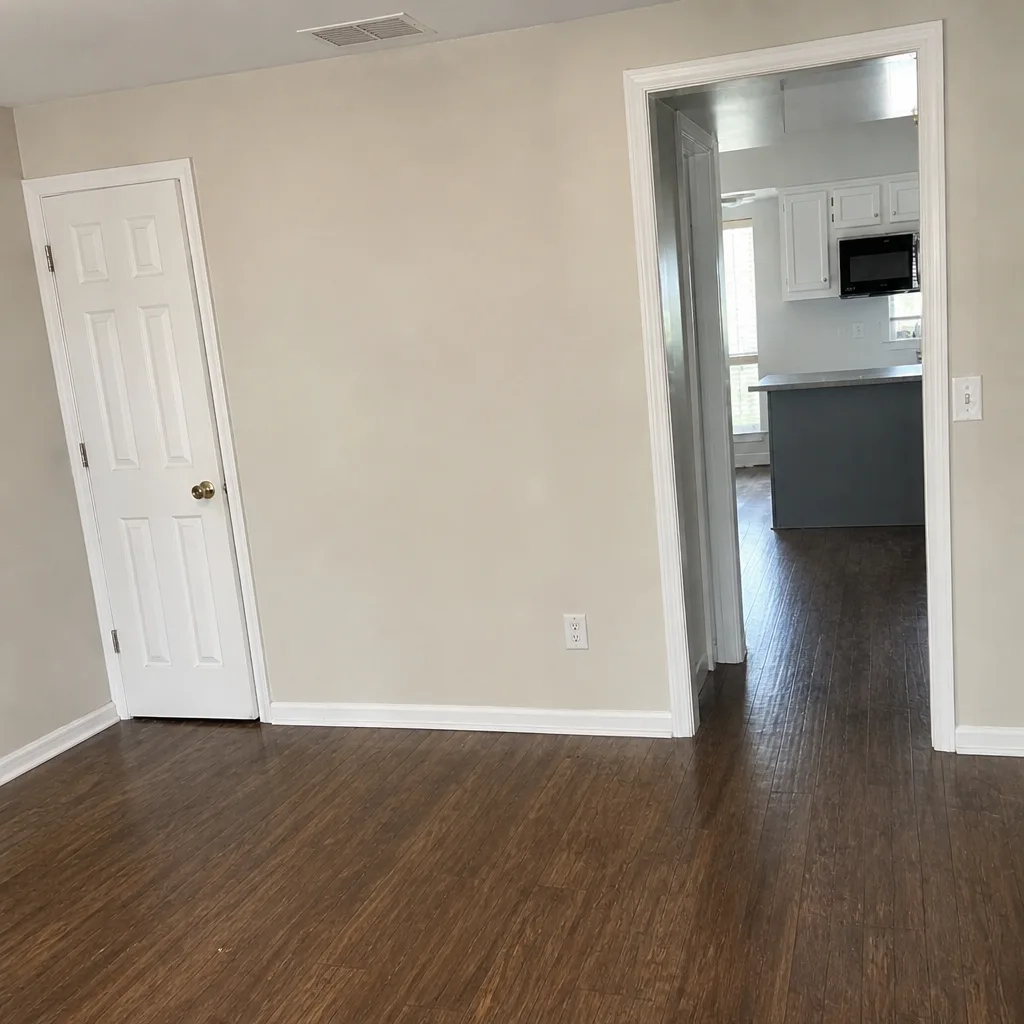 After
When to Call a Professional
Some signs are worth acting on right away, and others can wait for the next scheduled evaluation. Call a professional when you notice visible dust blowing from the supply grilles after the system kicks on, when the ducts have a persistent musty smell that doesn’t clear after a filter change, when you can see pest activity or droppings at the returns, when you’ve recently had water intrusion into the attic or crawlspace near ductwork, or when the coil and blower appear noticeably fouled on inspection. A recent renovation, a new home purchase with unknown cleaning history, or a change in household occupancy is also a reasonable trigger. For dryer vents, call the moment you notice that clothes are taking longer to dry or that the outside vent flapper isn’t lifting well.
Madison Air Duct Cleaning Co offers free estimates in Madison – call (844) 443-4890. We answer 24/7. Fast dispatch from 7am to 7pm, Sunday through Friday. Our technicians have up to 15 years of experience and we bring Rotobrush, Nikro, and Abatement Technologies equipment to every job. The written estimate sets the price, per system, agreed before any work starts.
Frequently Asked Questions
Plan on roughly $300 to $500 for a smaller home, $400 to $700 for a 2,000 square foot home, and $600 to $1,200 or more for a 2,500 square foot or multi-zone system. These are typical ranges for a full-system negative-pressure cleaning with verification. Add-ons like dryer vent cleaning, coil cleaning, sanitizing, and any duct repair found on the visit add cost on top. Call (844) 443-4890 for an exact quote. Estimates are free.
Because the cheaper quote is almost always for a different, smaller job. A $99 coupon usually covers a partial surface vacuum of a few openings, often without plenum cleaning, without negative pressure, and without photos. It’s not necessarily dishonest; it’s just not the same service as a full air-pathway clean. The thing to do is ask for a written scope and see what each quote actually covers. If the cheaper quote can’t produce a scope, that silence is your answer. Call (844) 443-4890 for a free estimate with a written scope you can read.
Ask for before-and-after photos of your own system, taken at the same opening, and for a written record of what was cleaned and what the technician found. On more involved jobs, a camera inspection of the trunk lines adds another layer of evidence. A company that can’t or won’t provide this is asking you to take its word. We provide photos and documentation on every Madison job; if the evidence weren’t real, this would be a very short FAQ. Call (844) 443-4890 to schedule a free estimate.
Every three to five years is a reasonable interval for a typical Madison home, though the honest answer is that the interval depends on the house. Homes with pets, recent renovations, heavy pollen seasons, or a history of water intrusion usually need it more often. Homes with a brand-new system and good filtration may go longer. There’s no single number that applies to every house. Call (844) 443-4890 for a free walkthrough; we’ll tell you what we actually see rather than quote you a number over the phone.
No, not on its own. Per-vent pricing measures openings, not a whole-system job. Two per-vent prices can mean two completely different levels of cleaning because neither tells you whether the trunks and plenums are included or whether negative pressure is maintained. Use per-vent as a menu to understand what a company offers, then insist on a flat per-system price with a written scope before you decide. Call (844) 443-4890 for a flat, per-system estimate.
For a dirty system, yes, when the cleaning is thorough and verified. The value shows up in the maintenance record, in reduced dust coming off the supply grilles, and in the information the cleaning produces about leaks and damaged sections that were previously invisible. For a clean system, the honest answer is that it’s probably not needed yet, and a professional will tell you so rather than sell you the job. Call (844) 443-4890 and we’ll say plainly whether your house needs this now.
The Bottom Line
Air duct cleaning in Madison in 2026 ranges from about $300 for a smaller home up to $1,200 or more for a large multi-zone system, and any price below that range is almost always a different, partial job. The five cost drivers – system size, duct material, access difficulty, equipment class, and verification – are what separate an honest estimate from a cheap number. Per-vent pricing isn’t a fair comparison to whole-system pricing, and the only fair way to compare two quotes is on written scope. Whether you hire us or someone else, ask for the scope, ask for the equipment names, and ask for before-and-after photos of your own ducts. If a company won’t provide these, that’s your answer.
If you’re ready to see what a full-system, verified cleaning looks like on paper, our team at Madison Air Duct Cleaning Co is happy to walk your house with you and produce a free written estimate. We answer 24/7. Fast dispatch from 7am to 7pm, Sunday through Friday. Call (844) 443-4890 today and we’ll put a scope in your hands before you commit to anything.
Written by the team at Madison Air Duct Cleaning Co.